danish design - table lamps

A table lamp is the ultimate finishing touch to any interior. In Danish design history, the table lamp is celebrated for its ability to create “islands of light,” bringing warmth and focus to desks, sideboards, and bedside tables. At Danish Design Classics, we have gathered a premier selection of table lamps that combine technical ingenuity with timeless aesthetic appeal.

Aj by Arne jacobsen

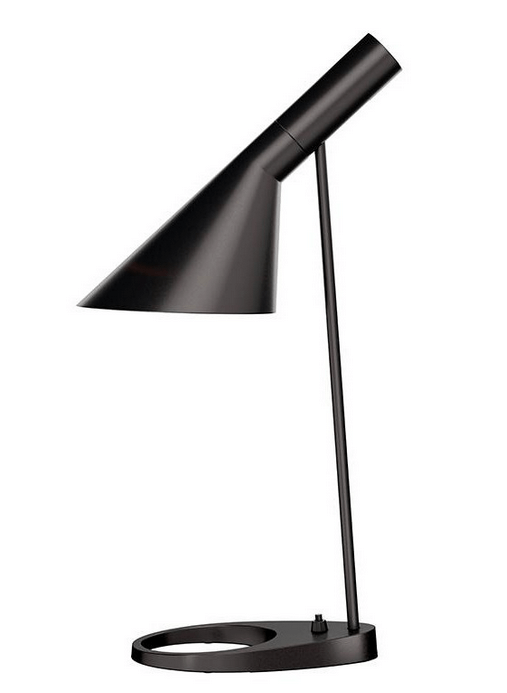
The AJ lamp was designed by Arne Jacobsen in 1960 to SAS Royal Hotel in Copenhagen (Radisson Blu). The lamp was part of the overall design concept of the hotel. Several of the hotel’s products have today obtained the status of design icons, and in the field of lighting, especially the AJ lamps have become world-renowned.

BellEvue by Arne Jacobsen

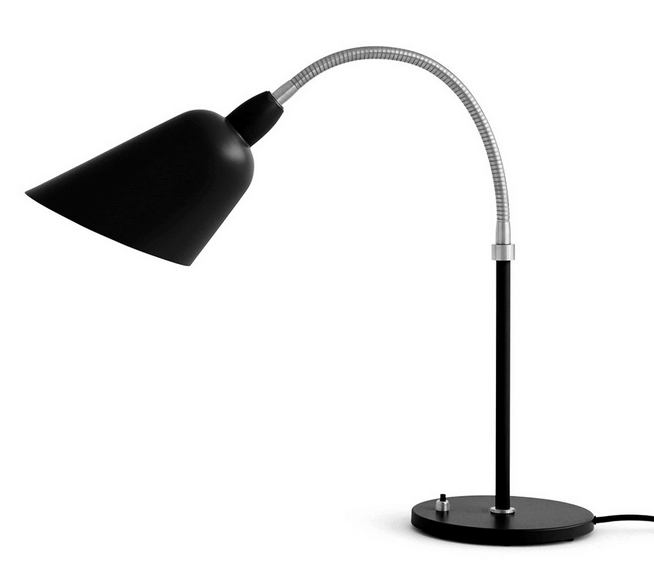
The Bellevue table lamp was designed in 1929 by Arne Jacobsen as the first lamp series from the master’s hand. Production and design is a speck shot from the Bauhaus period and the screen with its cutting of the 45 degrees is also seen going again at the famous Bellevue gas station.

Clam by Ahm & Lund

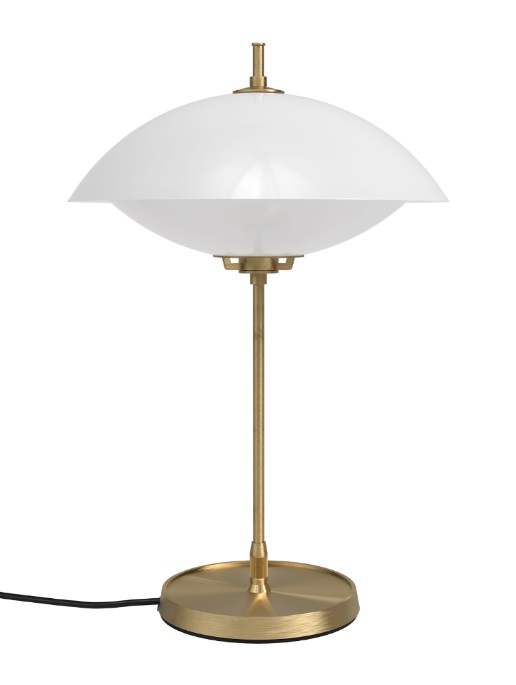
The Ahm & Lund Clam table lamp is an elegant design that combines functionality and aesthetics. With its organic shape and soft lines, the lamp adds a stylish, calming element to any room. The discreet shade creates a pleasant light, perfect for both task and ambient lighting. The Clam table lamp is a beautiful and timeless design object that easily integrates into both modern and classic interiors.

FJ Elements Table Lamp by Finn Juhl

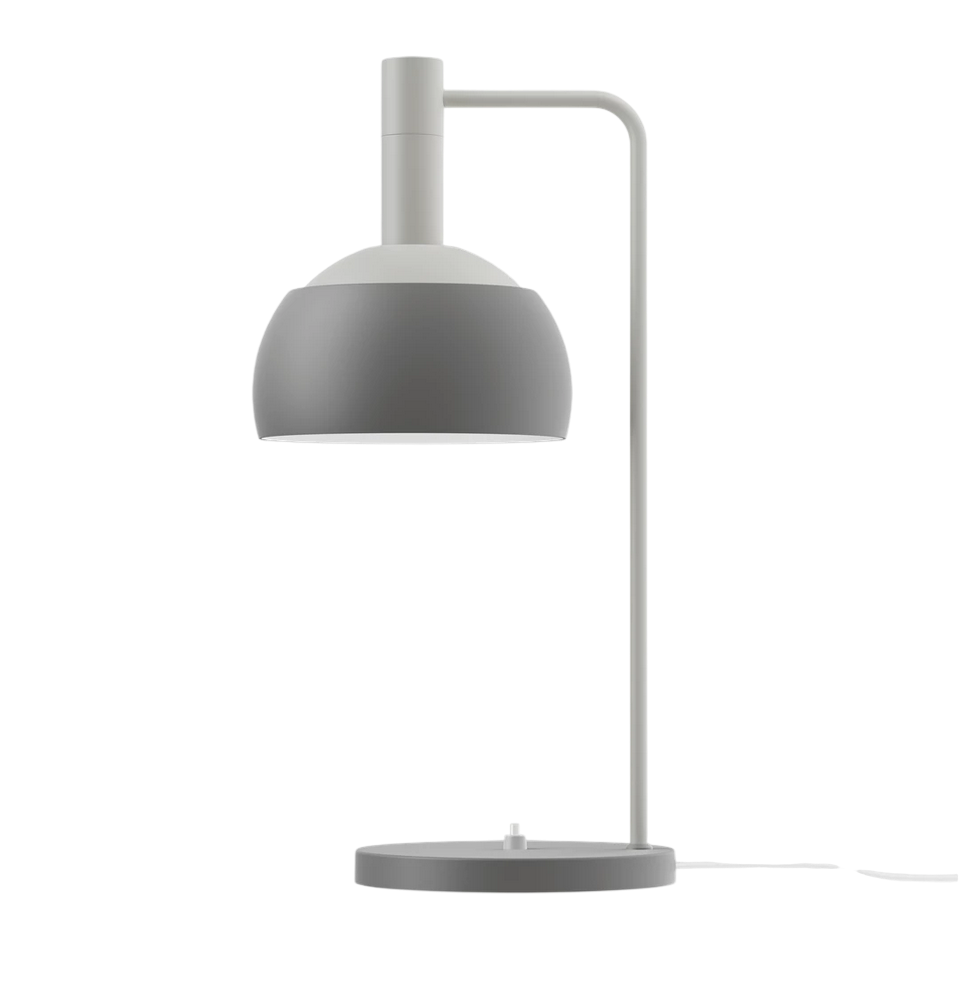
This lamp design is one of the few ever created by Finn Juhl (1912-1989), one of Denmark’s most renowned architects. Initially designed in 1963, the pendant and table lamp were reintroduced as FJ Elements in 2025, including the original two-toned grey variant.

The lamp’s name comes from Finn Juhl’s hand sketches, in which he described it as being composed of “elements”. These early drawings document the lamp’s form, proportions and the concept for an entire lamp series, and also tell of its overall construction. While the materials and geometric lines of the FJ Elements’ design stand out in their simplicity, the playful creativity is evident in how the upper shade can rotate around on the lower shade. This function allows you to control the direction of the light in multiple ways, while also transforming the lamp’s appearance.

Desk Lamp by Hans J. Wegner

Hans J. Wegner Bordlampe

Opala by Hans J. Wegner

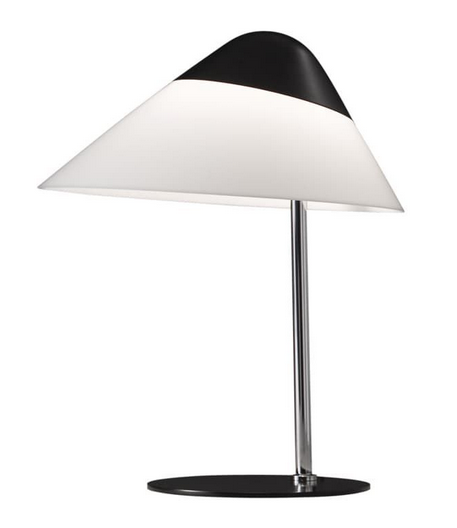
The HJW02 Opala Table Lamp Midi was designed by Hans J. Wegner in 1973 as a part of larger lighting series designed for Hotel Scandinavia in Copenhagen. The series presents a distinctive, almost futuristic expression with slightly tilted lampshades and straight lines. Opala table lamp features an asymmetric opal acrylic shade with a painted aluminium top, radiating a pleasant, focused light, while softly illuminating the surrounding space through the lampshade. Suitable for both the office- and living room.

Model 306 by Kaare Klint

The Le Klint 306 table lamp is a classic design that combines functionality with timeless elegance. The lamp’s iconic pleated shade, handmade in Le Klint’s signature style, creates a soft and pleasant light, perfect for both task and ambient lighting. The simple and sleek metal base gives the lamp a modern expression, while the organic shape of the shade adds an artistic touch.

With its balance of functionality and aesthetics, the Le Klint 306 table lamp is the perfect choice for adding warmth and atmosphere to any room. The lamp fits seamlessly into both modern and classic interiors, serving as both a practical light source and a beautiful design object.

Multi-lite by Louis Weisdorf

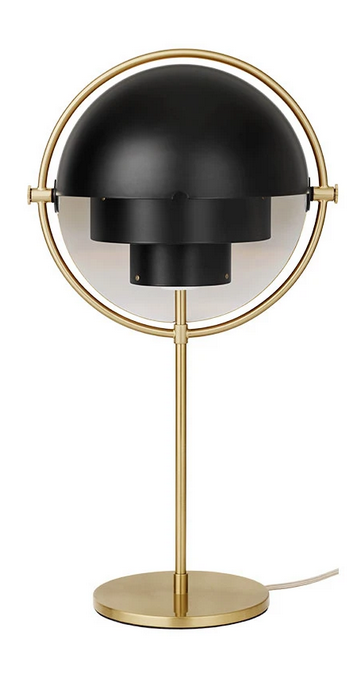
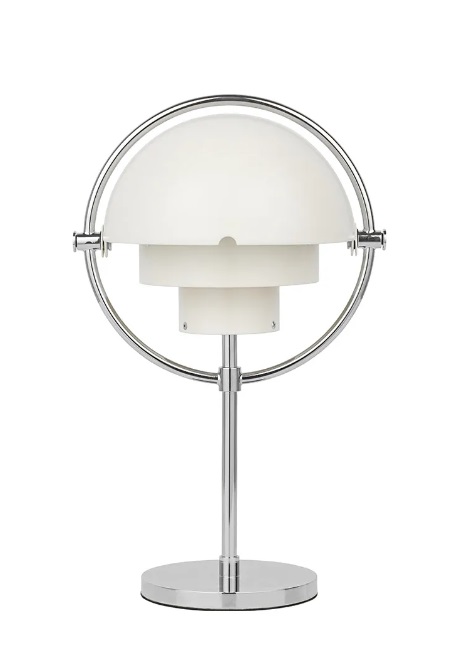
The GUBI Multi Lite table lamp is an elegant and functional design that exudes timeless beauty and versatility. With its adjustable shade, which can be rotated and tilted in different directions, this lamp allows you to customize the light to suit your needs – perfect for both direct and indirect lighting. The beautiful, minimalist form, with its combination of round and angular elements, creates a sophisticated expression that fits into both modern and classic interiors.

Multi-lite Portable by Louis Weisdorf

Bringing further flexibility to one of the most adaptable light designs of the 20th century, GUBI’s new edition of Louis Weisdorf’s sculptural and inventive Multi-Lite design reimagines the unique lamp in a portable format. Working in collaboration with the designer’s family, GUBI has redeveloped every component of the Multi-Lite Table Lamp in a more compact design, integrated a USB-charging facility, and incorporated a three-level, touch-activated dimmer function. The signature ring around the lamp now does double duty as a handle, allowing the lightweight lamp to be easily carried around and outside the home – the ideal companion to outdoor events and alfresco evenings.

Copenhagen SC13 by Space Copenhagen

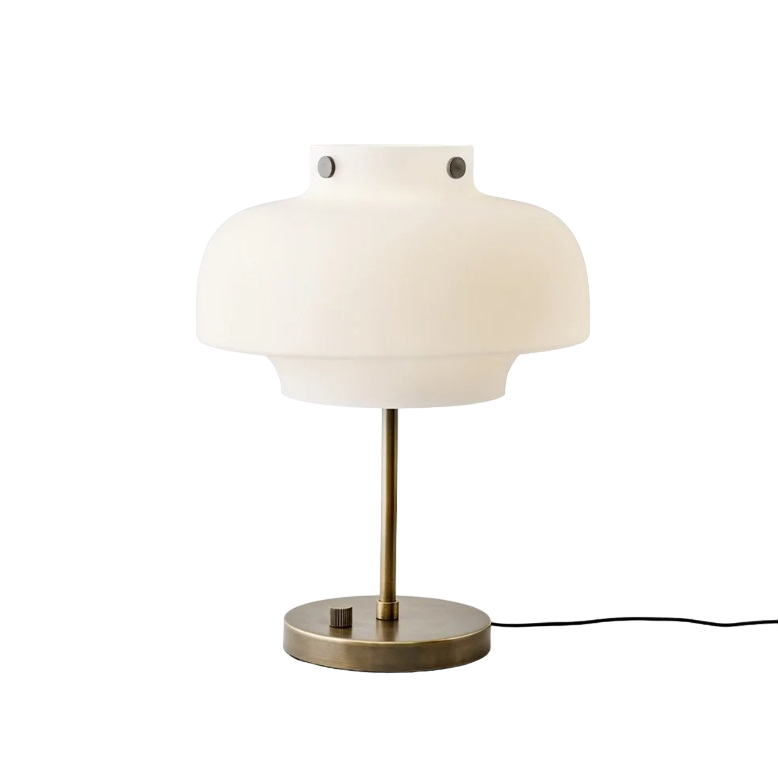
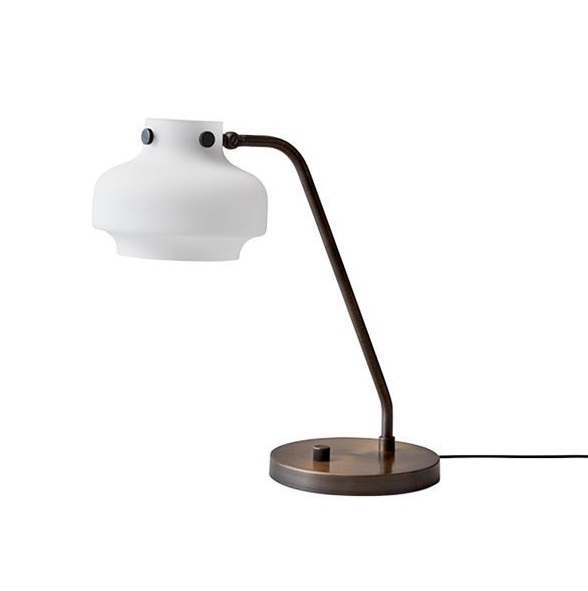
The Copenhagen table lamp by Space Copenhagen is a token of contemporary design – exuding a functional aesthetic without sacrificing it’s elegant visual identity. Blending both classic and modern aesthetics with an industrial sensibility, the result is a lamp that embodies an intriguing contrast.

Copenhagen SC15 by Space Copenhagen

LUcca by Space Copenhagen

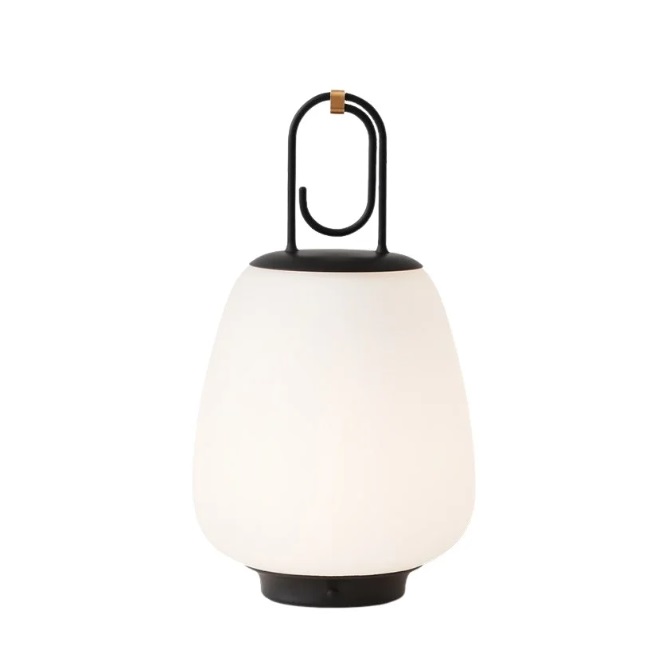
This elegant portable lamp, inspired by the golden glow of the Tuscan city of Lucca, mimics the warmth of the city’s nocturnal light. Intended as a multipurpose piece, the battery-powered Lucca lamp easily transitions from indoors to outside. It can operate for up to 12 hours and is easily recharged with a USB cable.

Manhatten SC52 by Space Copenhagen

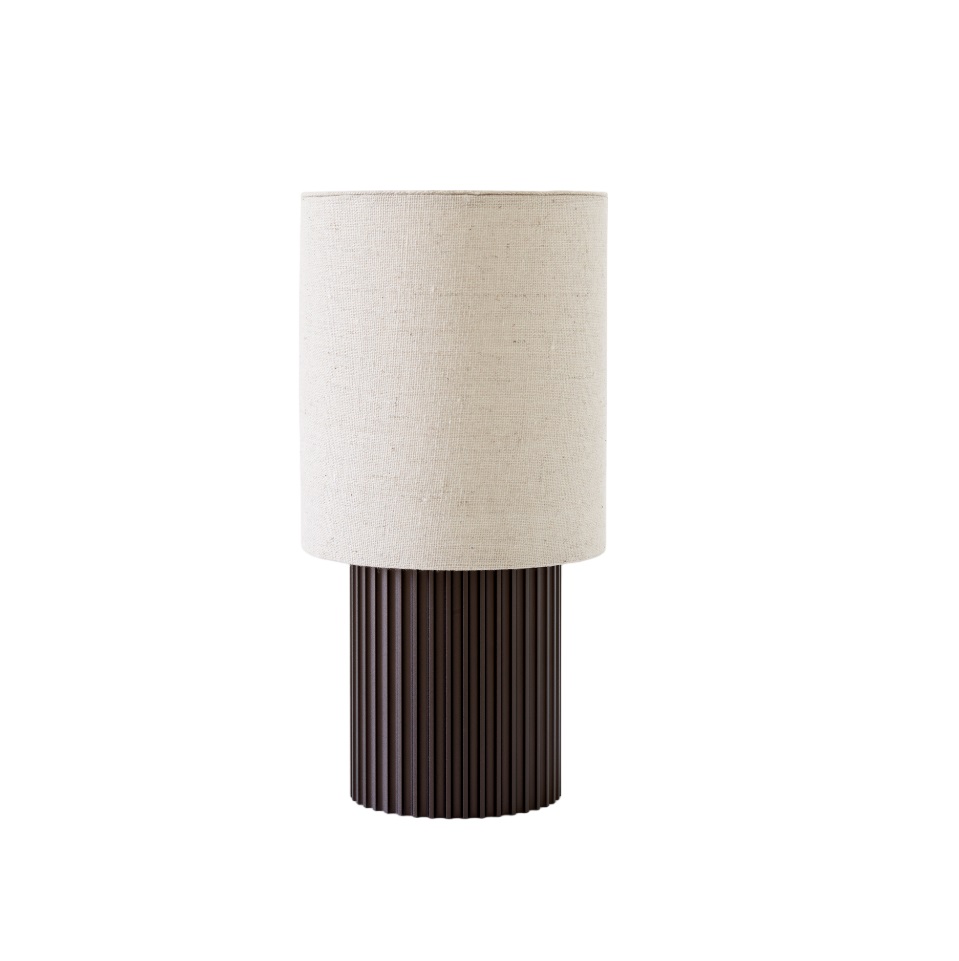
Set the mood with Space Copenhagen’s dimmable Manhattan lamp. Its anodised aluminium base with columned detailing and a canvas shade combine to emit an inviting glow. With three dimmable light functions, this portable lamp becomes a versatile addition to every environment, operating for eleven hours at the highest setting.

COMO SC53 by Space Copenhagen

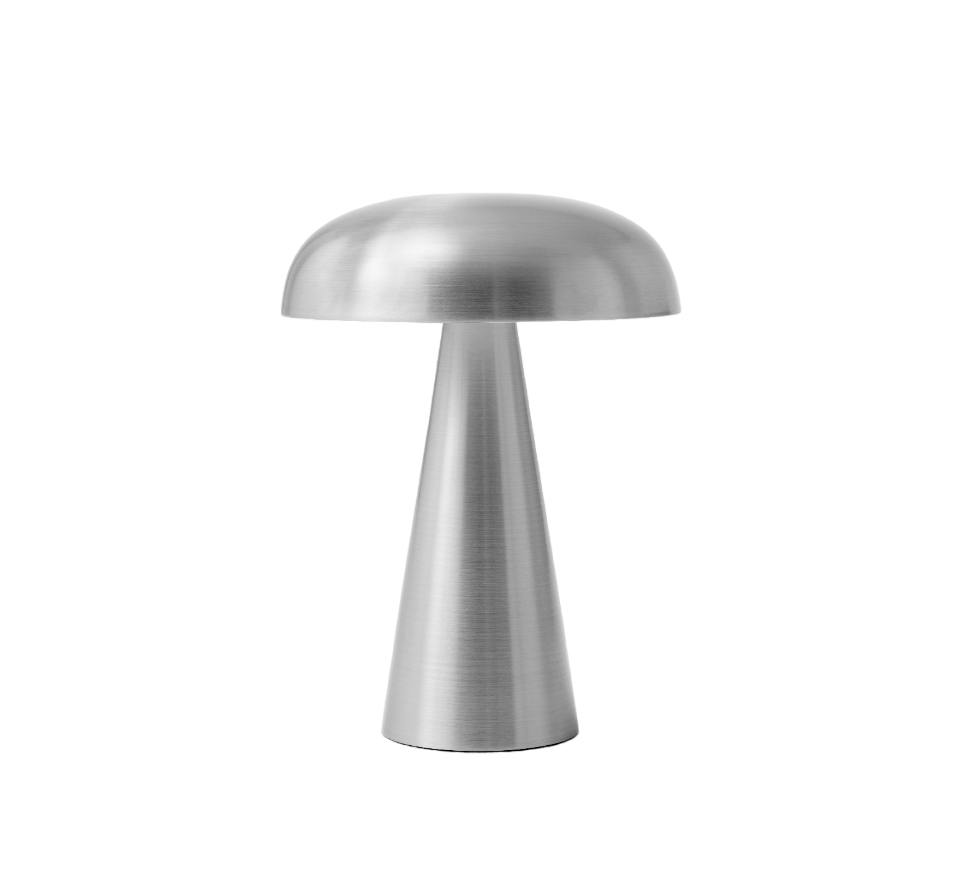
A design of duality and contrast, Como’s sturdy base tapers up towards a softly curved, organically-shaped shade. Available in a range of colours and finishes, the Como lamp was designed to complement every space it occupies, while its portable nature allows it to be moved easily and maintained efficiently.

Gravity by Space Copenhagen

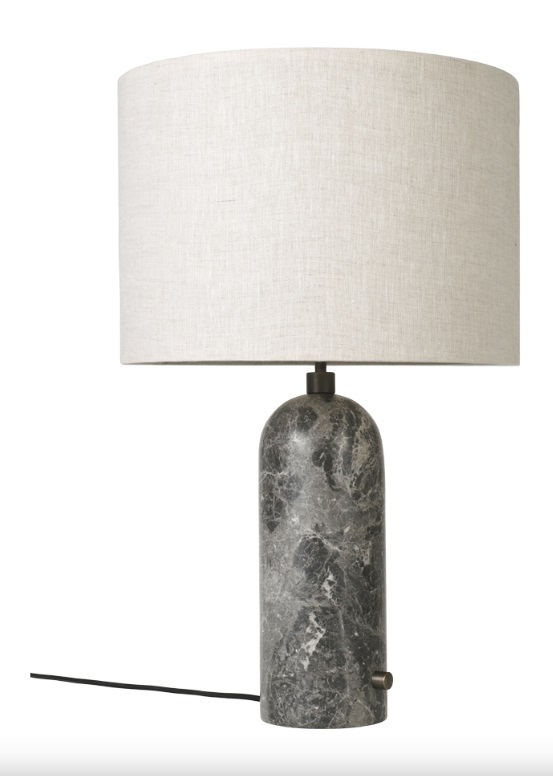
The Gravity Table Lamp, designed by Space Copenhagen, is aesthetically contrasting strength and fragility. Taking its name from the lamp’s distinctive balance between the anchoring of the heavy, cylindrical base and the lightweight, airy shade, it beautifully merges into a sculptural whole.

Meadow by Space Copenhagen

PH 2/1 Portable by poul henningsen

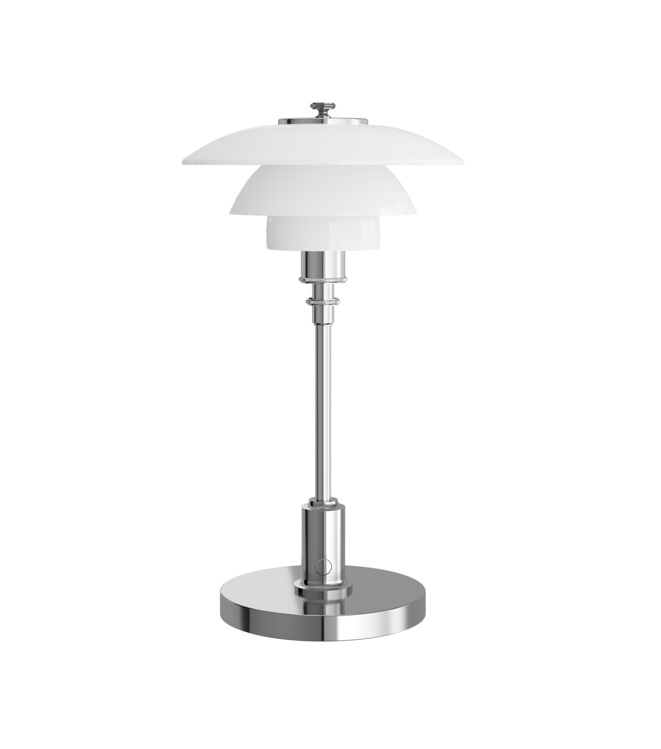
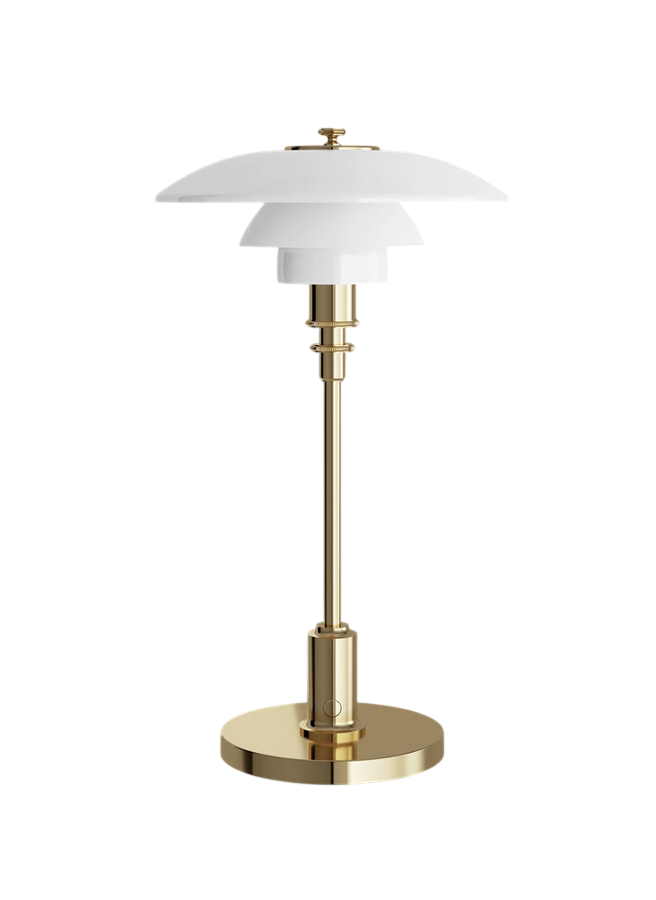
The PH 2/1 Portable is a cordless version of the classic petite table lamp, which with its mouth-blown opal glass-shades and stem and base made of either high-lustre chrome or metallised brass.

The portable version of the lamp is perfect for use both indoors and outdoors, particularly in spots where there may not be easy access to mains electricity, such as inside a bookcase or on a bedside table.

PH 2/1 by poul henningsen

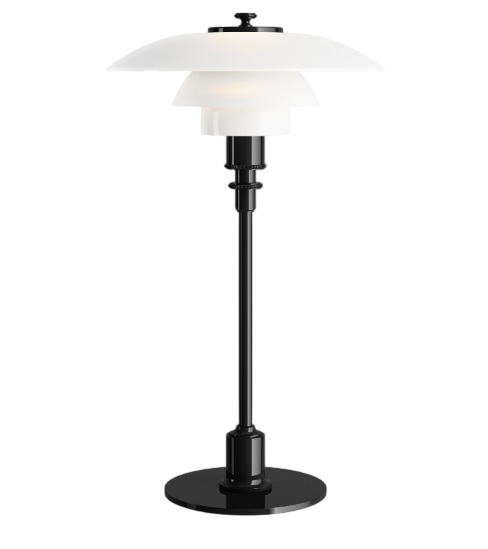
Poul Henningsen’s table lamps with opal glass shades are true masterpieces in lighting and design. With Henningsen’s iconic approach to light design, these lamps create a soft and pleasant light that is both functional and atmospheric. The opal glass shades diffuse the light evenly, eliminating glare, making them perfect for both workspaces and ambient lighting in the home.

Designed by Poul Henningsen, these lamps are based on his philosophy that light should be soft and indirect to create a comfortable and natural atmosphere. The opal glass shades give the lamp a classic, timeless expression, making it easy to integrate into both modern and traditional interiors.

These table lamps with opal glass are not only functional light sources but also elegant design objects that add style and warmth to any room. They are perfect for creating a calm and inviting atmosphere, where functionality and aesthetics go hand in hand.

PH 3/2 by poul henningsen

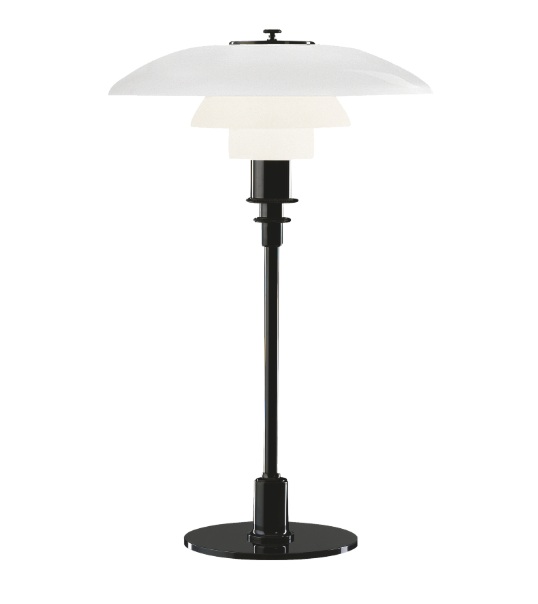
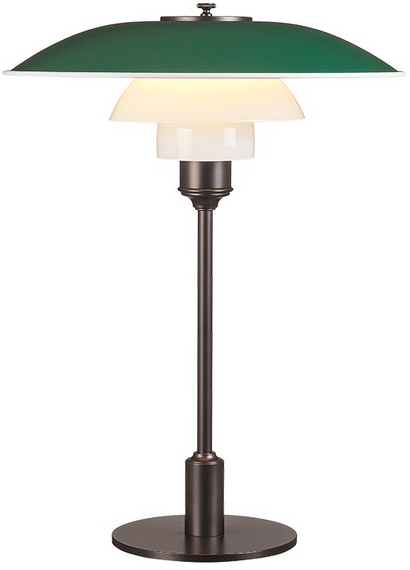
The table lamp provides a soft, harmonious and comfortable light distribution with its mouth-blown three-layer white opal glass that primarily directs the light downwards. Poul Henningsen designed it based on his celebrated three-shade system, which he created in 1925 to shape excellent non-glare lighting.

The first lamp using the multi-shade system was made in collaboration with Louis Poulsen for the Paris exhibition that same year. The ‘Paris Lamp’ won gold.

Henningsen had a distinct scientific approach to light and continued to design numerous luminaires based on the same system. He used the logarithmic spiral as the foundation and accomplished even distribution of light with the three-shade-system, which together with a dispersed reflection through the glass made it possible to curb glare and shadow.

Each PH lamp number refers to the size of its shades. The PH 3/2 Table consists of a top shade of approximately 30 cm and the lower shades are used from the 2/2 version.

PH 3/2 Fendi Casa Edition by poul henningsen

This exquisite PH 3/2 Table Lamp, crafted with aged brass and four-layer mouthblown glass is part of the Louis Poulsen | FENDI Casa collaboration, which debuted at Milan Design Week in 2023. Each of the pieces in the collection are reimagined versions of iconic Poul Henningsen designs, that subtly reflect FENDI’s distinctive design language through pequin stripes and a luxurious colour scheme.
With this collaboration Louis Poulsen and FENDI Casa have come together and created a collection of products that reflect a common approach to craftmanship, innovation and heritage, while exploring the idea of duality merging Danish design tradition and Italian excellence, resulting in modern interpretations of products created almost 100 years ago.

PH 3/2 Centenary Edition by poul henningsen

Honouring the legacy of Poul Henningsen, the PH 3/2 Table Lamp Centenary Edition is based on the iconic three-shade system, the System PH, invented by Poul Henningsen in 1926.

Based on this system, Poul Henningsen developed hundreds of lamps as the mathematical principle behind it, made it possible to enable excellent lighting quality for a great variety of purposes.

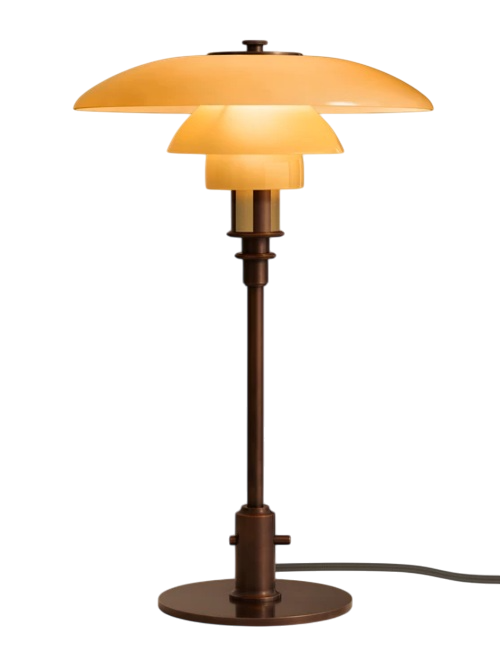
The lamp is crafted in aged brass carefully lacquered to preserve the patina, and three shades in an interesting combination of a mouth-blown, four-layered Amber upper glass shade and mouth-blown, three-layered White Opal lower glass shades, all glossy on the outside and sandblasted matte white on the inner side. A great way to provide both a warm, ambient upward light to the surroundings while maintaining a soft diffused and glare-free downward directed light.

Combined with a dark brown textile cord, the PH 3/2 Table Lamp Centenary Edition brings a distinct vintage feel to any setting.A contemporary interpretation of the 100-year heritage of the ingenious System PH.

PH 4½-3½ by poul henningsen

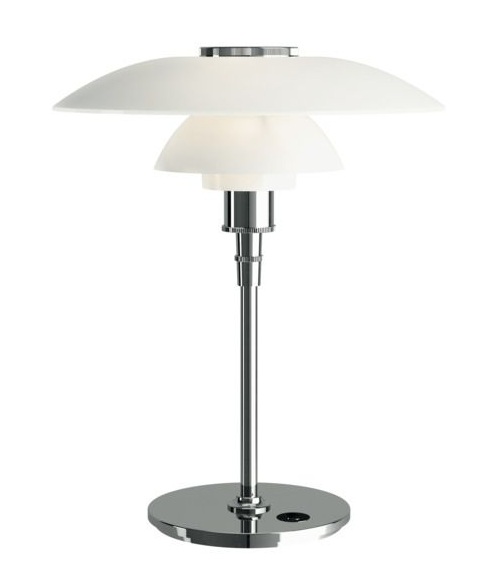
PH 4½-3½ Glass Table is a member of the three-shade family which numbers 30 lights today, including three for outdoor use. Thus PH did not just design a light, but an entire system – around a thousand different models have been produced over the years. This wide selection consisted of table, floor and wall lamps, as well as a number of different chandeliers, which were very popular in the 30s for lighting private homes from high ceilings. There were countless combination options. The lights were available in different colours, as well as a range of sizes. The first shades were made of metal with a painted undersurface, such as white, gold or silver – depending on whether diffuse, warm or cold light was desired. Glass was later introduced for the three-shade system. In addition to the downward-directed light, glass lamps illuminated the room. PH was the first person to pursue a scientific approach to light and use the logarithmic spiral as a basis. By using a design based on the logarithmic spiral he achieved even distribution of light over the entire curve of the shade. This even light distribution, together with the diffuse reflection through the glass, made it possible to control glare and shadow. Each shade reduces the amount of light equally, due to their distance from the light source. The PH light model numbers refer to the shade size. Each top shade had a corresponding set of middle and lower shades. In the ‘pure’ models, such as the 2/2, the top shade has a size of about 20 cm, with corresponding lower shades. PH 4½-3½ Glass Table consists of an approximately 45 cm top shade, but uses lower shades from the 3½ model. These ‘hybrid’ models were introduced due to the desire to hang pendants at lower heights. The system was also used for wall, table and floor lamps. PH 4½-3½ Glass Table in its current form was introduced in 1990.

PH 2/2 Question Mark by poul henningsen

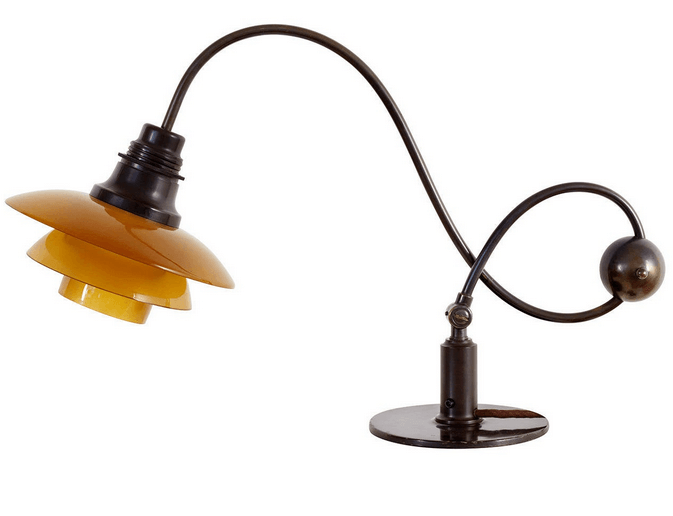
Poul Henningsen’s Question Mark, designed in 1931, is an iconic piece that combines aesthetics and functionality in a truly unique way. The lamp’s shape, resembling a question mark, is both innovative and playful, making it a statement piece in any room. With its distinctive, organic form and elegant details, the Question Mark creates a fascinating visual balance between function and art.

PH 2/2 Piano Lamp by poul henningsen

Poul Henningsen’s Piano Table Lamp, designed in 1931, is a timeless masterpiece that combines functionality with aesthetic finesse. The lamp’s frame stands out with its simple yet sophisticated form, giving it a unique and elegant expression. The slender, almost graphic base creates a beautiful balance, highlighting Henningsen’s ability to create functional designs that also serve as works of art.

PH 2/2 vintergækken by poul henningsen

Table Lamp by poul henningsen

PH 2/2 Luna by poul henningsen

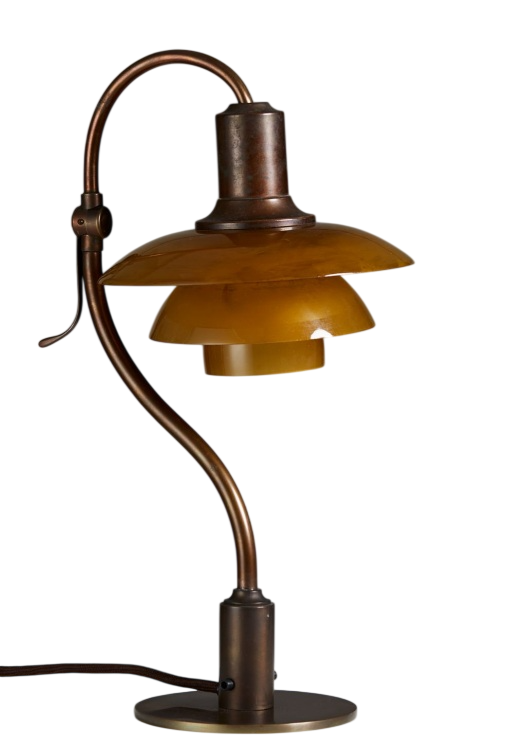
In the limited edition of Poul Henningsen’s PH 2/2 The Question Mark in brass with fine hairlines, the design and materiality of Henningsen’s elegant classic are paired with mouth-blown opal glass shades that create a beautiful ambience in any space.

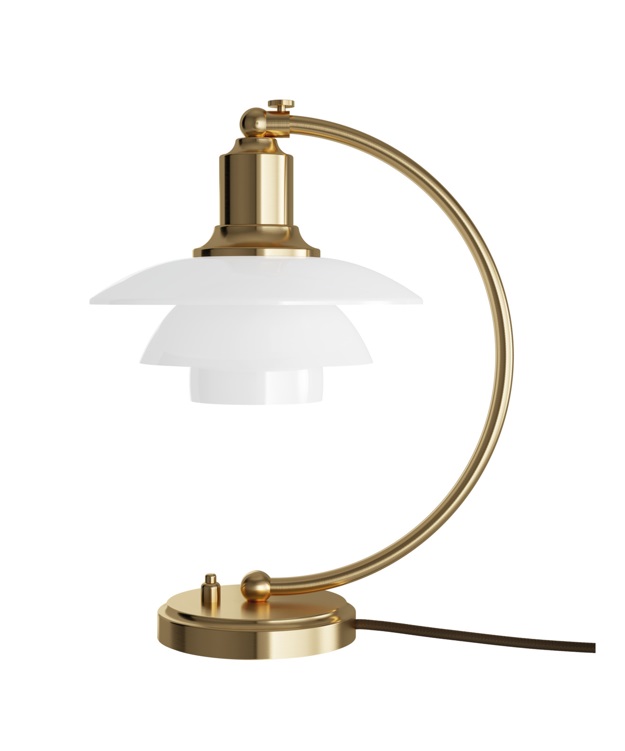
PH designed the original table lamp in 1931, based on his three-shade system from 1926, which perfectly combines a glare-free downward directed light with a pleasant upward glow, creating an ideal ambience. The lamp was given the name ‘The Question Mark’ due to the curvature of the lamp stem. The PH 2/2 Question Mark was produced until the mid-1950s in brass and with different coloured glass shades, including amber, and with various shade holders. The direction of the light could be adjusted by turning the handle on the middle of the stem. It was fitted with a go-through switch.

PH 3½-2½ by Poul Henningsen

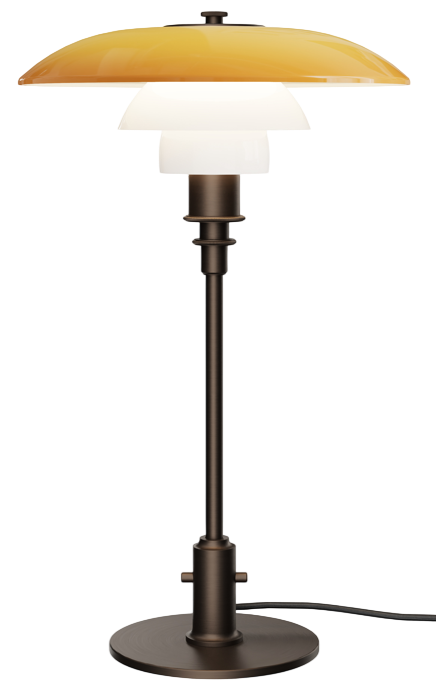
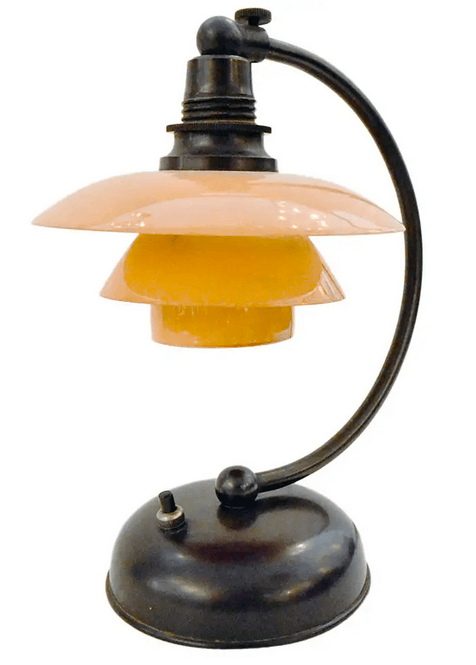
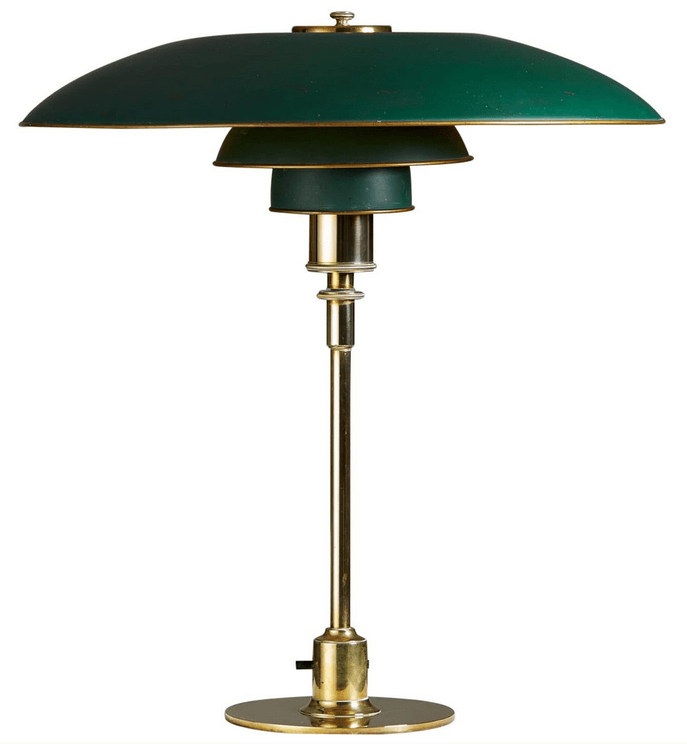
PH 3 ½-2 ½ Table was designed in 1928 and is one of many development projects undertaken by PH in connection with the development of his world-famous three-shade system. The table lamp is based on PH’s original drawings, and comes with the first type of shade holder, with adjustment screws. The top metal shade has a rolled edge, a decorative and stabilising feature that makes the shade appear thicker than the actual material. The two bottom shades are made of mouth-blown opal glass. PH found that this combination utilises the light source more efficiently, directing the light downwards due to the reflection from the white inner surface of the top shade. The frame is brown painted brass giving the lamp the same appearance as the burnished brass lamps of the time – a process that is no longer recommended due to environmental considerations.

PH 4/3 by poul henningsen

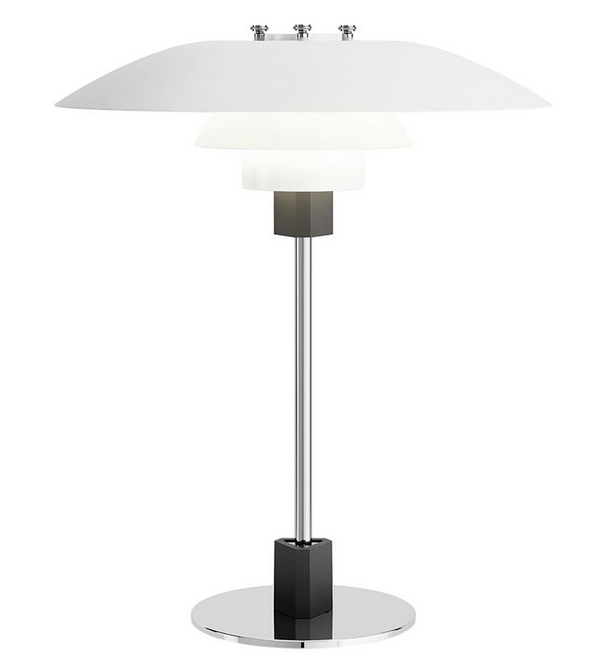
PH 4/3 Table is a member of the three-shade family. Thus PH did not just design a light, but an entire system – around a thousand different models have been produced over the years. This wide selection consisted of table, floor and wall lamps, as well as a number of different chandeliers, which were very popular in the 30s for lighting private homes from high ceilings. There were countless combination options. The lights were available in different colours, as well as a range of sizes. The first shades were made of metal with a painted undersurface, such as white, gold or silver – depending on whether diffuse, warm or cold light was desired. Glass was later introduced for the three-shade system. In addition to the downward-directed light, glass lamps illuminated the room. PH was the first person to pursue a scientific approach to light and use the logarithmic spiral as a basis. By using a design based on the logarithmic spiral he achieved even distribution of light over the entire curve of the shade. This even light distribution, together with the diffuse reflection through the glass, made it possible to control glare and shadow. Each shade reduces the amount of light equally, due to their distance from the light source. The PH light model numbers refer to the shade size. Each top shade had a corresponding set of middle and lower shades. In the ‘pure’ models, such as the 2/2, the top shade has a size of about 20 cm, with corresponding lower shades. PH 4/3 Table consists of an approximately 40 cm top shade, but uses lower shades from the 3/3 model. These ‘hybrid’ models were introduced due to the desire to hang pendants at lower heights. The system was also used for wall, table and floor lamps. PH 4/3 Table in its current form was introduced in 1966.

PH5 table lamp by poul henningsen

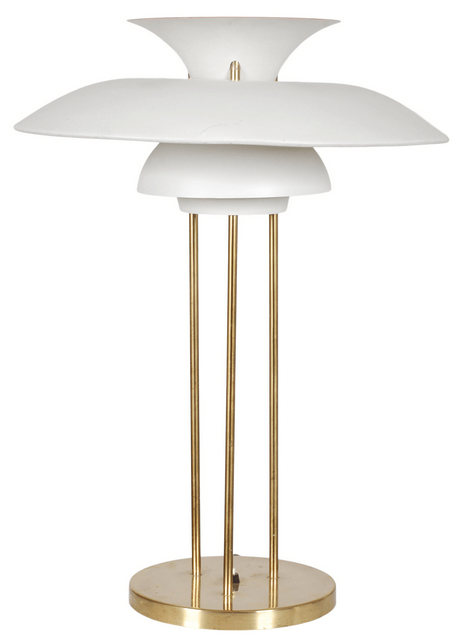
Poul Henningsen’s PH5 table lamp is a true design classic that combines functionality with timeless beauty. Designed in 1958, the PH5 was created to eliminate glare and provide a soft, diffused light. The lamp features the iconic multi-layered shade, ensuring even illumination and a warm ambiance in any space.

PH5/3 table lamp by poul henningsen

Ph80 by poul henningsen

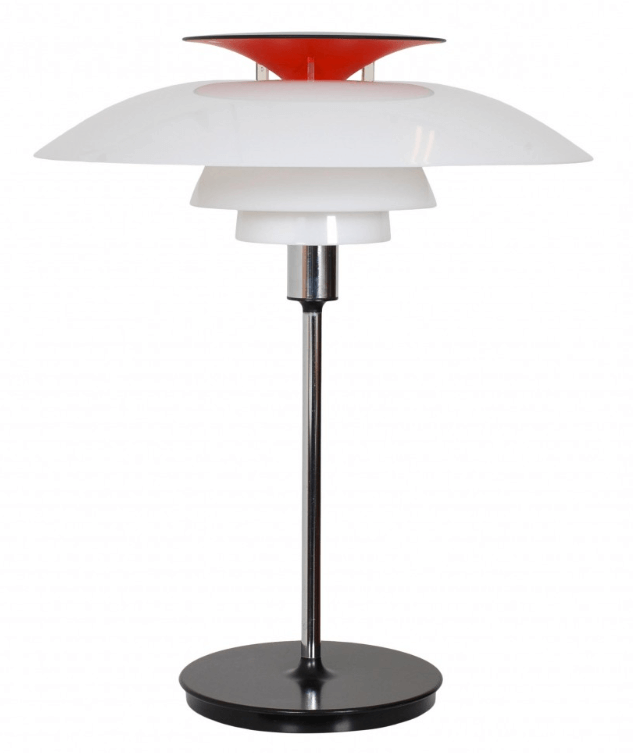
The PH 80 is based on the same 3-screen principle and with the logarithmic spiral as a starting point. The material is opal acrylic and the top screen is red to give a warm and atmospheric light. The lamp number does not refer to the diameter of the screen as normal in the 3-screen system. The lamp was made after Poul Henningsens death to mark his 80th birthday in 1974 – hence the name PH 80.

New Wave by verner panton

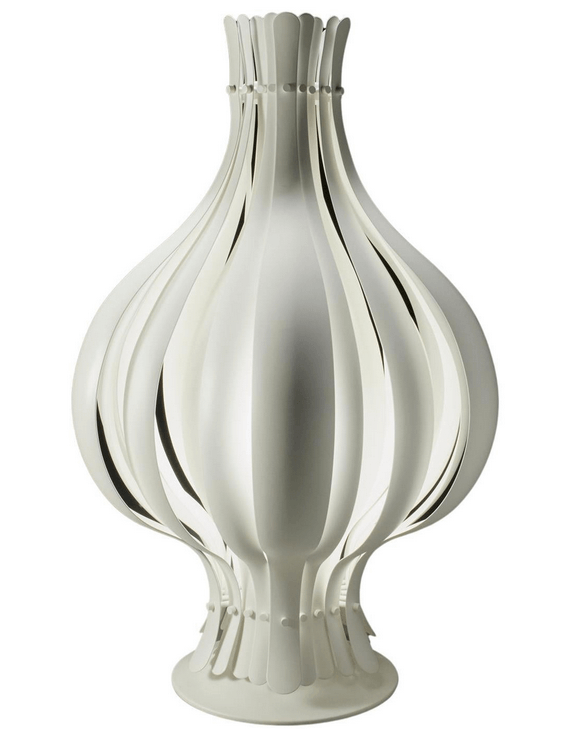
Onion by verner panton

Onion Pendant is a different and humorous ceiling lamp, where Verner Panton’s creative and inventive talent is fully revealed. The white metal slats are shaped like an onion and give a beautiful indirect light.

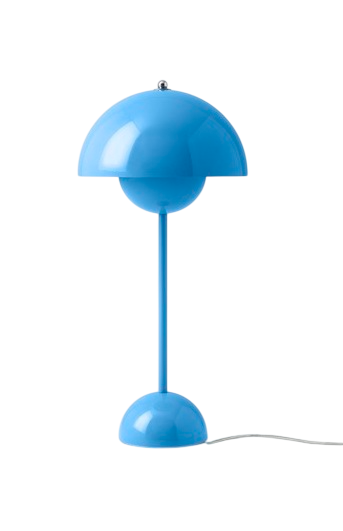
Flowerpot by verner panton

In 1968, Verner Panton designed the organic and beautiful Flowerpot. The flowerpot lamp is made as a ceiling lamp, wall lamp and table lamp. It consists of two round screens of lacquered metal. Flowerpot is today produced by & tradition and is a well-known icon throughout the world.

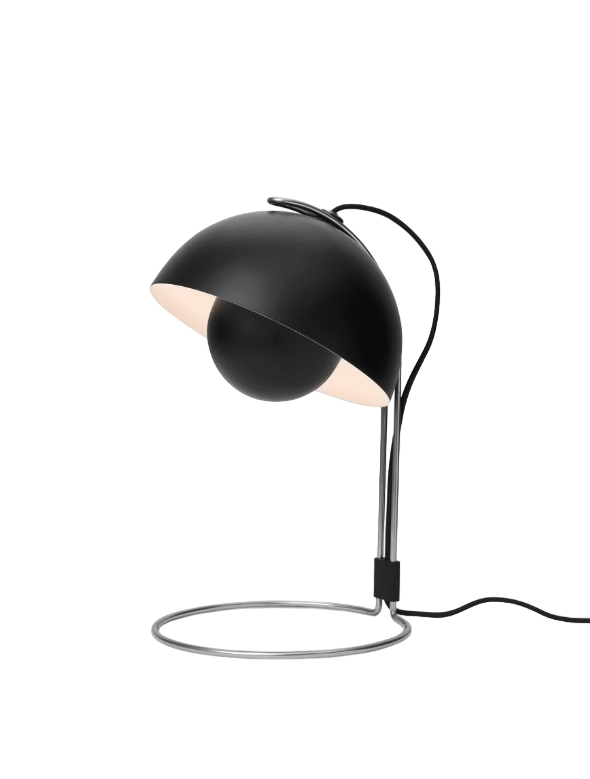
Flowerpot VP4 by verner panton

The VP4 model adapts the form of the iconic Flowerpot into a stylish table lamp. The petite proportions of the VP4 allow for easy placement without compromising the distinct character and aesthetic identity of the original design. The VP4 embodies the expressive visual language of Verner Panton and his affinity for intriguing forms.

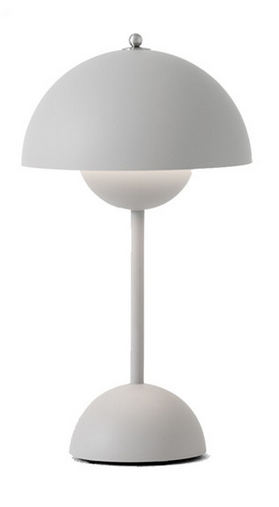
Flowerpot VP9 by verner panton

In 1968, Verner Panton designed the organic and beautiful Flowerpot. The flowerpot lamp is made as a ceiling lamp, wall lamp and table lamp. It consists of two round screens of lacquered metal. Flowerpot is today produced by & tradition and is a well-known icon throughout the world.

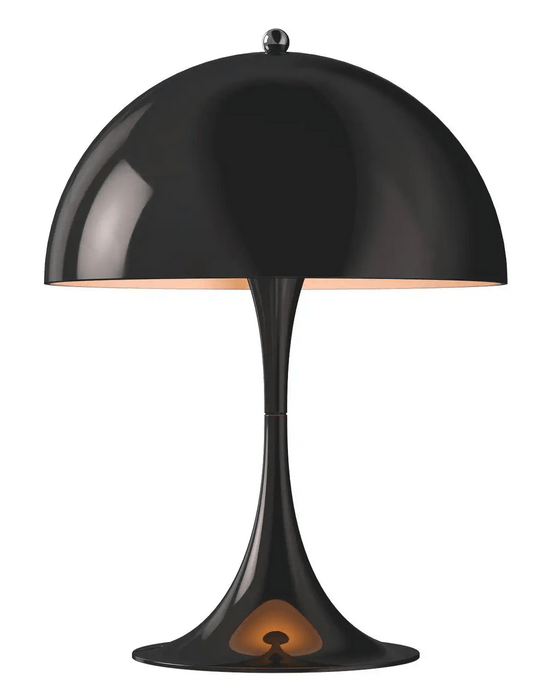
Panthella mini by verner panton

A modern and smaller version of the classic Panthella lamp designed by Verner Panton. The Panthella Mini was designed in collaboration with Louis Poulsen in 1971. The lamp comes in the most beautiful colors, which come from Verner Panton’s last project at Trapholt. Panthella is ideal for spreading a nice lighting in the home, and you can place it in the windowsill, on the nightstand or in a third place. The lamp is manufactured with a lacquered metal screen in deep-drawn steel and it also has three light levels. The lamp came on the street in September 2016.

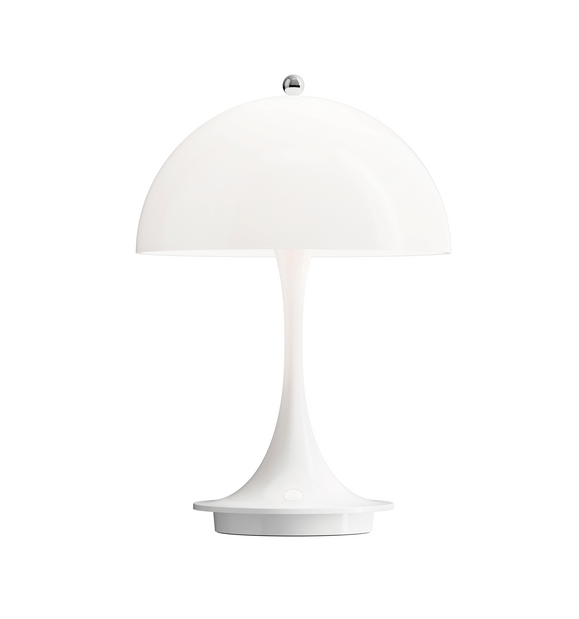
Panthella Portable by verner panton

Verner Panton’s Panthella Portable table lamp is a modern classic that combines functionality, elegance, and innovation. With its organic, soft shape and iconic, opal white shade, the lamp creates a soft, pleasant light that fills the room with warmth and atmosphere. The portable version of the classic Panthella lamp offers the freedom to place the light wherever you desire, while maintaining the same unique aesthetic that has made the Panthella series famous.

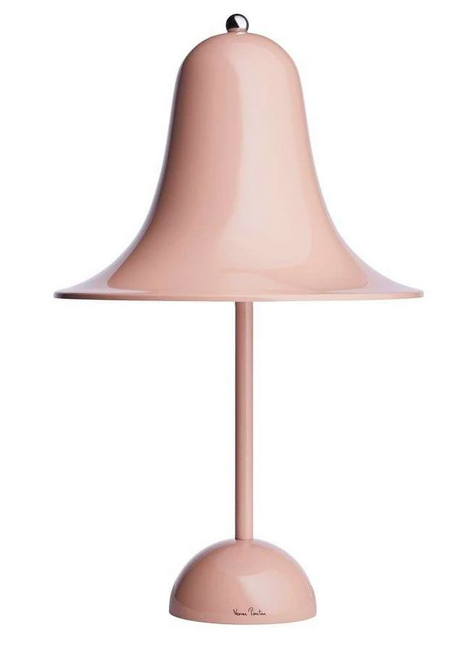
Pantop by verner panton

Verner Panton’s Pantop table lamp is a statement of modern elegance and functionality. With its simple yet striking form and iconic bell-shaped shade, the lamp creates a distinctive and stylish expression that fits seamlessly into both modern and classic interiors. The unique shade provides soft, diffused light that spreads evenly, creating a pleasant atmosphere in the room.

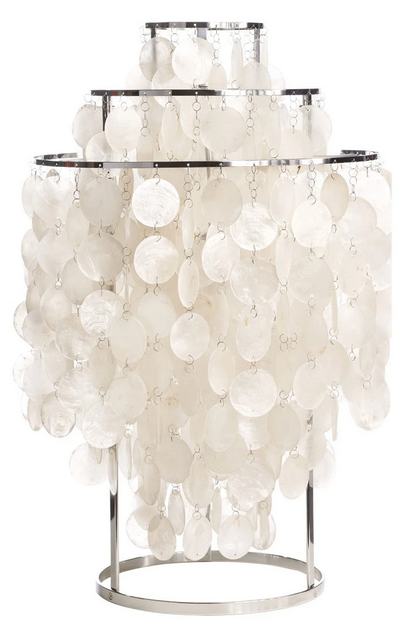
Fun 1 tm by verner panton

Verner Panton’s Fun table lamp is a spectacular design that brings life and drama to any room. Its characteristic shade, made from small slices of perlemor, creates a warm, diffused light that offers a unique and inviting atmosphere. The Fun table lamp is a beautiful example of Panton’s innovative approach to lighting, where aesthetics and function merge into an artistic expression.

VL Ring Crown by Vilhelm Lauritzen

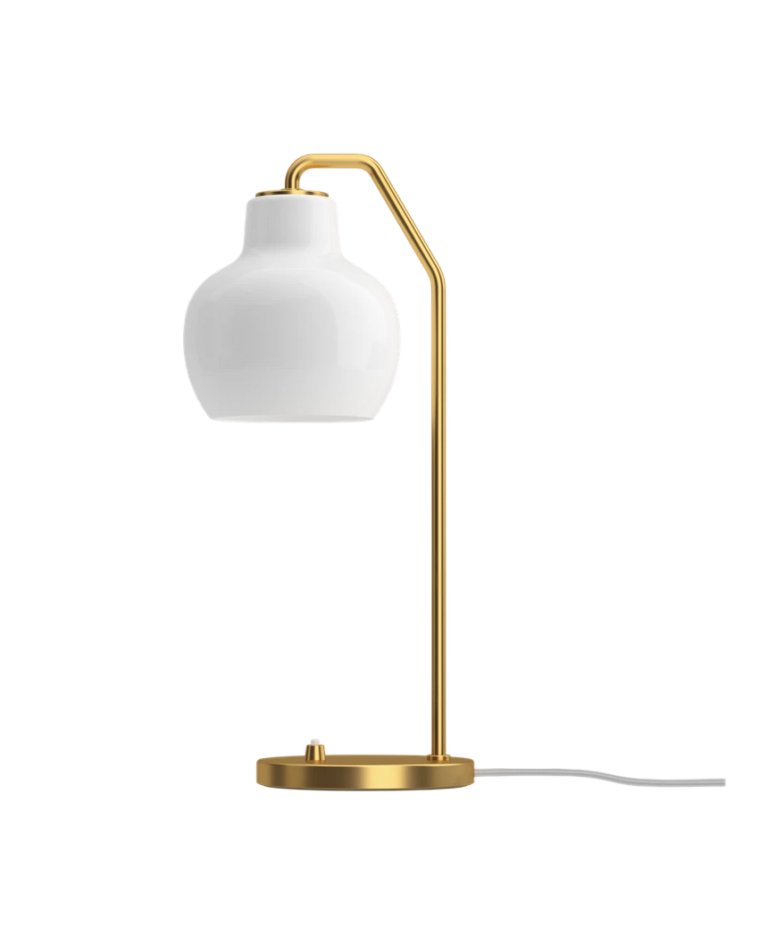
Introduced in 2025, the VL Ring Crown Floor and Table lamps honour the original VL Ring Crown series, which has a history spanning over 80 years. The VL Ring Crown lamps are part of a series that include a pendant, chandeliers and wall lamps, created by the Danish architect Vilhelm Lauritzen for Radiohuset (The Radio House), headquarters of the Danish Broadcasting Corporation, which was inaugurated just after World War II ended in 1945.

Staying true to the original design and materials, the VL Ring Crown Floor and Table lamps feature polished brass and glossy, three-layered, mouth-blown opal white glass shades, beautifully complementing the lamp designs originally installed in Radiohuset. Vilhelm Lauritzen also designed the VL 38, VL Studio and VL 45 lamps for Radiohuset.
VL 38 by Vilhelm Lauritzen

Vilhelm Lauritzen’s VL38 table lamp is a timeless design that beautifully combines functionality and aesthetics. With its simple and elegant form, the lamp creates a pleasant and soft light that is both practical and atmospheric. The distinctive shade with a metallic finish and the sleek brass base give the lamp a modern and sophisticated expression, making it a perfect fit for both classic and contemporary interiors.

Table Lamp by Vilhelm Lauritzen

This elegant brass table lamp, designed by Vilhelm Lauritzen, combines simplicity with sophisticated style. With its frame of patinated brass and minimalist shade, the lamp creates a soft and atmospheric light. The timeless design fits perfectly into both modern and classic interiors, adding warmth and elegance to any room.

VL45 Portable by Vilhelm Lauritzen

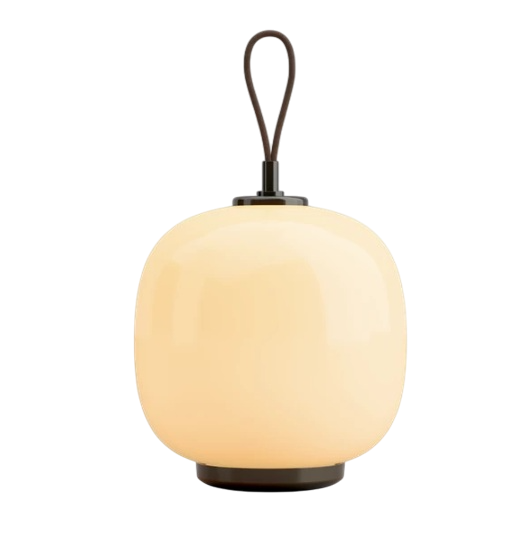
Based on Vilhelm Lauritzen’s famous Radiohus Pendant VL 45, you can take the VL 45 Portable anywhere, indoors and outdoors, to create light and ambience with its classic mouth-blown opal glass.


The iconic Danish architect Vilhelm Lauritzen designed the VL 45 Radiohus Pendant in the 1940s for his gesamtkunstwerk, the Danish Broadcasting House, Radiohuset. The pendant was originally named ‘The Office Lamp’.
 

Historical photos capture the VL 45 Radiohus above the Eames Lounge Chair in the iconic American couple Charles and Ray Eames’ home and studio in 1950s Los Angeles. Today, the design maintains its lighting benefits, and sophisticated look and feel that suit today’s interior trends so well.

Lorem ipsum dolor sit amet, consectetur adipiscing elit. Ut elit tellus, luctus nec ullamcorper mattis, pulvinar dapibus leo.