Experience the ultimate blend of comfort and aesthetics with our curated collection of Danish design chairs. Whether you are seeking a sculptural lounge chair for your living room or timeless dining chairs for your home, our selection features the very best of Scandinavian furniture history. Explore world-renowned classics crafted with exceptional quality and enduring style.
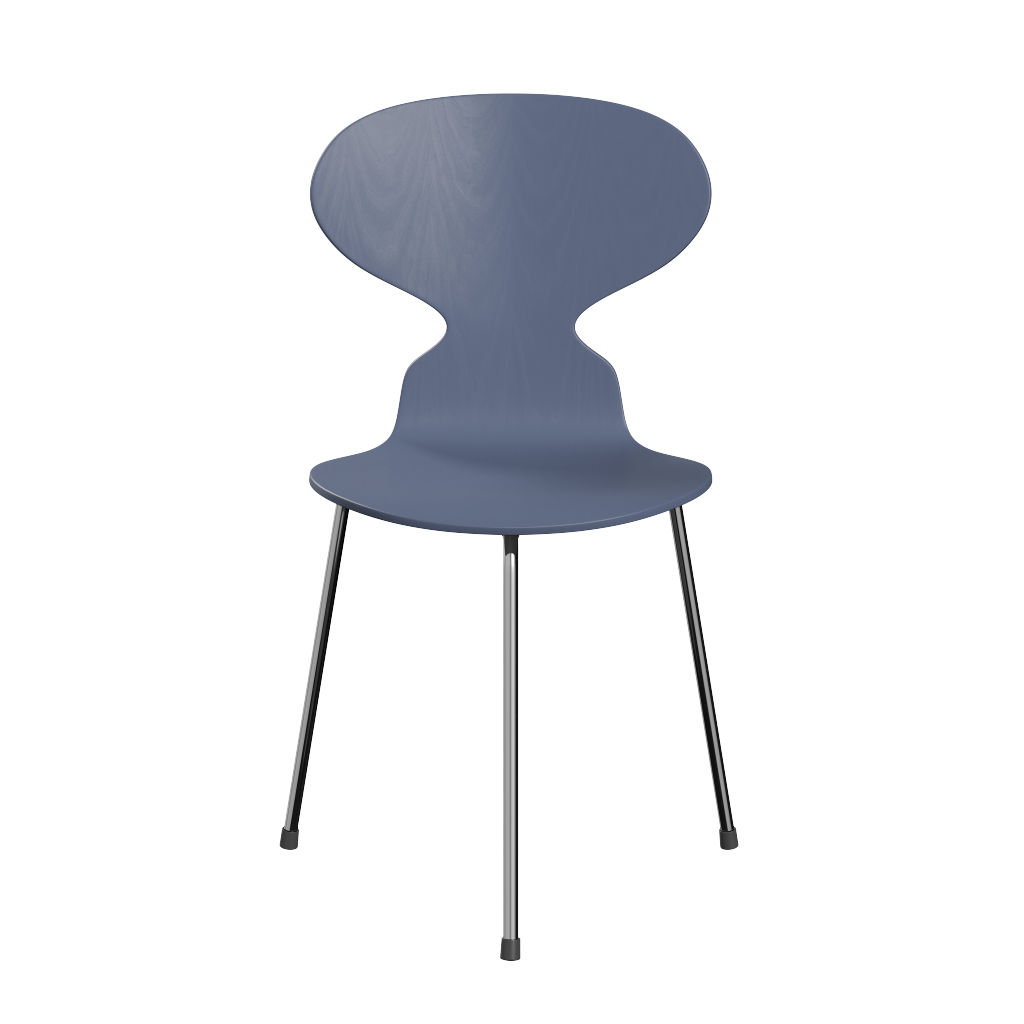
The Ant™ chair’s visual expression is delicate and artful, much like the curves of a musical instrument. Designed by Arne Jacobsen in 1952, the chair is made from nine layers of pressure moulded veneer. Its elegant shape disguises its remarkable strength and comfort. The 3101 model retains the sculptural simplicity of the original three-legged Ant design while expanding its distinct, expressive profile to suit a myriad of interior settings. Although the four-legged version of the Ant chair was occasionally produced during Jacobsen’s lifetime, it was only put into official production in 1971.
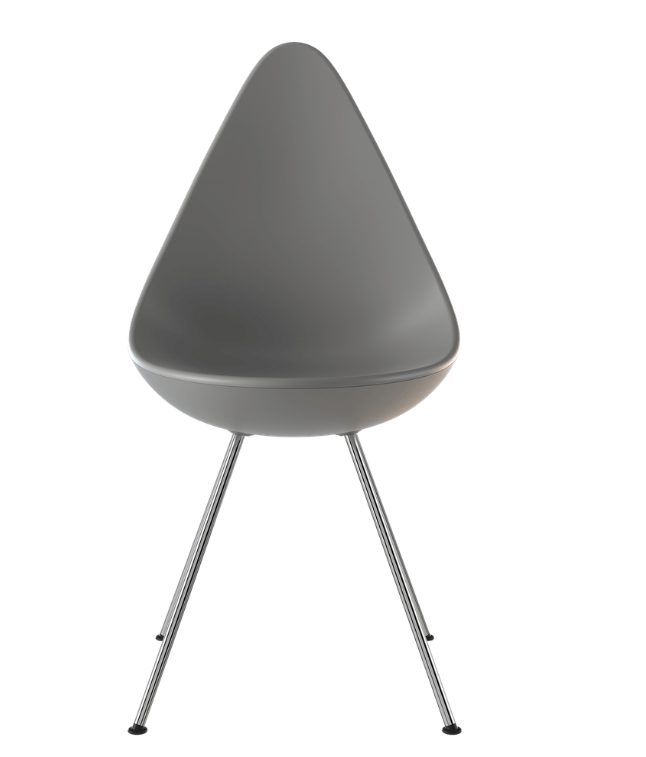
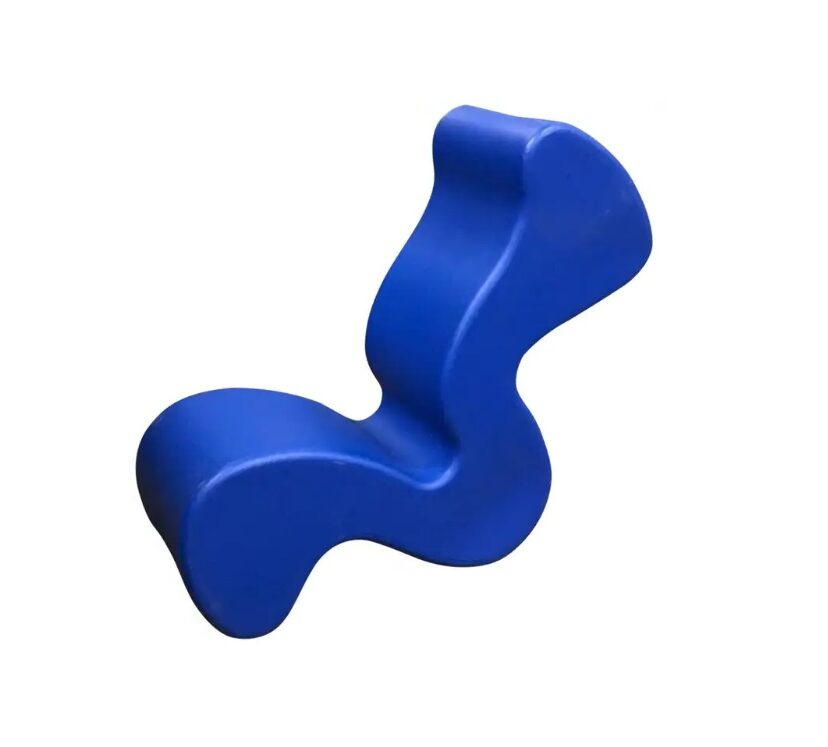
The Drop™ chair draws inspiration from the feeling of an embrace, but it has also been designed for freedom of movement; creating a unique sense of comfort. Designed by Arne Jacobsen, it was originally created for the SAS Royal Hotel in Copenhagen before being relaunched in 2014. It is said to be Jacobsen’s favourite chair among his many designs.
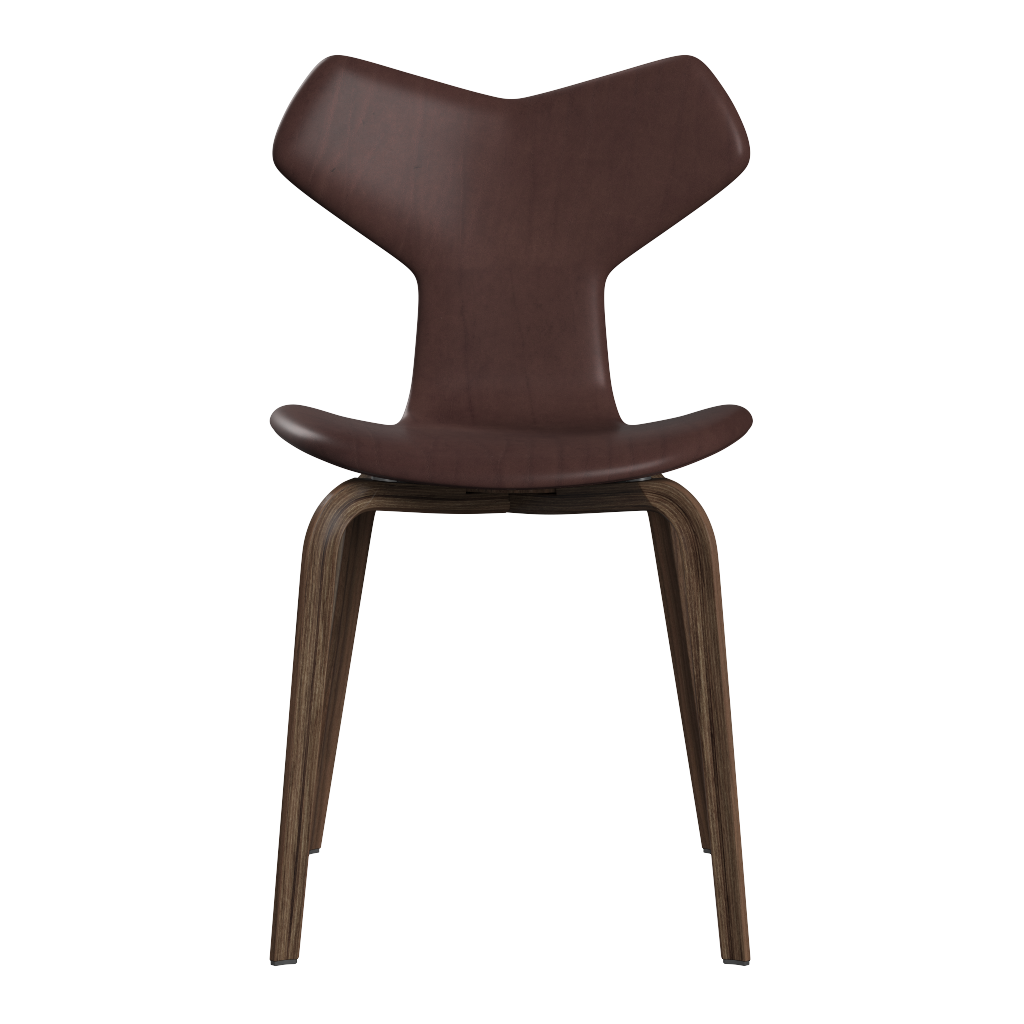
The Grand Prix™ chair is an iconic Arne Jacobsen design with a graphic edge. It was introduced at the Designers’ Spring Exhibition at the Danish Museum of Art & Design in 1957. Later that year, the chair was displayed at the Triennale in Milan, where it received the Grand Prix, the finest distinction of the exhibition. The celebrated chair comes in a range of models and can be customised with an almost endless variety of colours, wood types and upholstery. Wooden legs are angled smoothly outwards in this design, mimicking the steel legs of Jacobsen’s other plywood chairs. This is one of the few Arne Jacobsen chair designs with wooden legs. Remember that the Grand Prix chair with wooden legs is not stackable.
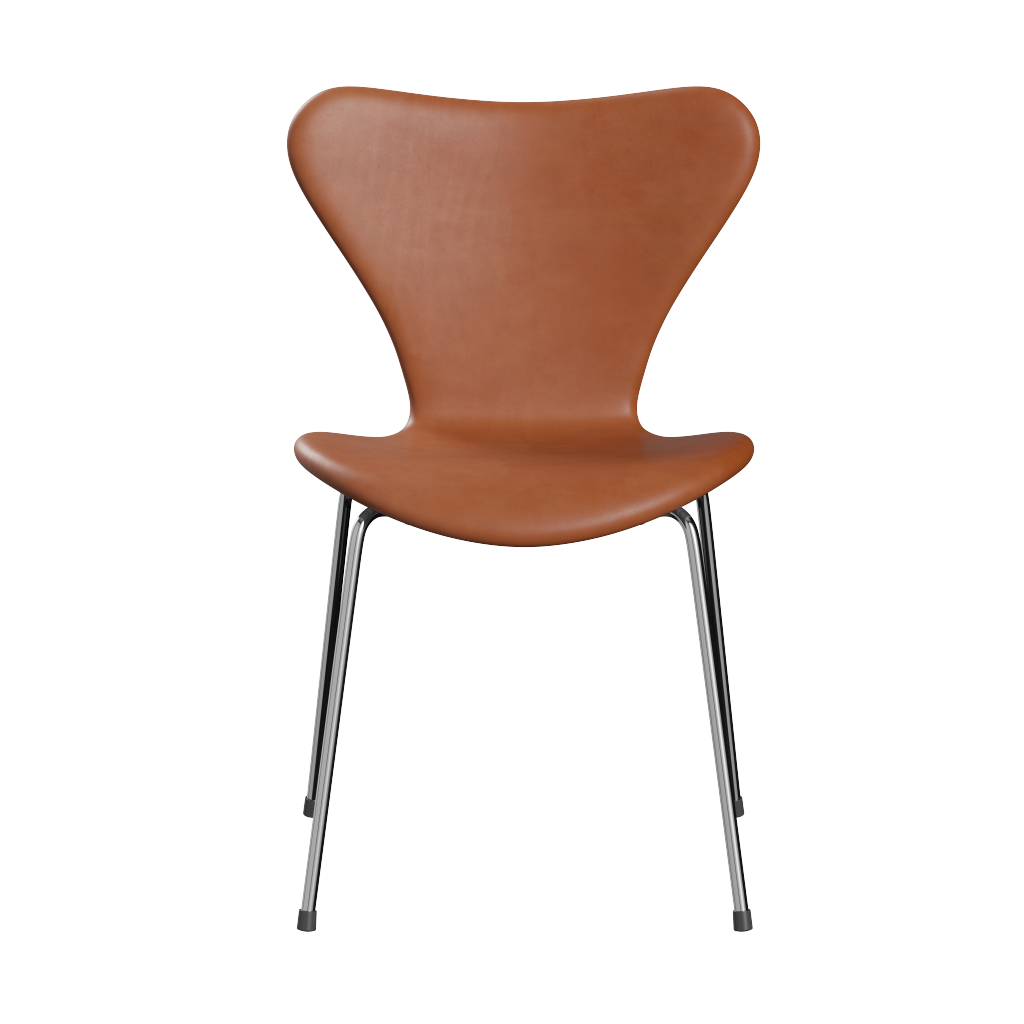
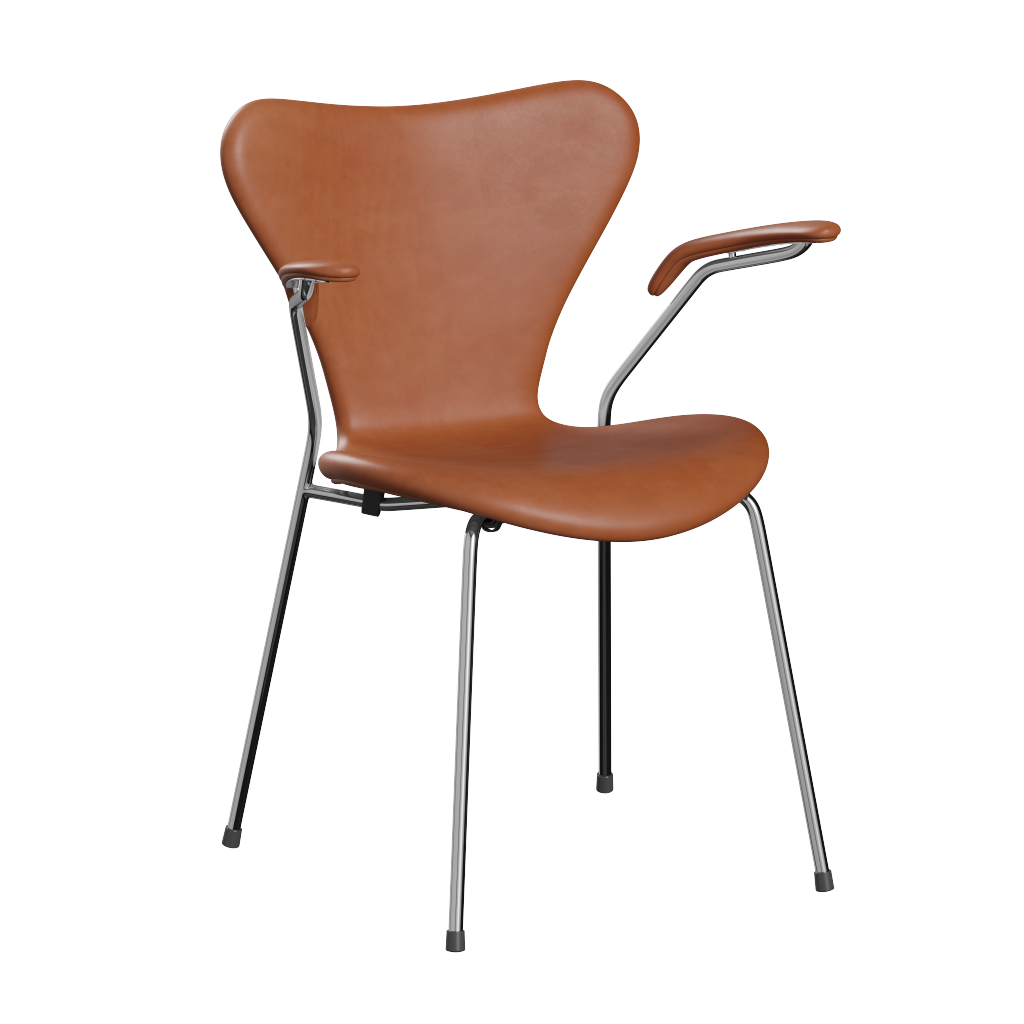
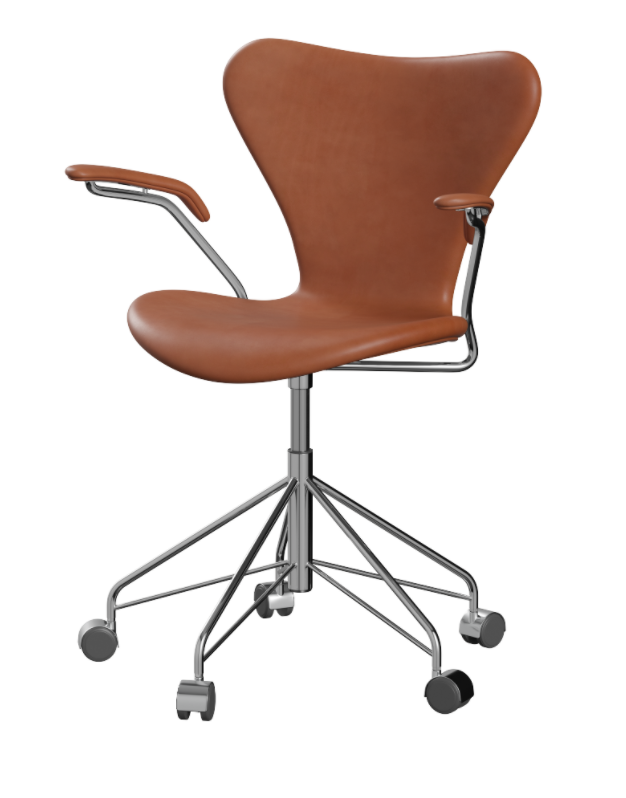
The Series 7™ chair is an icon in modern furniture history, designed by Arne Jacobsen in 1955. Its unique shape is timeless and incredibly versatile, displaying character without overpowering the eye. The chair is made from 9 layers of pressure moulded veneer for strength, flexibility and durability despite its slender form. This is the most popular design within Fritz Hansen’s chair collection. The 3107 has slim yet strong steel-tubed legs that complement the shell’s curved profile. Legs extend just beyond the edge of the seat, allowing chairs to be easily arranged in rows or stacked for storage. The base/legs are discreetly mounted to a circular disc beneath the seat further enhancing the clean, minimal aesthetic of Jacobsen’s design.
Arne Jacobsen’s by far best-selling chair is the world-famous “The 7′”. The 7 was designed in 1955 and was like many of his other designs with a very unique shape. The chair is very beautiful and simple with a great seating comfort. The chair is available upholstered, fully upholstered or just as a clean shell in different types of wood. The 7 ‘will forever be an icon that can be found in schools, offices, around the dining table or just for decoration in the corner.
Arne Jacobsen’s by far best-selling chair is the world-famous “The 7′”. The 7 was designed in 1955 and was like many of his other designs with a very unique shape. The chair is very beautiful and simple with a great seating comfort. The chair is available upholstered, fully upholstered or just as a clean shell in different types of wood. The 7 ‘will forever be an icon that can be found in schools, offices, around the dining table or just for decoration in the corner.
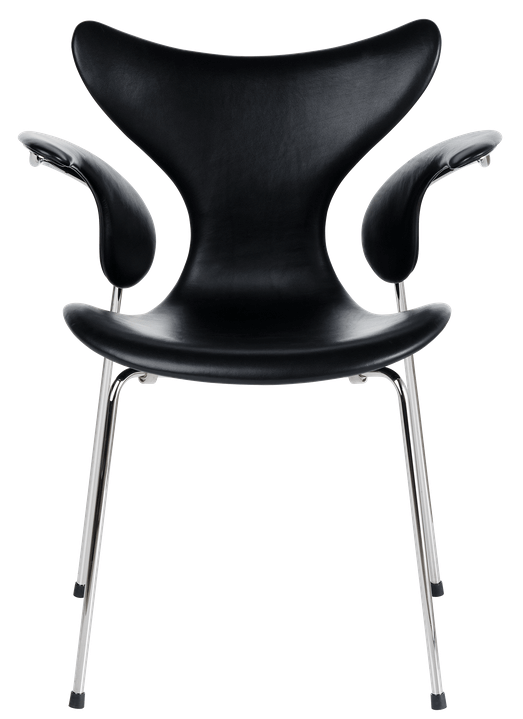
Arne Jacobsen first created the sleek, curvaceous Lily™ chair for Danmarks Nationalbank. Its characteristic wide shoulders and slim waist are striking examples of Jacobsen exploring and challenging the possibilities of veneer to create perfect curves and offer ultimate comfort. The Lily 3208 has angled armrests which accentuate the chair’s wood grain and require expert craftsmanship. This model is the pinnacle of Arne Jacobsen’s plywood designs and experimentations with wood veneer.
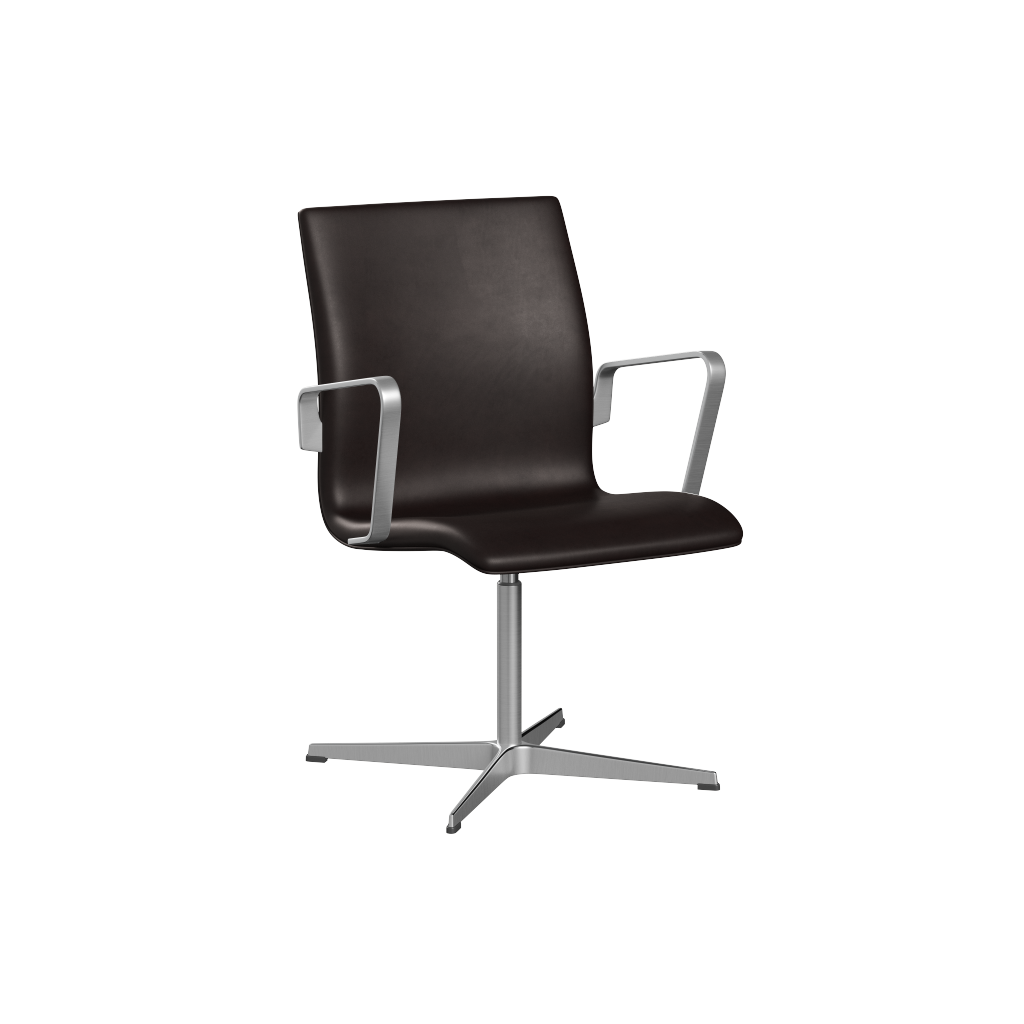
In 1965, Arne Jacobsen designed the Oxford chair for the professors at St. Catherine’s College, Oxford. Arne Jacobsen received an honorary doctorate from Oxford for his fantastic design. The chair was later designed in several different versions with different heights, colors, materials, with and without wheels and armrests. The Oxford chair is both perfect at the desk or around the dining table at home.
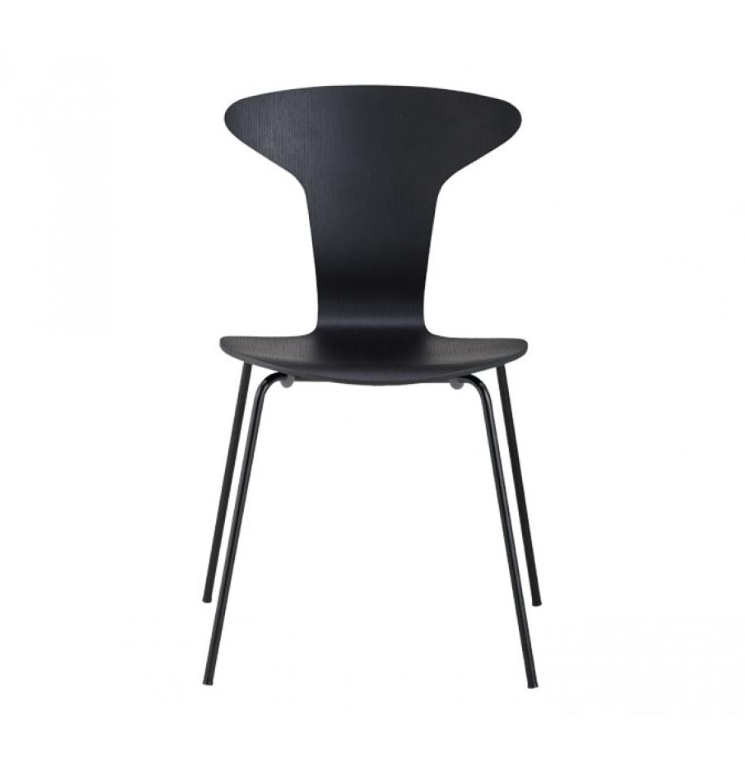
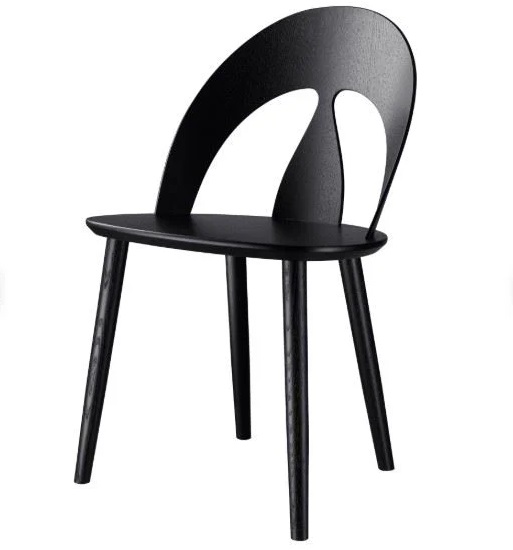
The Munkegaard Chair, designed by Danish architect and designer Arne Jacobsen, is a refined example of functional Danish modernism. Created in the 1950s for the Munkegaard School in Gentofte, Denmark, the chair was designed with a strong focus on comfort, durability, and everyday use in an educational environment.
The chair is characterized by its simple, organic form and carefully shaped plywood seat and backrest, which provide ergonomic support while maintaining a light and elegant expression. Its clear construction and honest use of materials reflect Jacobsen’s belief that good design should be practical, unobtrusive, and closely connected to its purpose.
The Munkegaard Chair demonstrates Arne Jacobsen’s ability to combine architectural thinking with furniture design. Timeless in both form and function, it remains a classic piece of Danish design that fits naturally into both public and private interiors.
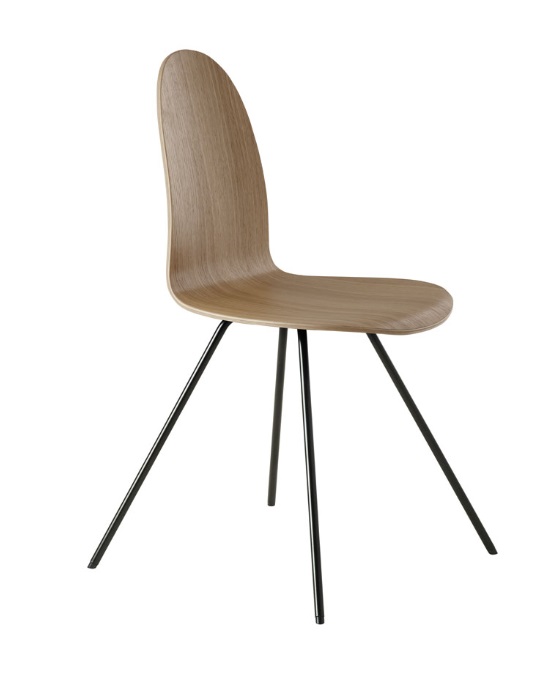
The Tungen Chair, designed by Danish architect and designer Arne Jacobsen, is a distinctive example of early Danish modern furniture design. Created in the 1950s for the Tungen community center in Norway, the chair reflects Jacobsen’s ability to combine functionality with a clear and expressive form.
The chair is characterized by its sculptural, curved seat and backrest, typically made of molded plywood. The organic shape provides both comfort and visual lightness, while the refined proportions give the chair an elegant and contemporary appearance. Its design balances simplicity with a strong sense of character.
With the Tungen Chair, Arne Jacobsen demonstrates his talent for creating furniture that is closely connected to its architectural context. The chair remains a timeless design, appreciated for its craftsmanship, comfort, and enduring modern aesthetic.
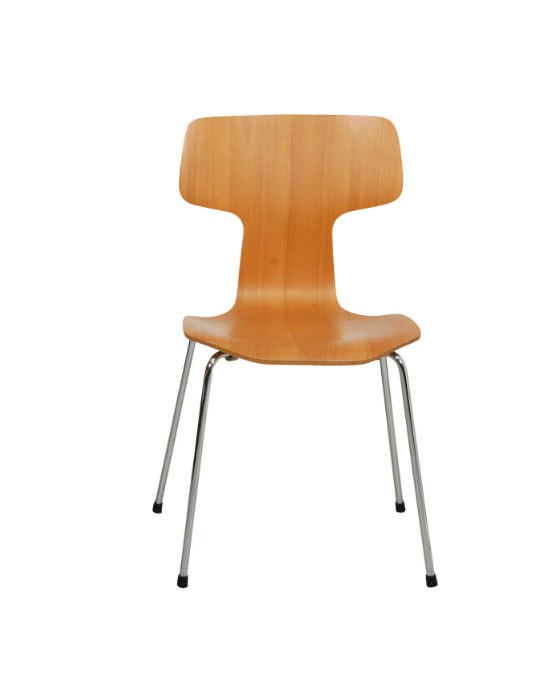
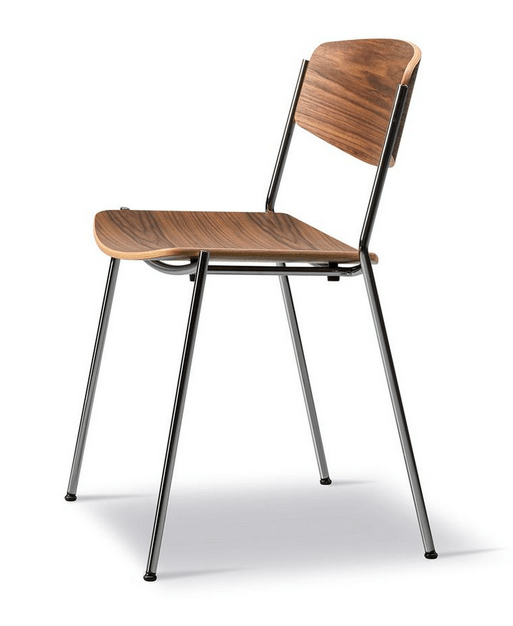
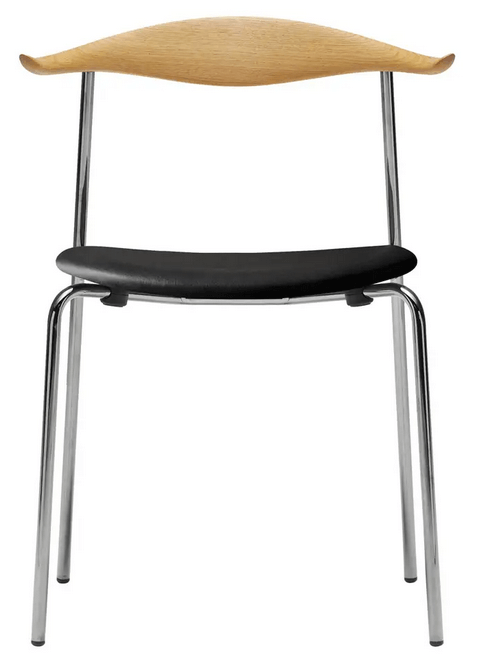
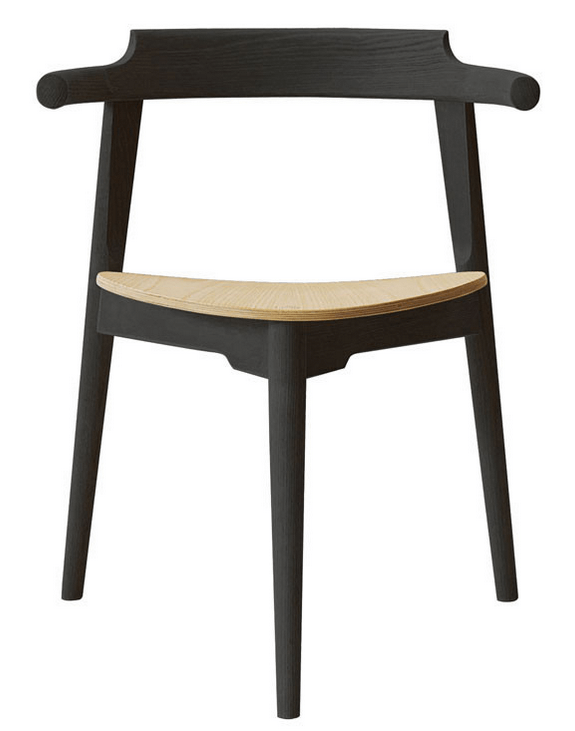
An iconic piece of Danish modernism, the T-Chair by Arne Jacobsen is a clear expression of functional and sculptural design. Designed in the 1950s, it features a distinctive molded plywood seat and backrest with the characteristic T-shaped silhouette that gives the chair its name. The organic wooden form is paired with slender chrome-plated steel legs, creating a light and elegant contrast. Simple, practical, and timeless, the T-Chair reflects Jacobsen’s mastery of form, ergonomics, and modern materials.
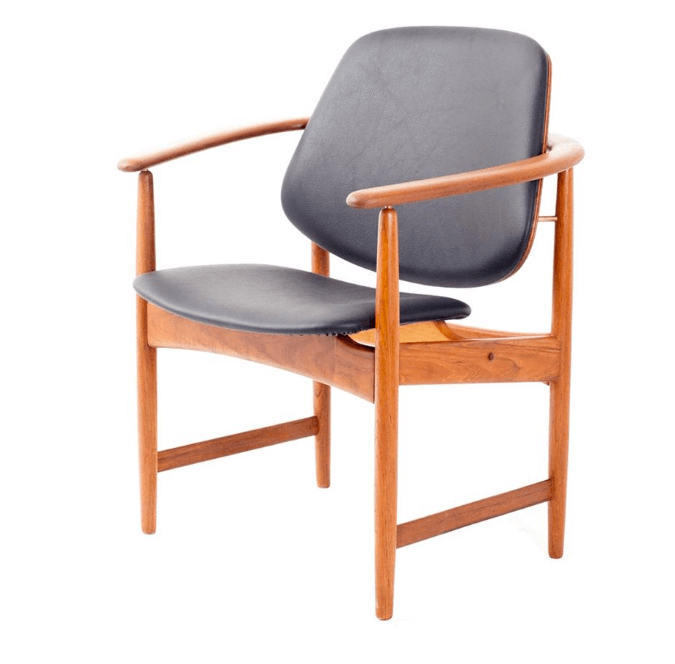
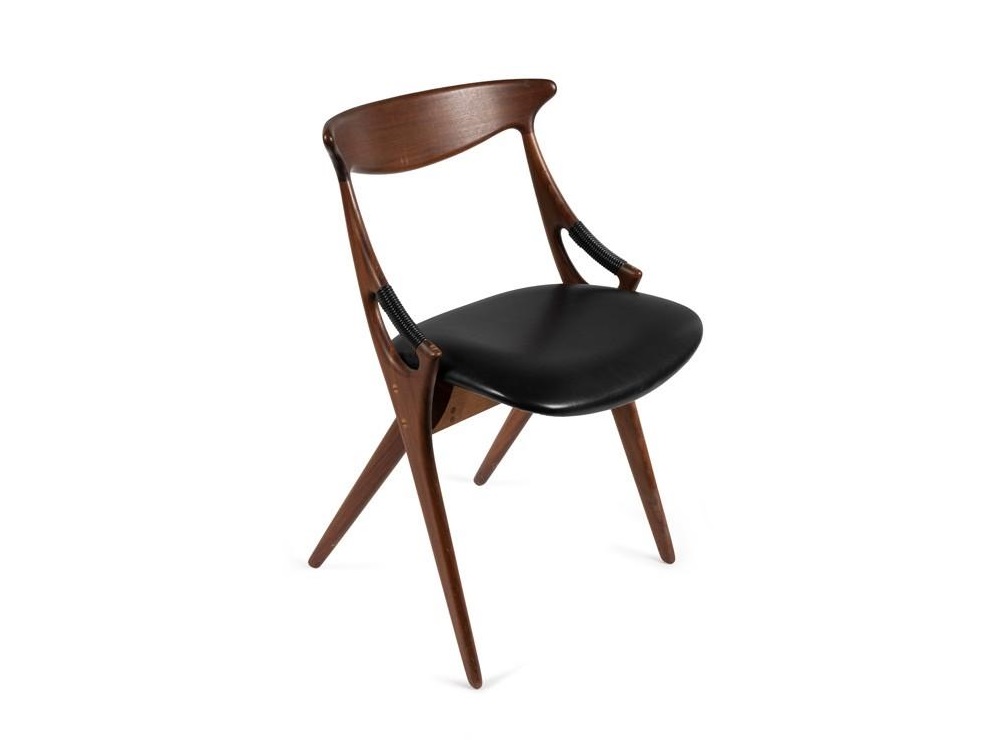
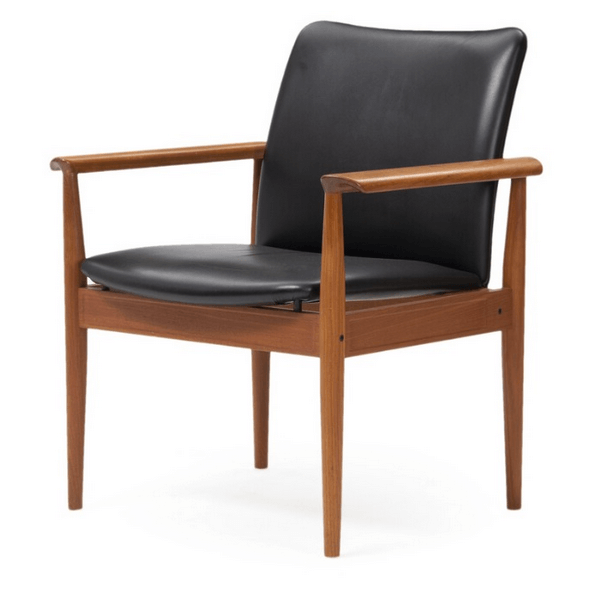
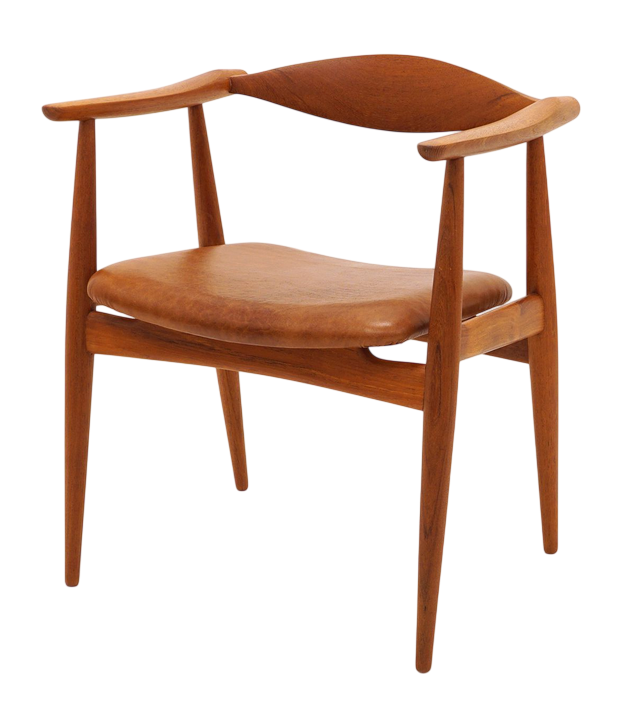
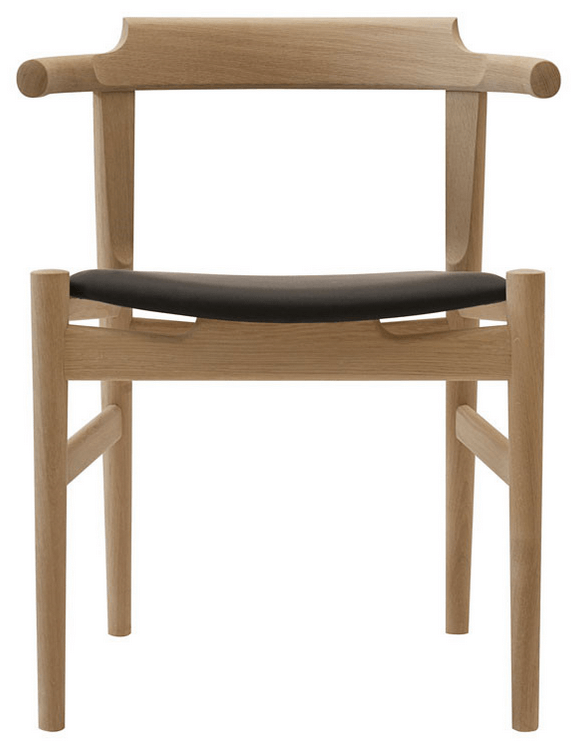
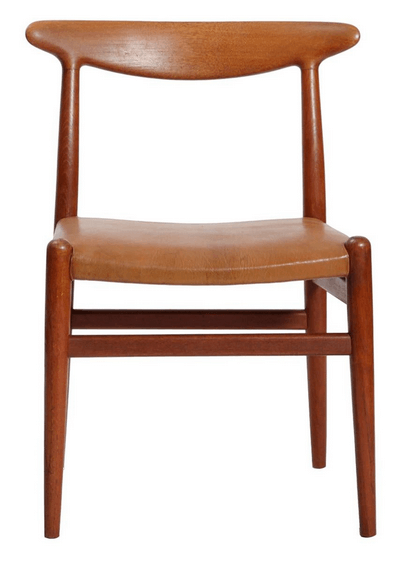
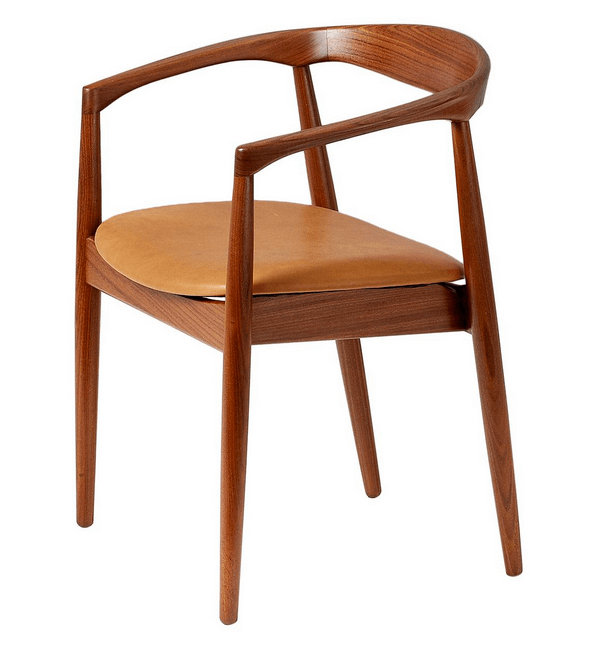
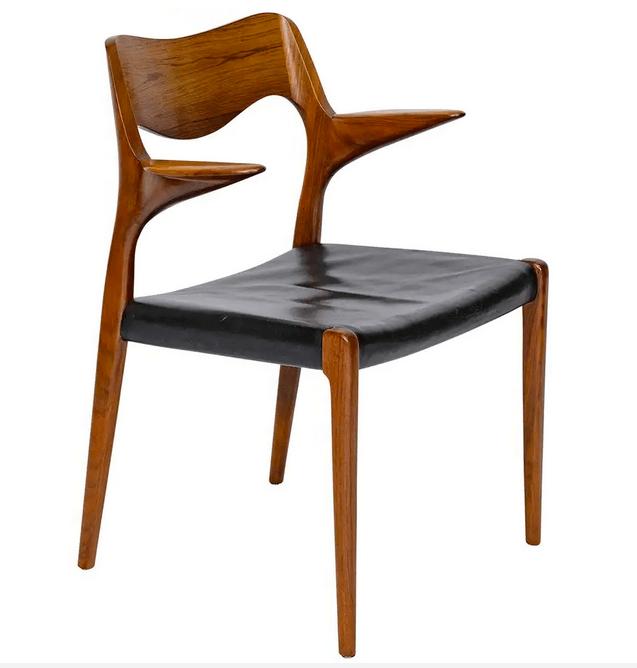
A refined example of Danish mid-century modern design, this armchair by Arne Hovmand-Olsen dates from the 1960s. Crafted in warm teak wood, it features elegant, softly rounded lines and beautifully shaped armrests. The seat and back are upholstered in black leather, offering a striking contrast to the wood while providing comfort and support. Timeless and understated, the chair reflects Hovmand-Olsen’s focus on craftsmanship, proportion, and functional beauty.
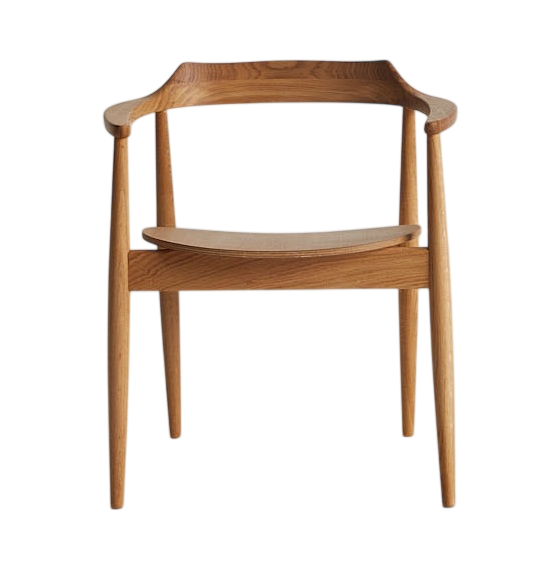
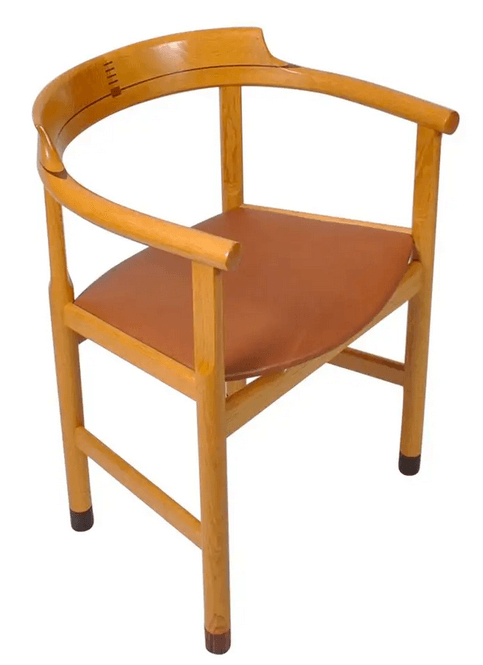
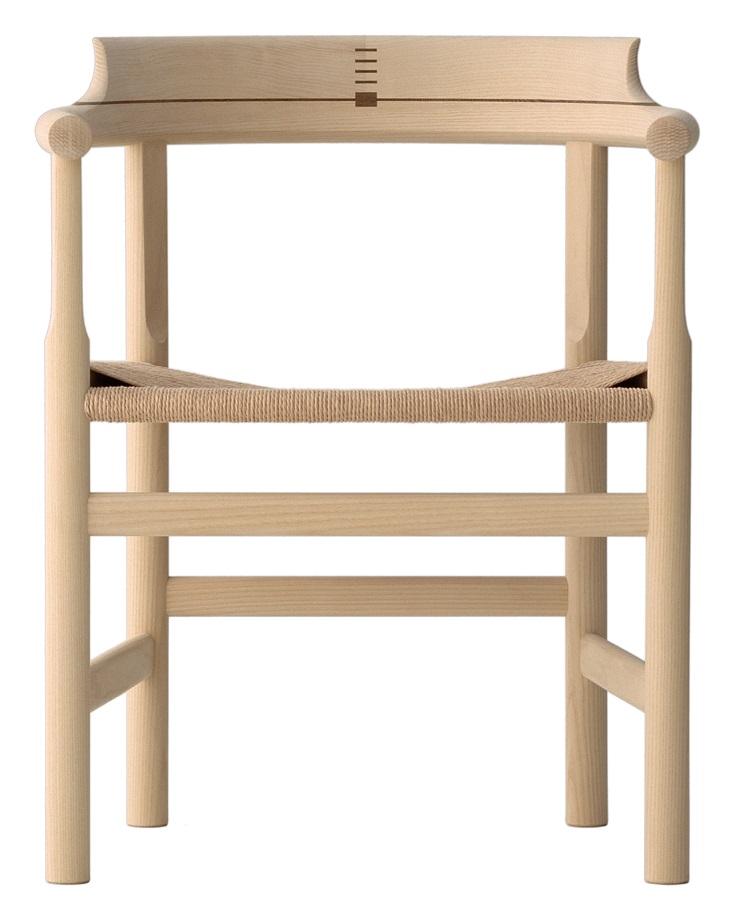
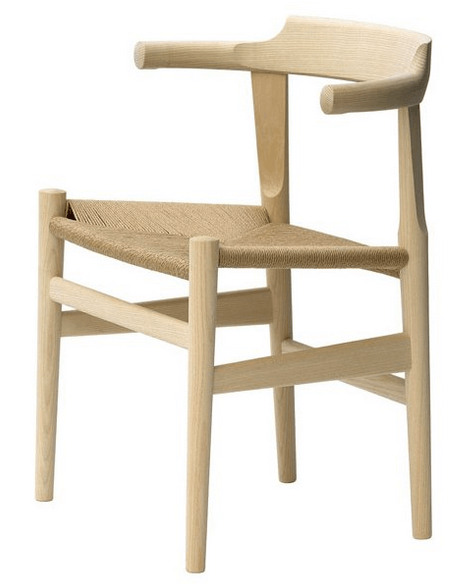
Designed by Arne Wahl Iversen in 1959. At that time Denmark was entering a new era. Arne
was inspired by the telephone which you recognize when you see the chair from above. Fur- thermore, it was thought to be a comfortable chair beside the telephone in the house. The
arm- and backrest were originally made from one single piece of wood but today made with mortise and tenon joints which make the chair exceptionally strong.
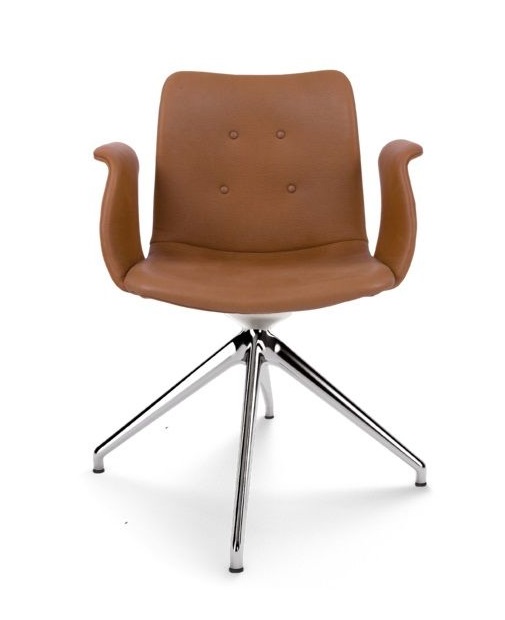
The Primum Chair, designed by Danish designer Bent Hansen, is a contemporary seating design that combines comfort, functionality, and refined aesthetics. Created with a strong focus on ergonomics, the chair is designed to support the body naturally, making it suitable for both professional environments and private interiors.
The chair is characterized by its softly curved seat and backrest, which provide flexibility and a high level of sitting comfort. Its clean lines and balanced proportions give the Primum Chair a calm and modern expression, while the choice of materials reflects high craftsmanship and durability.
With the Primum Chair, Bent Hansen demonstrates a design philosophy where form follows function without compromising on elegance. The result is a versatile and timeless chair that fits seamlessly into modern Scandinavian interiors.
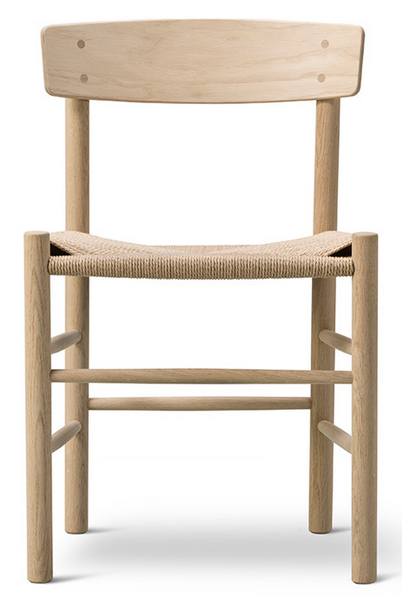
The J39 Chair, designed by Danish architect and furniture designer Børge Mogensen, is one of the most iconic pieces of Danish design. Created in 1947, the chair is often referred to as “The People’s Chair” because it was designed to be affordable, durable, and suitable for everyday use in a wide range of homes.
The J39 Chair is characterized by its honest construction in solid wood and its hand-woven paper cord seat, which provides both comfort and flexibility. The simple, well-balanced form reflects Mogensen’s belief in functional design rooted in traditional craftsmanship and practical needs rather than decoration.
With its timeless expression and strong emphasis on quality, the J39 Chair embodies Børge Mogensen’s vision of furniture designed to last for generations. It remains a classic example of Scandinavian design, valued for its simplicity, comfort, and enduring appeal.
The 3237 Chair, designed by Danish furniture designer Børge Mogensen, is a classic example of functional and honest Scandinavian design. Created in the 1950s, the chair reflects Mogensen’s commitment to simplicity, durability, and everyday usability.
The chair is characterized by its solid wooden frame and well-defined, straightforward lines. Its sturdy construction provides excellent stability and comfort, while the balanced proportions give it a calm and timeless appearance. Designed for practical use, the 3237 Chair fits naturally into both private homes and public interiors.
With the 3237 Chair, Børge Mogensen demonstrates his belief that good furniture should be useful, well-crafted, and long-lasting. The chair remains a refined example of Danish design, where quality materials and thoughtful construction come together in a clear and functional form.
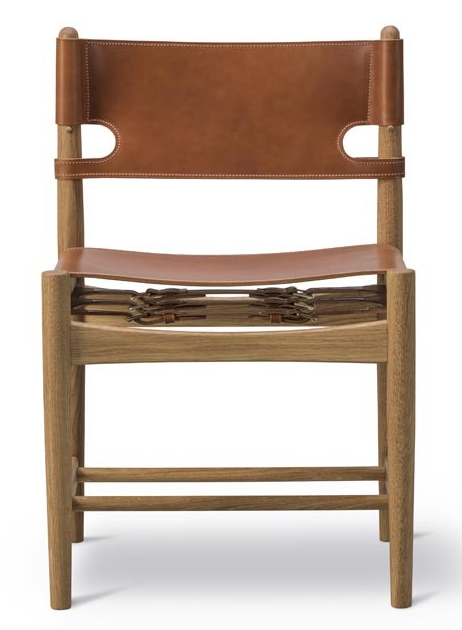
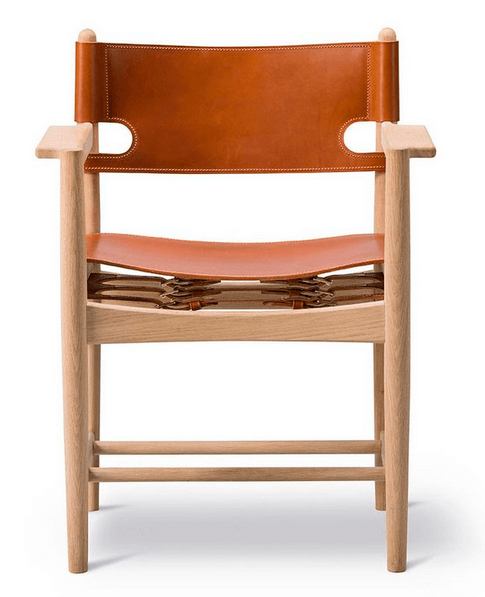
The Spanish Dining Chair is a generous and exquisitely crafted chair in Børge Mogensen’s well known series of saddle leather chairs. Over time, as the leather expands, the adjustable straps can be tightened. A true statement of craftsmanship. Solid oak or walnut is combined with the highest calibre saddle leather in a chair that will only become more beautiful with age.
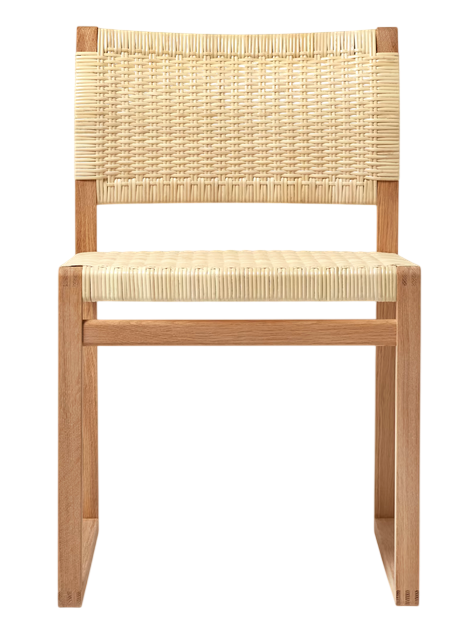
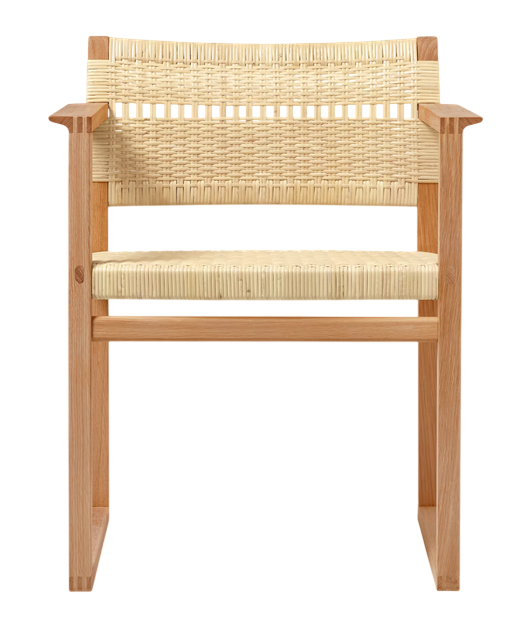
The BM61 chair was designed by Børge Mogensen in 1958, based on a minimal, yet extremely robust construction. The structured design is, however, enriched with outstanding comfort and carefully crafted details, such as its exposed finger joints and seat and back in cane wicker.
The BM62 chair was designed by Børge Mogensen in 1958, based on a minimal, yet extremely robust construction. The structured design is, however, enriched with outstanding comfort and carefully crafted details, such as its exposed finger joints and seat and back in cane wicker.
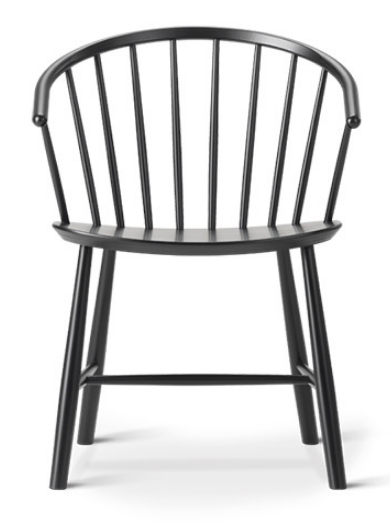
The J18 chair was designed by Børge Mogensen in 1945. Like Mogensen’s other well-known FDB chairs, this model is distinguished by its clean, Nordic design with no decoration or unnecessary trimmings, and where the focus is on function and simplicity. The comfortable chair was inspired by the old eighteenth-century English Windsor chairs. The solid backrest continues into the armrests, which fit under most tabletops. The comfortable, bowl-shaped wooden seat slopes gently backwards.
Børge Mogensen’s classic J42 Chair clearly reflects his design philosophy. Precise proportions with simple horizontal and vertical lines are used to construct a curved spindled backrest and angular armrests. Crafted in solid wood the design has a timeless quality that is built to provide lasting comfort.
The J45 chair from FDB Møbler is a timeless classic designed by Børge Mogensen. This chair is crafted with care and quality in mind, making it both durable and comfortable. With its simple and functional design, the J45 chair fits beautifully into any home.
The Lynderup chair is a flexible stacking chair for collaboration spaces, auditoriums, cafés and commercial settings. Lynderup is a flexible stacking chair with plywood shells, designed by Børge Mogensen in 1954. The Lynderup chair is eco-labelled and was, when introduced in 2021, adapted with circular design principles. Thus all components are interchangeable and can be renewed separately as needed.
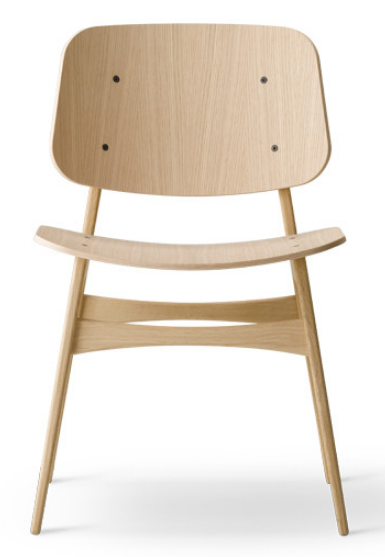
The Søborg Chair, designed by Danish designer Børge Mogensen, is a classic example of functionalist Danish design. Created in the mid-20th century, this chair reflects Mogensen’s philosophy of simplicity, practicality, and comfort. The design emphasizes clean lines, sturdy construction, and the use of natural materials such as solid wood and leather, making it both durable and visually appealing. Its timeless aesthetic allows it to fit seamlessly into both modern and traditional interiors. The Søborg Chair is not only a piece of furniture but also a reflection of Mogensen’s commitment to creating designs that are accessible, enduring, and made to be lived with every day.
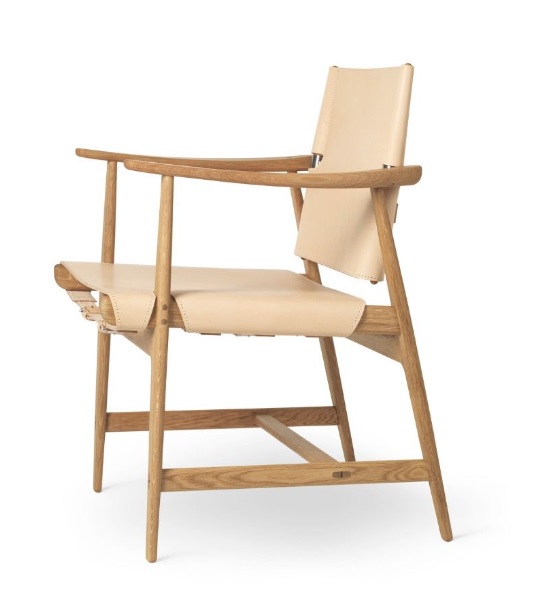
Børge Mogensen designed the Huntsman Chair in 1950 and it perfectly encapsulates the timeless qualities of the designer, allowing the premium materials to speak for themselves. The stringent chair serves as both a dining chair and a lounge chair.
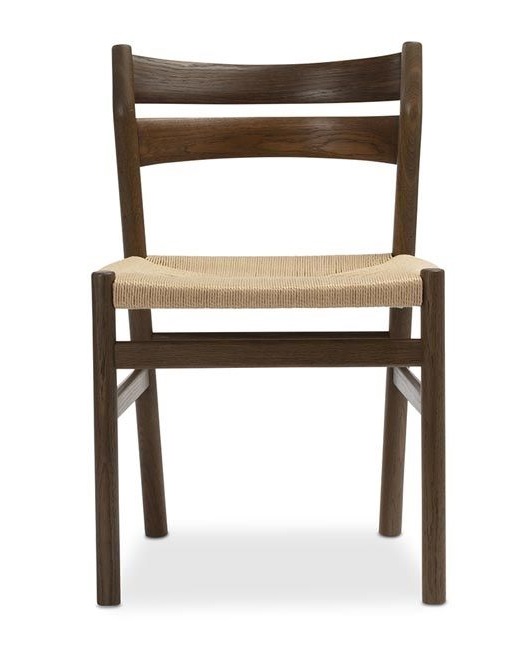
The BM1 Chair, designed by Danish designer Børge Mogensen, is a hallmark of Danish modern design. Characterized by its sturdy construction, clean lines, and functional approach, the chair combines simplicity with comfort. Crafted from solid wood and often paired with a woven paper cord seat, the BM1 reflects Mogensen’s dedication to natural materials and craftsmanship. Its timeless design makes it suitable for a variety of interiors, from dining rooms to living spaces, while its durable construction ensures it can be enjoyed for generations. The BM1 Chair embodies Mogensen’s philosophy of creating practical, enduring furniture that prioritizes both usability and aesthetic harmony.
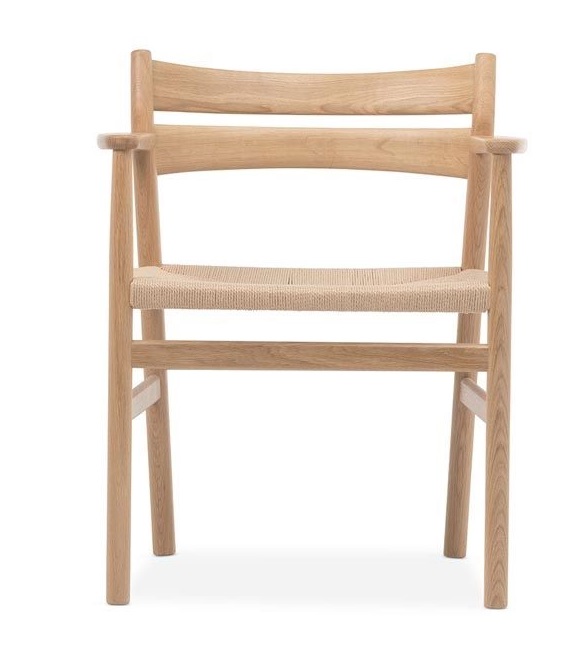
The BM2 chair, a Danish furniture classic designed by Børge Mogensen.
The chair is the perfect combination of elegant design and excellent comfort. The chair has armrests and a wider seat than the BM1 dining chair, giving the chair great seating comfort whether you use it at the dining table or as a lounge chair. It’s made to meet your needs, whether you need a chair to work at your desk or to gather around a meeting table.
In addition to its classic looks, the BM2 chair is also incredibly durable and hard-wearing. It’s designed to withstand daily use and will last for years to come.
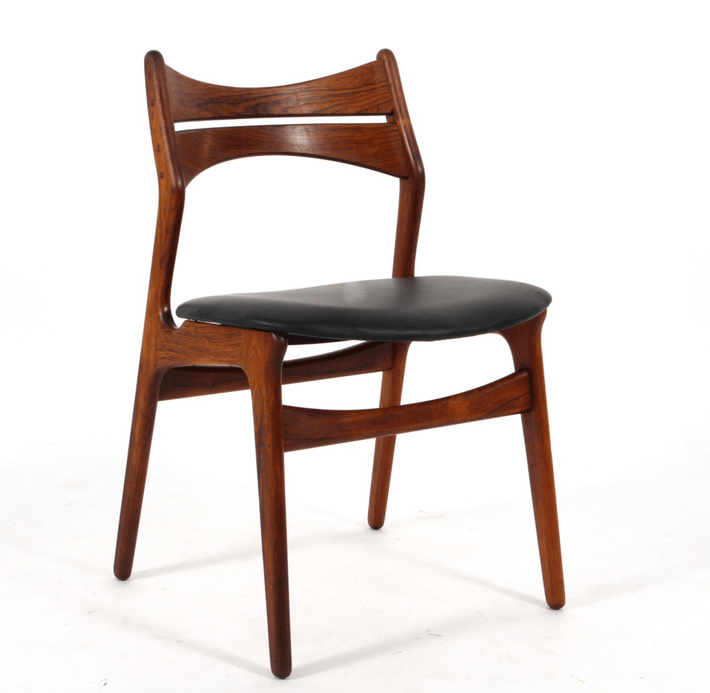
The name gives it away. With its defining armrests, solid seat and supportive backrest, the Captain chair lives up to its prominent calling. It’s an almost underplayed design that fits any room, yet stands out from the crowd with its indisputable feel of being solidly grounded. Like you need any captain to be. Originally designed by Erik Buck in 1950 for R. Skovgaard Jensen the Captain chair was made in Palisander, Teak and Oak. The broad and comfortable chair was made for the North American market but was also part of the interior on the Royal Danish Yacht. Of course. Today, the Captain chair is made only in solid certified oak from Scandinavian forests.
model 67-C Captain Chair by erik buch
The name gives it away. With its defining armrests, solid seat and supportive backrest, the Captain chair lives up to its prominent calling. It’s an almost underplayed design that fits any room, yet stands out from the crowd with its indisputable feel of being solidly grounded. Like you need any captain to be. Originally designed by Erik Buck in 1950 for R. Skovgaard Jensen the Captain chair was made in Palisander, Teak and Oak. The broad and comfortable chair was made for the North American market but was also part of the interior on the Royal Danish Yacht. Of course. Today, the Captain chair is made only in solid certified oak from Scandinavian forests.
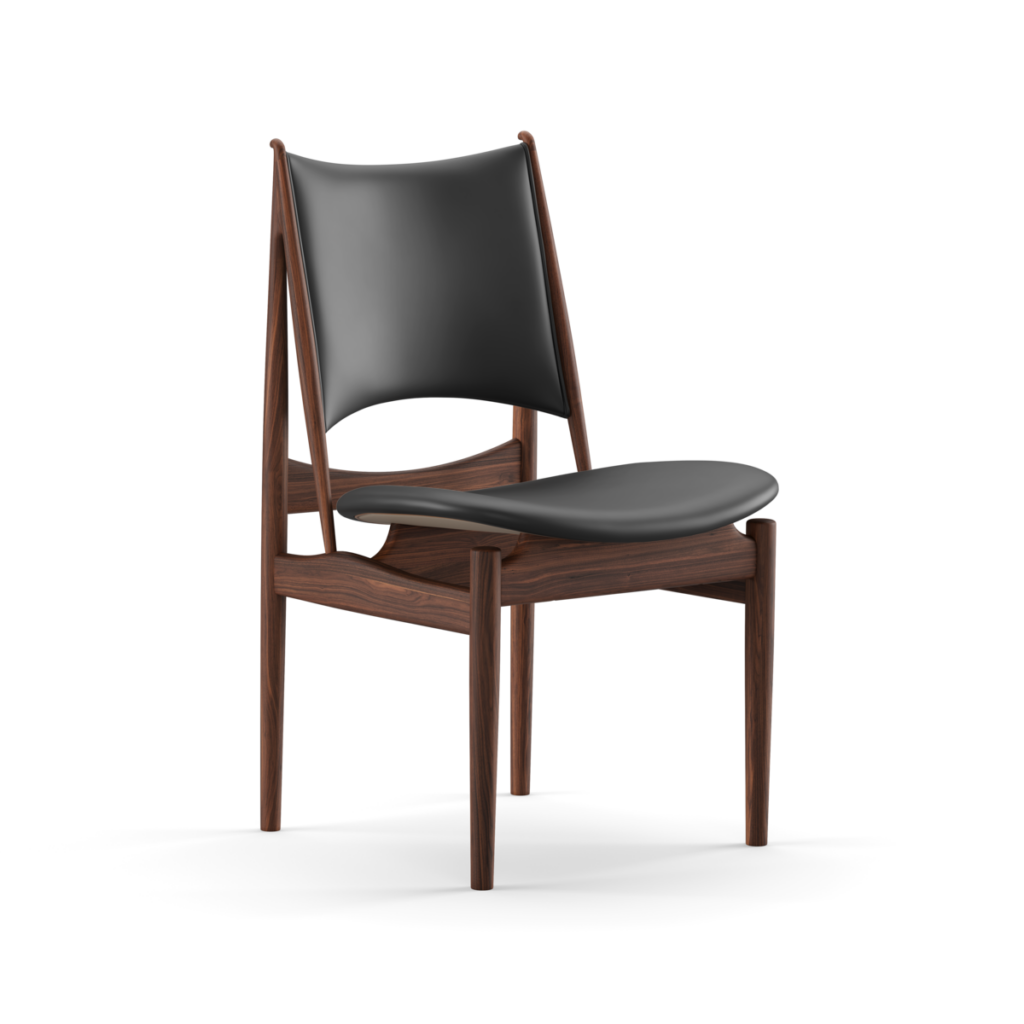
The absolutely amazing Egyptian chair was designed in 1949 by Finn Juhl. It was presented the same year at Snedkerlauget’s exhibition together with the Chieftain chair. This exhibition gave Finn Juhl his international breakthrough and he became known as the man behind the famous design style “Danish Modern”. The Egyptian chair has been hailed by design critics from around the world for its blend of ancient Egyptian design principles, modern rhythms and aerodynamics. It is made of the different types of wood oak, walnut, teak and rosewood. The chair is produced today by Onecollection.
Model BO 62 “Karmstolen” was designed in 1953 by Finn Juhl. The chair is very simple and beautiful. It was manufactured by the company Bovirke, which manufactured a large number of Finn Juhl’s furniture. BO 62 is today a collector’s item for furniture enthusiasts around the world.
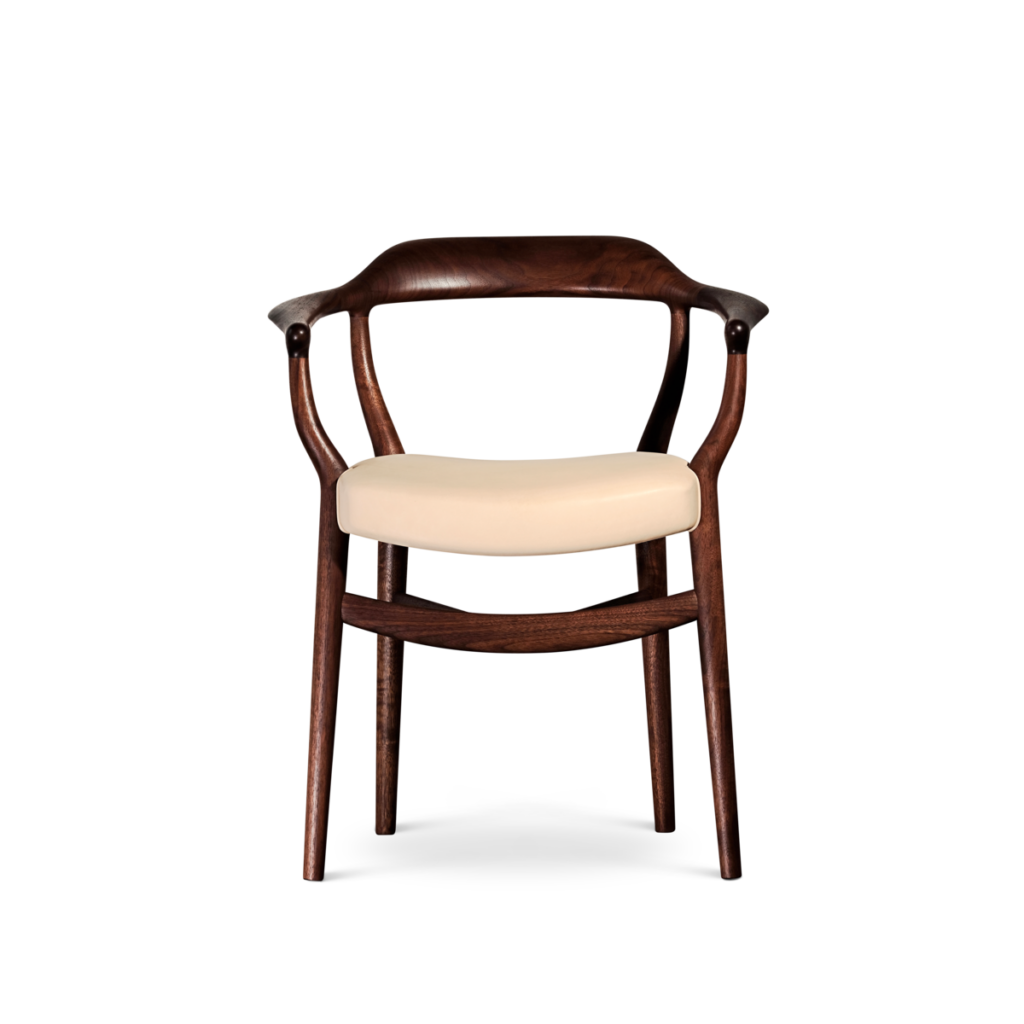
The 44 Chair, designed by Danish architect and designer Finn Juhl in 1944, is a true icon of Danish modern design. Known for its elegant, sculptural form, the chair combines comfort with artistry, reflecting Juhl’s innovative approach to furniture design. Crafted with high-quality wood and often featuring leather upholstery, the 44 Chair showcases organic curves, a balanced structure, and meticulous attention to detail. Its design emphasizes both the human form and the natural beauty of the materials, making it not only a functional chair but also a piece of art. The 44 Chair remains a celebrated classic, admired worldwide for its timeless elegance and sophisticated craftsmanship.
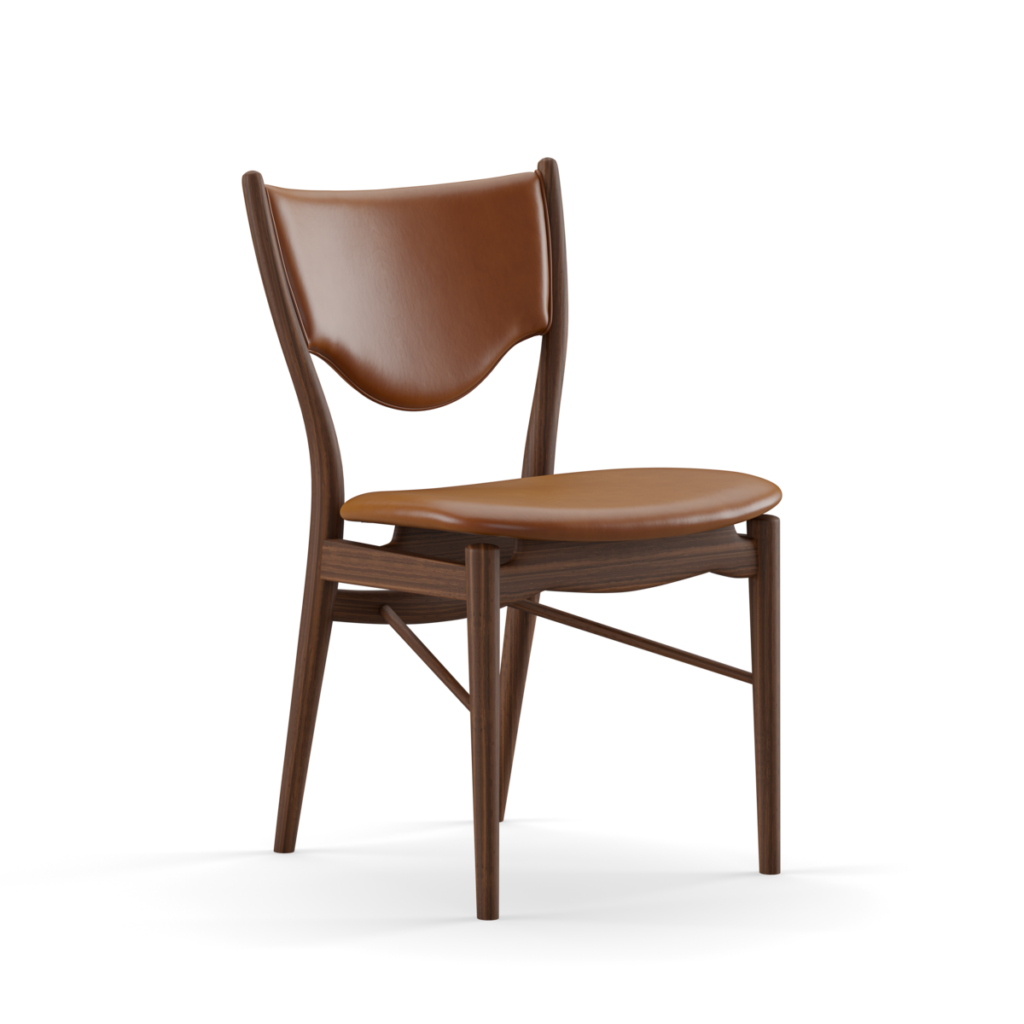
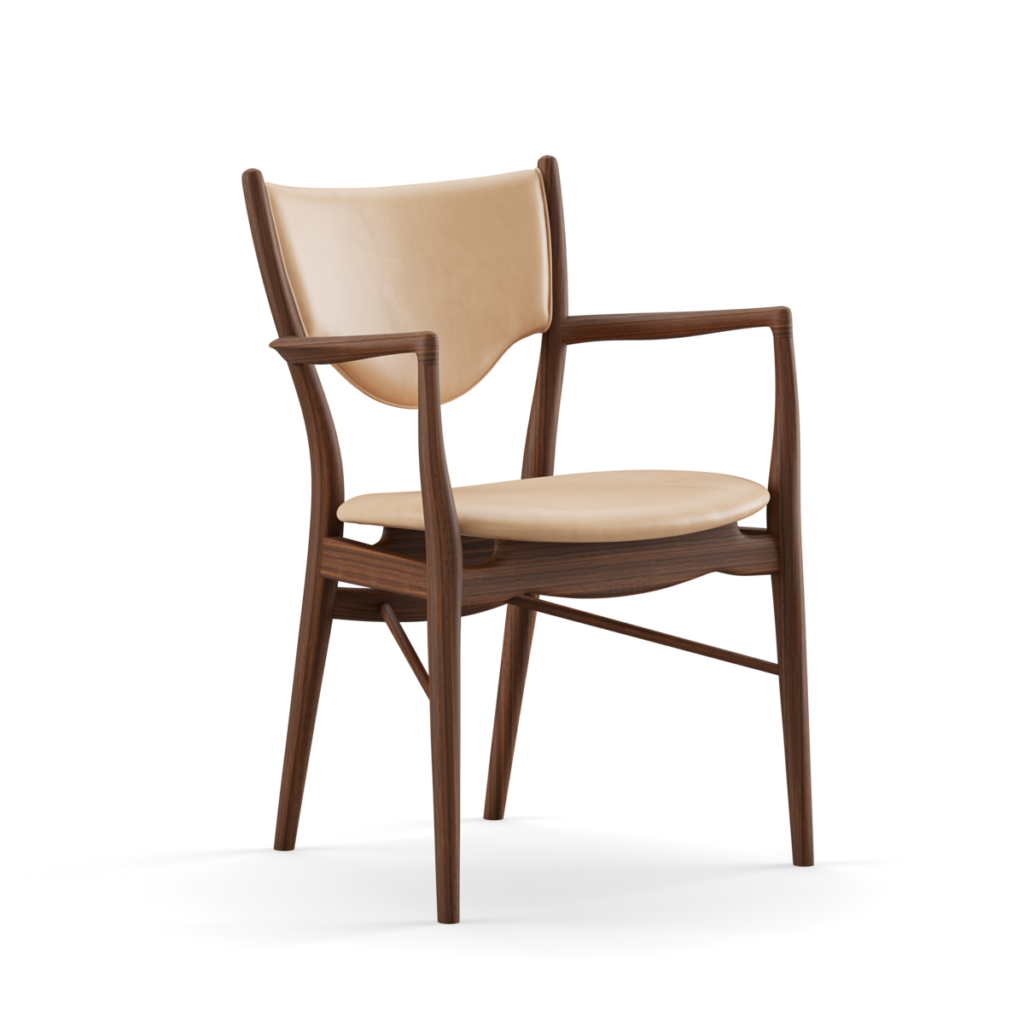
The 46 Chair, designed by Danish designer Finn Juhl in 1946, is a celebrated example of Danish modern design. Known for its organic, sculptural form, the chair combines comfort with a striking aesthetic, reflecting Juhl’s pioneering approach to furniture. Crafted from high-quality wood and often paired with leather upholstery, the 46 Chair features elegant curves, a light yet sturdy structure, and meticulous craftsmanship. Its design prioritizes both the human form and the natural beauty of the materials, making it a piece that is as functional as it is visually captivating. The 46 Chair remains an enduring classic, admired worldwide for its timeless elegance and innovative design.
The 46 Chair, designed by Danish designer Finn Juhl in 1946, is a celebrated example of Danish modern design. Known for its organic, sculptural form, the chair combines comfort with a striking aesthetic, reflecting Juhl’s pioneering approach to furniture. Crafted from high-quality wood and often paired with leather upholstery, the 46 Chair features elegant curves, a light yet sturdy structure, and meticulous craftsmanship. Its design prioritizes both the human form and the natural beauty of the materials, making it a piece that is as functional as it is visually captivating. The 46 Chair remains an enduring classic, admired worldwide for its timeless elegance and innovative design.
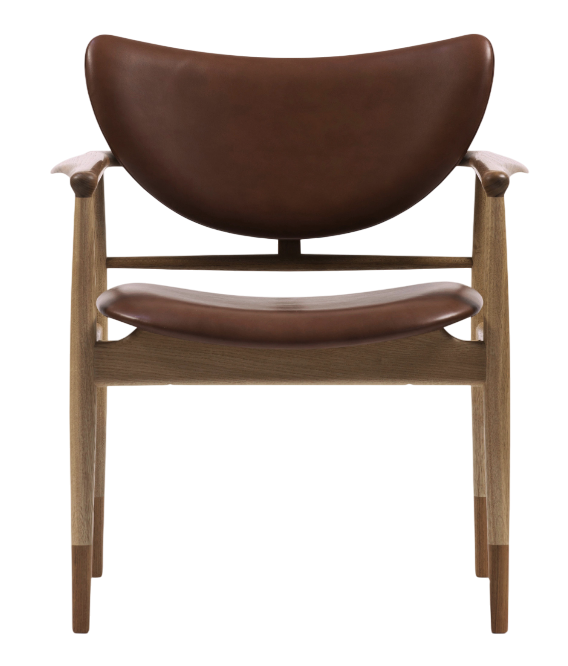
The 48 Chair, designed by Danish architect and designer Finn Juhl in 1948, is a landmark piece of Danish modern design. The chair is celebrated for its elegant, sculptural form, combining comfort with artistic expression. Crafted from high-quality wood and often upholstered in leather or fabric, the 48 Chair showcases Juhl’s signature organic curves and attention to detail. Its design reflects a balance between functionality and aesthetics, with a focus on ergonomics and the natural beauty of the materials. The 48 Chair remains an iconic example of Juhl’s innovative approach, admired worldwide for its timeless style and sophisticated craftsmanship.
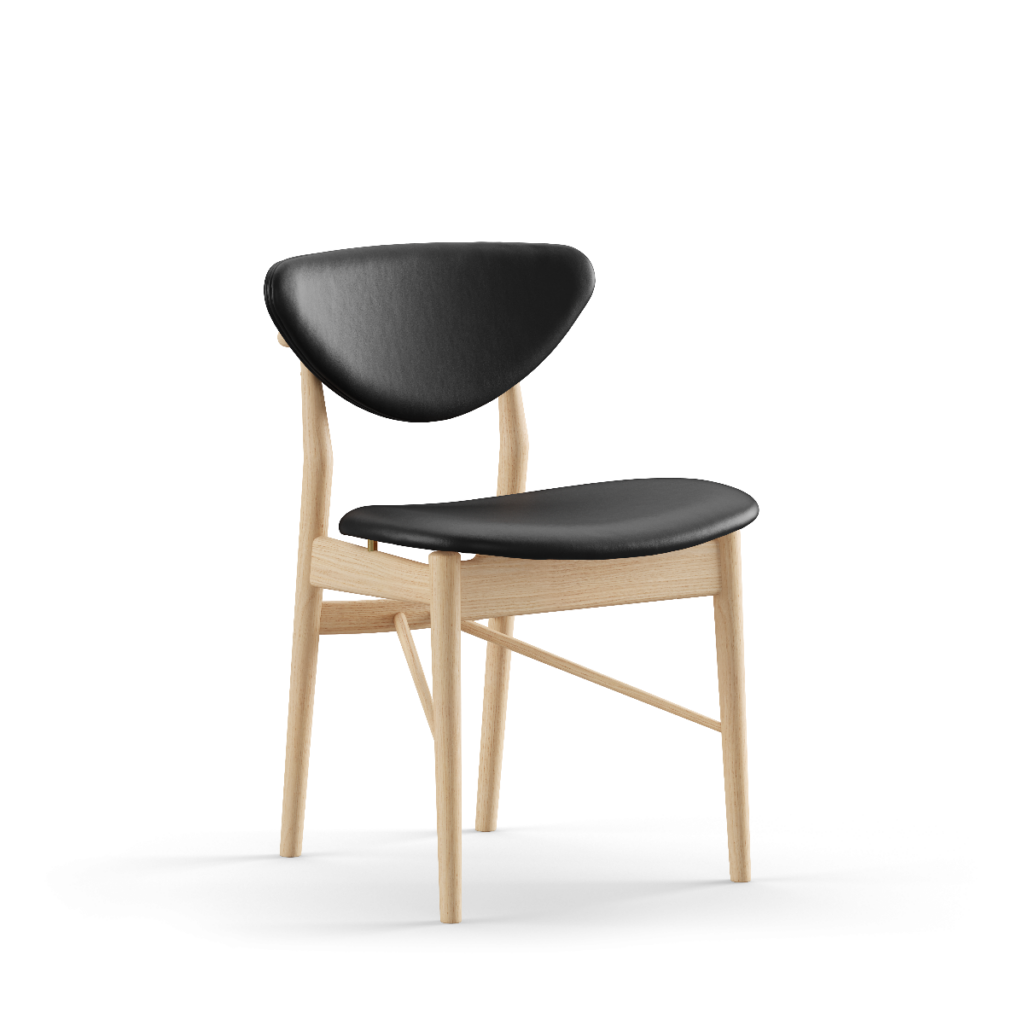
The 108 Chair, designed by Danish architect and designer Finn Juhl, is an iconic example of Danish modern design. Renowned for its sculptural, organic form, the chair combines comfort with artistic elegance, reflecting Juhl’s innovative approach to furniture design. Crafted from high-quality wood and often upholstered in leather or fabric, the 108 Chair features flowing lines, a lightweight yet sturdy structure, and exceptional attention to detail. Its design emphasizes both ergonomics and the natural beauty of materials, making it a functional piece of furniture as well as a work of art. The 108 Chair continues to be celebrated worldwide for its timeless style, sophisticated craftsmanship, and visionary design.
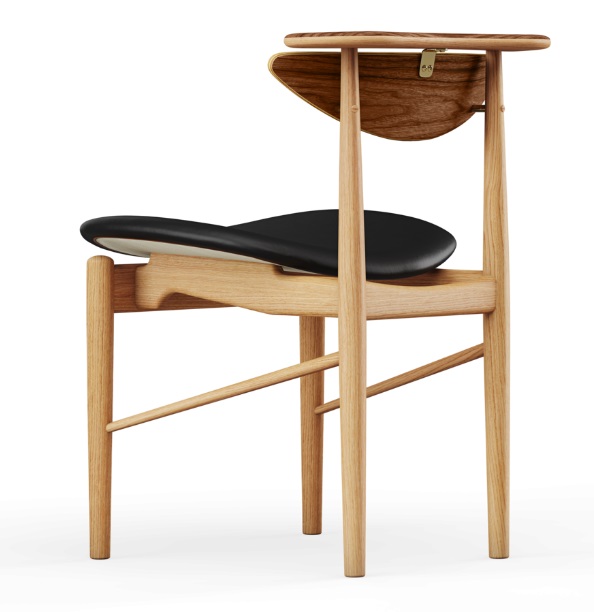
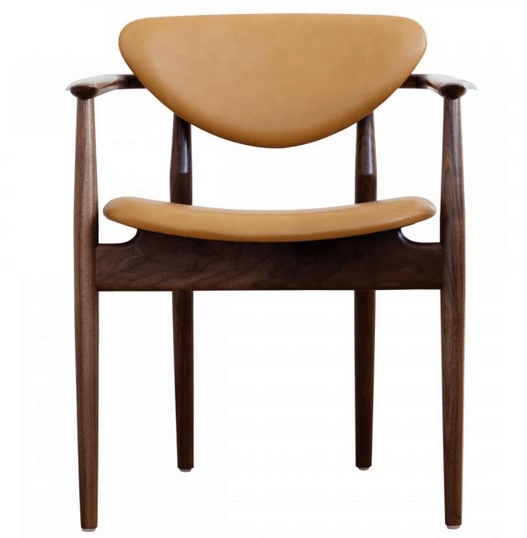
Finn Juhl designed the beautiful 109 chair in 1946 and was originally produced by master carpenter Niels Vodder. The beautiful chair is both sculptural, detailed and with lots of comfort. The armrests are shaped with curves and angles so that arms and hands can rest perfectly. The 109 chair is available in the woods oak and walnut.
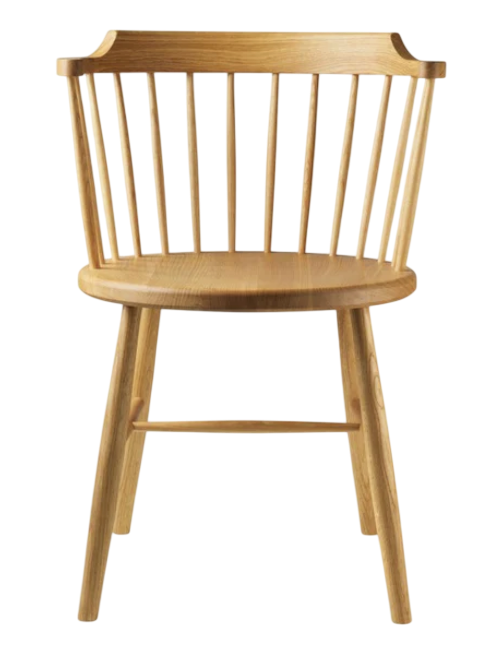
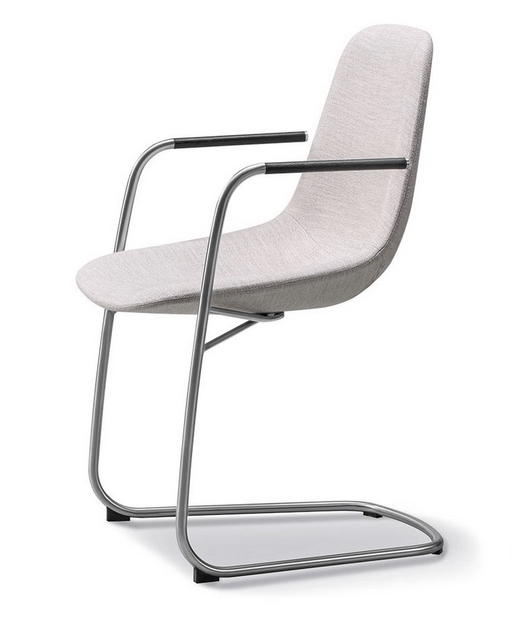
Eyes Chair by Foersom & Hjort-Lorenzen is an endearing design that can enliven any interior. The soft organic shape is like a welcoming gesture, inviting you to sit down and stay awhile.
Eyes Chair by Foersom & Hjort-Lorenzen is an endearing design that can enliven any interior. The soft organic shape is like a welcoming gesture, inviting you to sit down and stay awhile.
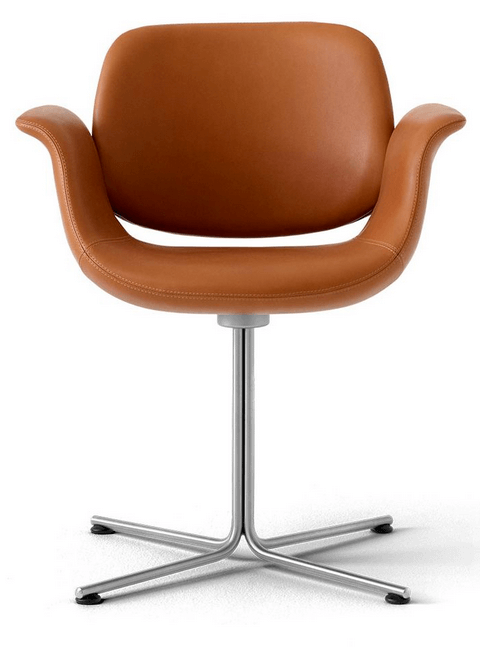
Almost like a flamingo standing on its slender legs, the Flamingo Chair By Foersom & Hjort-Lorenzen is at once aesthetic and poetic. The graceful curves of the seat with its symbolic ‘wings’ for arms are poised above the steel frame and long, slim legs. While the back appears as if it’s floating on top. It all culminates in an exquisite expression of fluid lines.
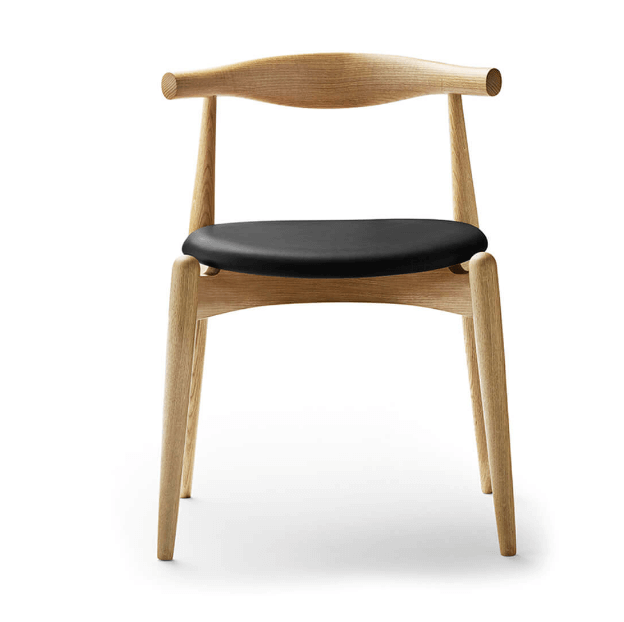
The beautiful and classic CH20 Elbow Chair was designed by Hans J. Wegner in 1956 but first came into production in 2005. The chair became very popular within the first year and won the design award ICFF Editors’ Award in New York. Elbow Chair has a steam-bent backrest which is made of one piece of solid wood and provides a comfortable sitting position. The seat is made of 11-layer plywood. CH20 Elbow Chair is produced by Carl Hansen & Son.
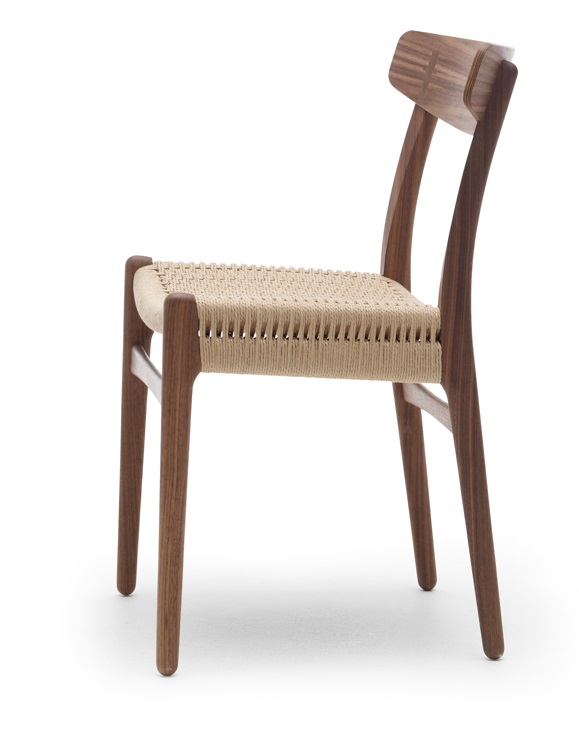
Hans J. Wegner designed more than 500 different chairs throughout his career and the stunning CH23 was one of them. Wegner already designed CH23 for Carl Hansen & Son in 1950 and is a masterpiece consisting of a seat with double wicker, beautiful joints and cross-shaped deck plugs in the backrest.
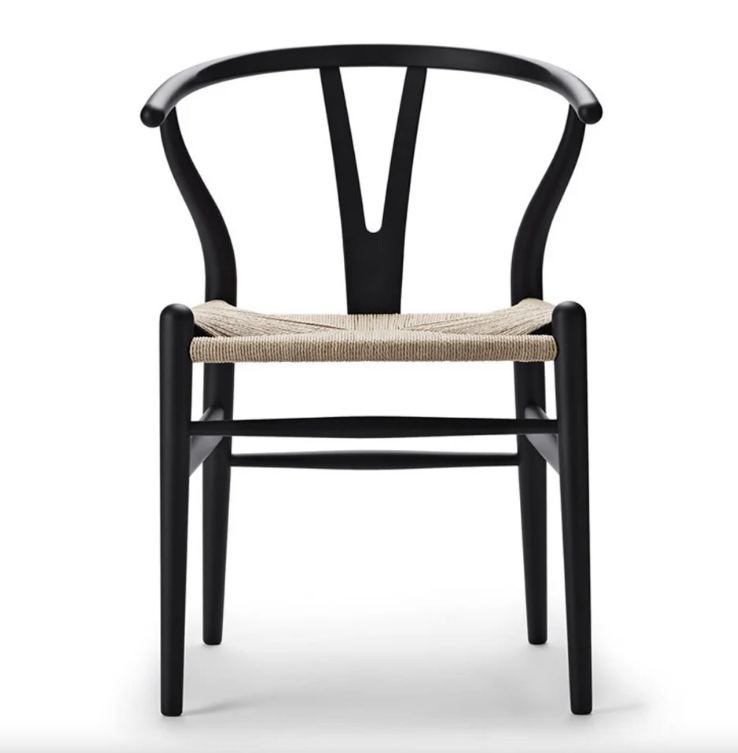
The Y-chair (CH24 / Wishbone chair) is one of Hans J. Wegner‘s best-selling chairs of all time. The Y-chair was designed in 1949 and has been in production since 1950 and is a craft masterpiece. It is available in several different types of wood and colors, the seat is braided with 120 meters of paper string and has a durability of up to 50 years. More than 100 parts in the fantastic Y-chair are real needlework.
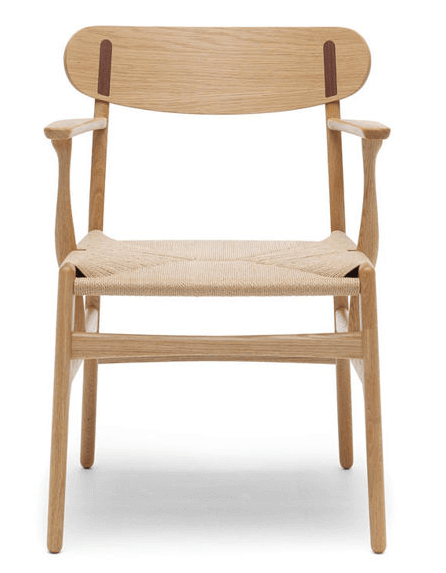
The CH26 armchair is a variant of a design that Wegner designed in 1950 and has been unknown for many years. In 2016, Carl Hansen & Son put the chair into production. The beautiful chair is with a lot of handmade details as well as with a seat of natural wicker. The chair is produced in the materials oak and walnut.
CH29 “Savbukkestolen” is designed by Hans J. Wegner. The chair is both aesthetic in its expression and comfortable to sit on, which creates a really good chair that can be used in many rooms for different purposes.
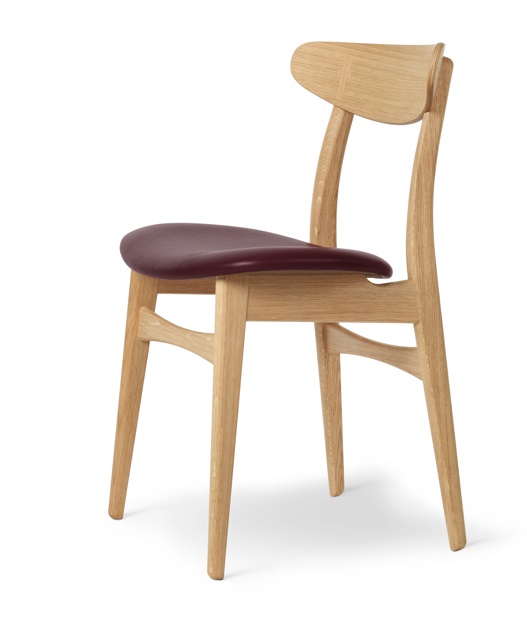
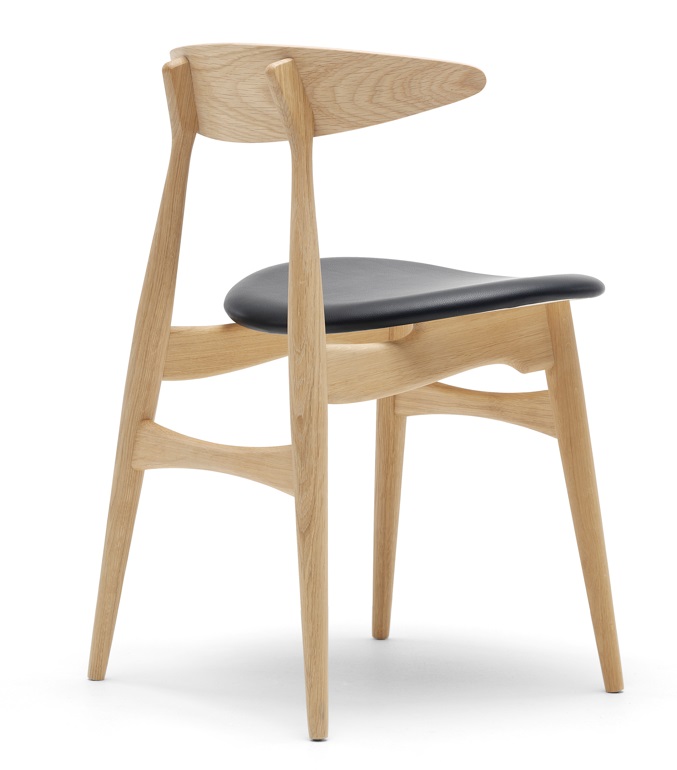
Hans J. Wegner presented the CH30 chair in 1954 and the harmonious design embodies his ongoing journey to design the perfect chair. The CH30 dining chair showcases Wegner’s signature style: His organic design and exceptional craftsmanship can be seen in sophisticated details such as the cruciform cover caps on the curved, oval backrest that pitches back in line with the rear legs to achieve ultimate comfort.. Combined with the wide, form-pressed padded seat it makes for a chair with a high level of comfort and functionality. As the highly comfortable chair can be tucked under a table, it only takes up limited space which makes it ideal for any modern context. Having been out of production for a number of years, the chair is recreated in close collaboration with Hans J. Wegner’s Design Studio. The elegant CH30 chair is produced according to his original working drawing—an extra two centimeters have been added in height to accommodate modern standards.
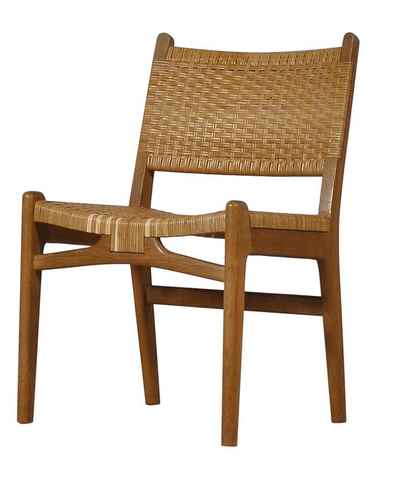
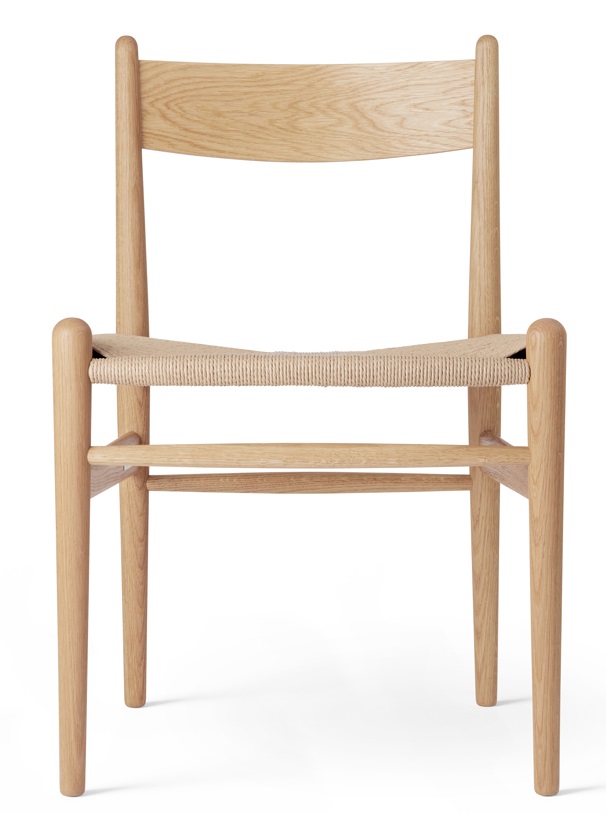
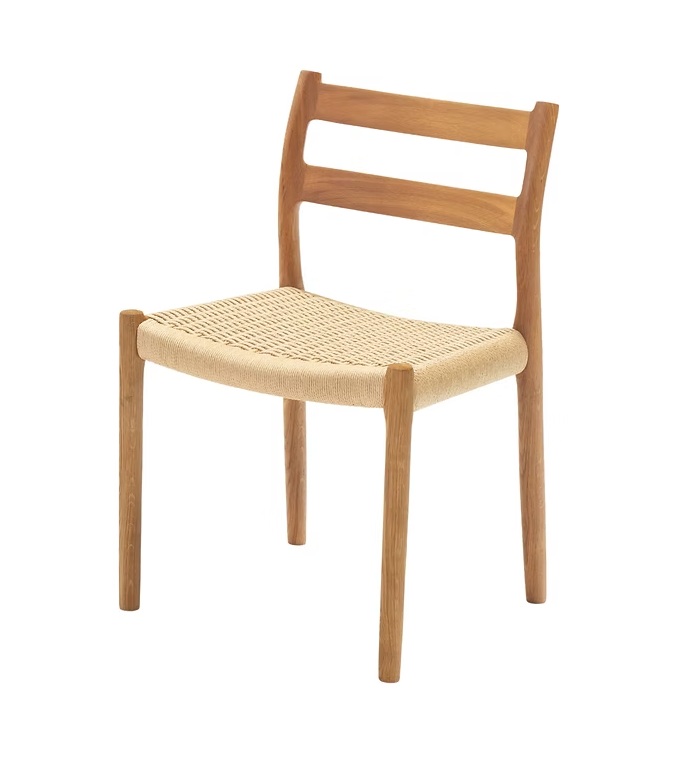
The CH31 is an iconic dining chair featuring a distinctive woven seat that highlights Wegner’s dedication to natural materials and exceptional craftsmanship. Its gently curved backrest and refined legs create a light, timeless appearance, making the chair a perfect match for both intimate dining spaces and larger tables.
The beautiful and organic chair CH33 was designed by Hans J. Wegner in 1957 and produced by Carl Hansen & Son. The chair was manufactured for 10 years and then took a long break of 45 years before it came back into production in 2012. CH33 has a strong backrest of molded veneer with visible plugs.
The CH35 armchair, designed by Hans J. Wegner for Carl Hansen & Søn in Denmark in 1959, is a rare and highly collectible piece of Danish mid-century modern design. Produced for a limited time, the CH35 reflects Wegner’s exceptional ability to combine structural clarity, comfort, and understated elegance.
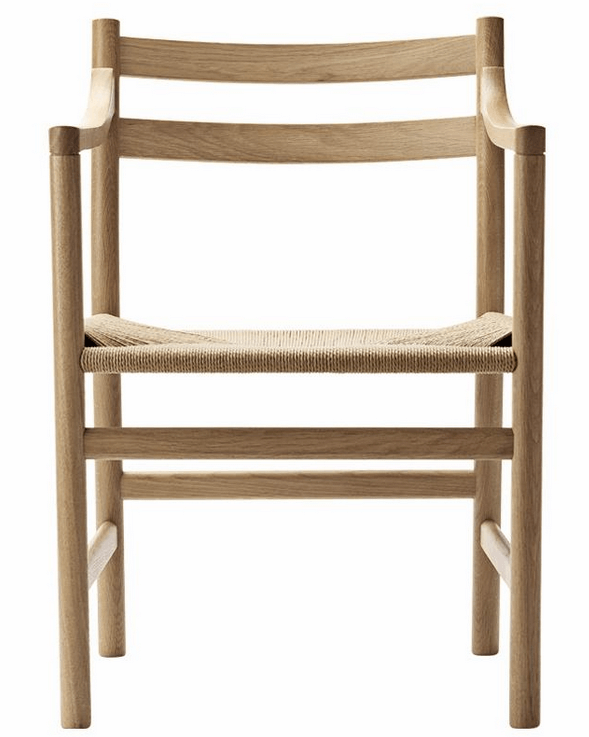
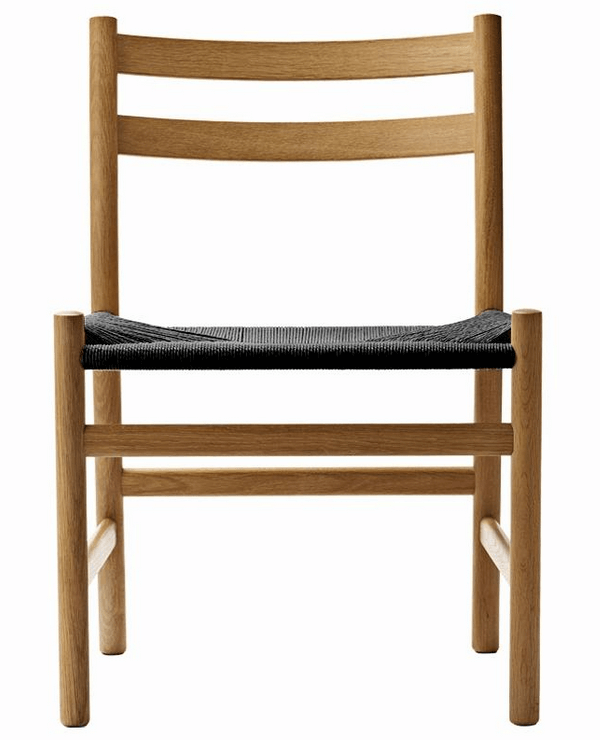
The CH36 dining chair by Hans J. Wegner is crafted with great attention to each detail in a simple and functional design. This 1962 design demonstrates the influence American Shaker furniture principles and craftsmanship had on Wegner’s work. The legs of the CH36 taper off slightly both towards the floor and, in the case of the rear legs, also towards the top, creating an elegant appearance. The backrest is significantly more curved at the top than at the bottom to optimize back support. The overall expression is completed with the frame and the seat hand-woven in durable paper cord. The chair is also available with armrests – model number CH37 – for added comfort and support.
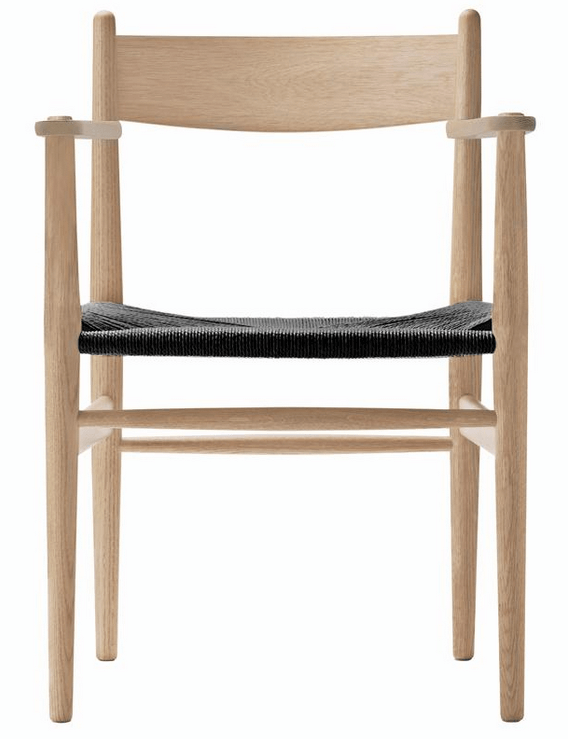
The CH37 dining chair from 1962, designed by Hans J. Wegner, is clearly inspired by the American Shaker furniture principles of simplicity, functionality and craftsmanship. The CH37 also displays many carefully considered details characteristic of Wegner’s style. The chair’s light, elegant appearance is created by the vertical round legs and a backrest which arches backwards – slightly more in the top than in the bottom – in order to achieve the best possible back support. The hand-woven paper cord seat and the gently rounded and flat armrests – fixed to the front legs with a distinctive cap – provide both comfort and sturdiness. The fascinating design of the CH37 dining chair offers a light and yet sturdy expression to comfortably seat many generations. The chair is also available without armrests as model number CH36.
Designed by Hans J. Wegner in 1965, the CH46 and CH47 chairs are refined dining chairs that capture the essence of Danish modern design through clean lines and functional elegance. Their enduring design and high level of comfort have made them favored not only in dining settings, but also in conference rooms and church interiors.
Designed by Hans J. Wegner in 1965, the CH46 and CH47 chairs are refined dining chairs that capture the essence of Danish modern design through clean lines and functional elegance. Their enduring design and high level of comfort have made them favored not only in dining settings, but also in conference rooms and church interiors.
The CH88 Chair, designed by Danish master Hans J. Wegner, is a prime example of Danish modern design, celebrated for its elegance, comfort, and craftsmanship. Introduced in 1963, the CH88 combines a sleek, minimalist silhouette with a functional and ergonomic design, making it suitable for dining rooms, offices, and living spaces. Crafted from high-quality wood and featuring a upholstered seat, the chair reflects Wegner’s dedication to natural materials and meticulous craftsmanship. Its timeless design balances form and function, creating a piece that is both visually striking and exceptionally comfortable. The CH88 remains an iconic classic, admired worldwide for its refined aesthetics and enduring quality.
The beautiful and strong PP52 was designed by Hans J. Wegner in 1975 for the DFDS ferries and is still PP Møbler’s largest order to date.In the same year, Wegner also designed the PP62 where the seat is instead with wicker.
The PP58 Chair, designed by Danish master Hans J. Wegner in 1956, is a celebrated example of Danish modern design. The chair showcases Wegner’s signature approach of combining simplicity, comfort, and craftsmanship. Constructed from solid wood with a gently curved backrest and an upholstered or woven seat, the PP58 emphasizes both ergonomic support and timeless elegance. Its clean lines and balanced proportions make it versatile for dining rooms, offices, or living spaces, while the high-quality materials ensure durability. The PP58 Chair remains a classic piece, admired worldwide for its understated sophistication, functional design, and enduring beauty.
The PP58 Chair, designed by Danish master Hans J. Wegner in 1956, is a celebrated example of Danish modern design. The chair showcases Wegner’s signature approach of combining simplicity, comfort, and craftsmanship. Constructed from solid wood with a gently curved backrest and an upholstered or woven seat, the PP58 emphasizes both ergonomic support and timeless elegance. Its clean lines and balanced proportions make it versatile for dining rooms, offices, or living spaces, while the high-quality materials ensure durability. The PP58 Chair remains a classic piece, admired worldwide for its understated sophistication, functional design, and enduring beauty.
This chair from 1975 is considered one of the most formal and classical designs in Wegner’s body of work. Its precisely defined, geometric frame is balanced by armrests that gently surround the sitter, while the elegantly shaped backrest offers exceptional comfort.
Known as The Captain’s Chair, it was conceived as a definitive expression of Wegner’s design philosophy. The chair embodies the key qualities that grew out of the close collaboration and shared craftsmanship between Hans J. Wegner, Ejnar Pedersen, and the skilled cabinetmakers at PP Møbler.
In the late years of a long glorious career with an extensive line of masterpieces acknowledged worldwide and a number of significant awards already achieved, Hans J. Wegner aged 73 designed the pp68/pp58 as his final round back arm chair.
As a genuinely comfortable, practical, strong, durable and affordable chair, it concludes the line of round back arm chairs that Wegner evolved through four decades based on ideas of good craftsmanship and proper ergonomics.
Revising the old Chinese Chair, the pp201 | pp203 First Chair combines the aesthetics of the pp701 Minimal Chair with the construction of the pp66 Chinese Chair thus creating a new expression, where the strict geometrically defined frame supports only the most prudent use of those organic shapes so characteristic of Wegner’s work through the 1950’s.
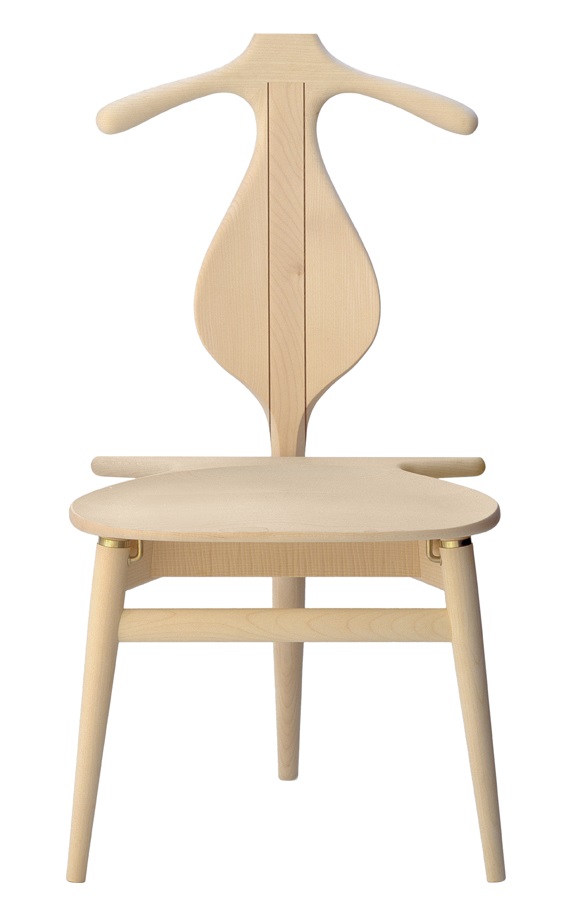
PP250 (Valet chair or The rest of the jacket) is a beautiful, sculptural, fun and functional chair. The chair is perfect to have standing in the bedroom for the clothes before bedtime. The back is shaped like a jacket hanger and under the seat there is a storage box for, for example, the watch, purse or keys. First the chair was four-legged but Wegner thought it looked too heavy and removed a leg which gave a lighter expression. Valet chair is available in the materials oak, pine, teak, wenge, oregon pine and mahogany.
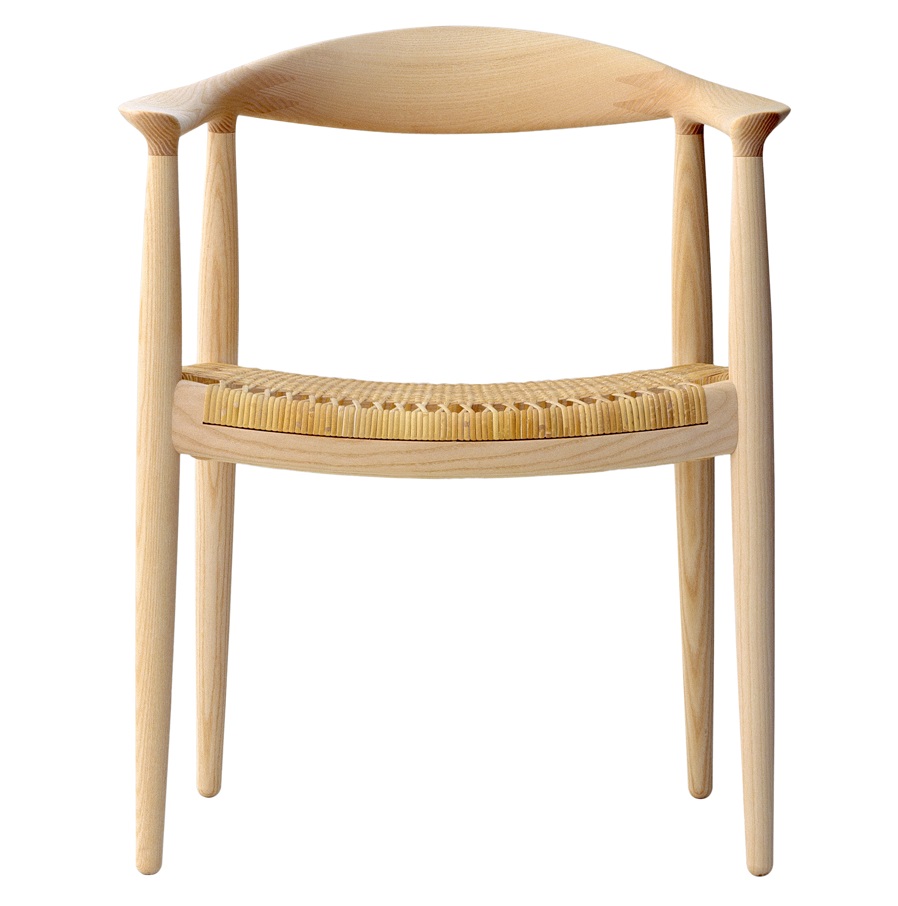
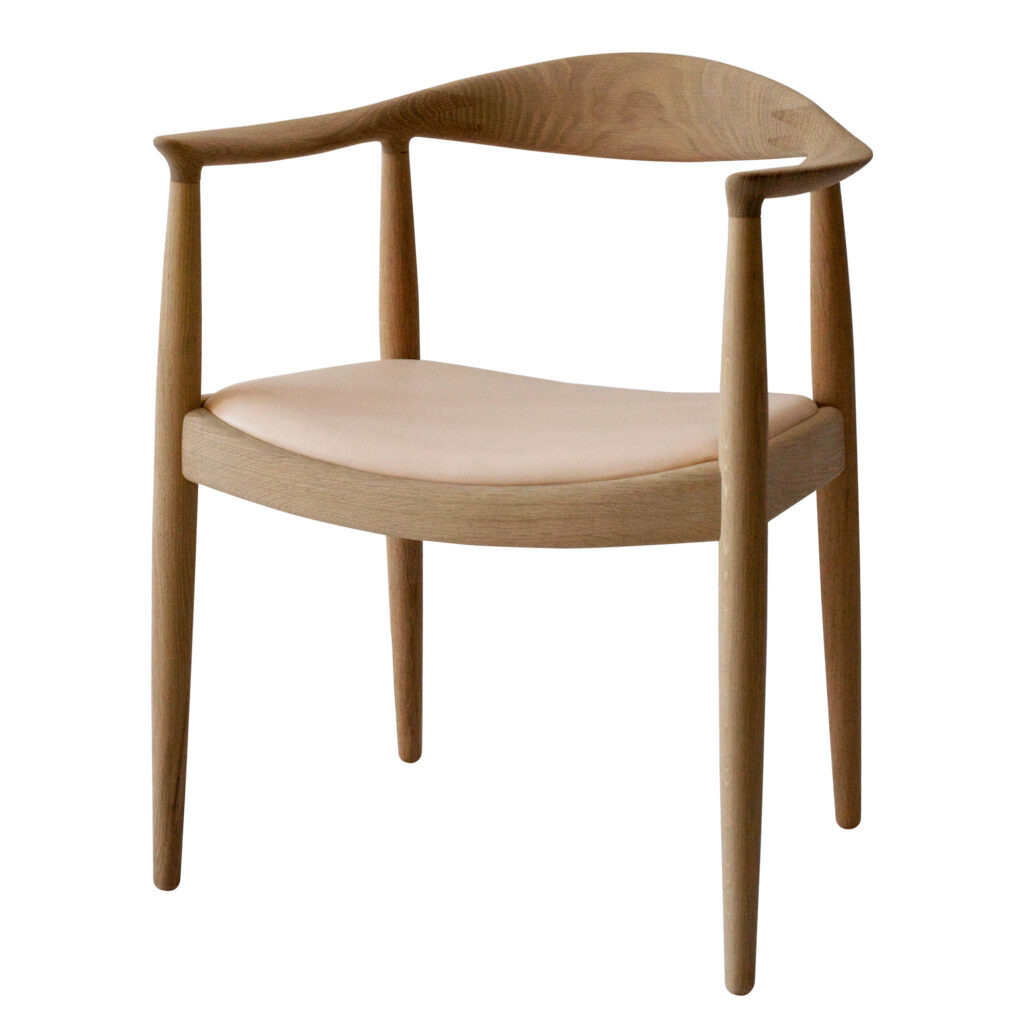
The “Round One” as Wegner referred to it with his usual provincial modesty, is one of the most famous Danish pieces of furniture — and certainly most distinctly Danish. In its own modest and simple way, it sums up the very essence of traditional Danish woodworking and design philosophy. It is considered the magnum opus of Hans J. Wegner.
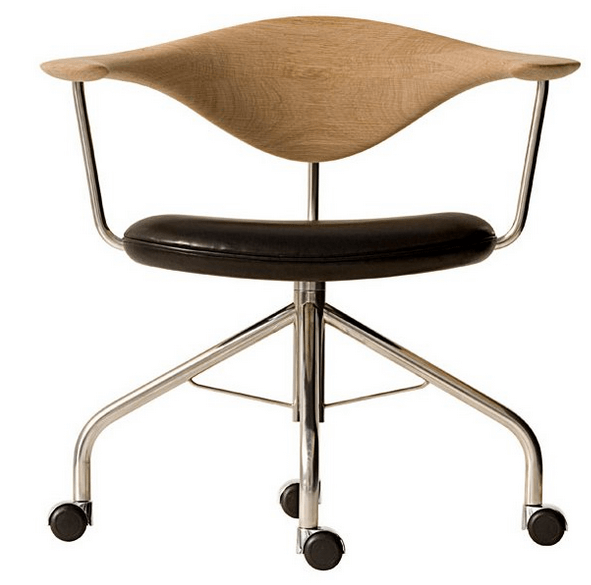
Hans J. Wegner’s PP502 office chair was designed in 1955 and is a combination of the hard steel and the soft natural materials wood and leather. PP502 is a continuation of The Round Chair. The backrest is made of solid wood and has been twisted like a propeller. It is the ultimate in office chairs and the price starts at 108.000 DKK.
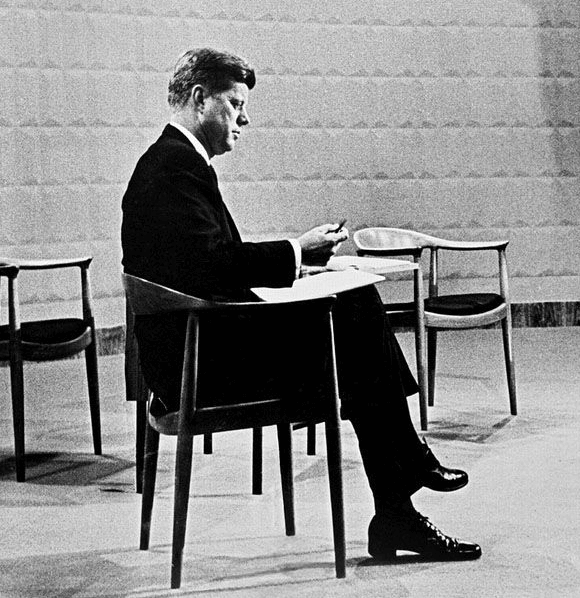
“The Chair” or “The Round Chair” is one of Hans J. Wegner’s absolute masterpieces.The Chair PP503 was designed in 1949 and was published shortly after in the American design and architecture magazine Interiors.This was the international breakthrough of Danish design and the Danish furniture and lamps came on the world map.The Chair was shown on television worldwide in 1960 when John F. Kennedy and Richard Nixon met in the world’s first televised election debate.Later, Barack Obama also wanted to sit in this particular model when he was to be interviewed at the Bella Center during the climate summit.
One of Hans J. Wegner’s smallest chairs is the beautiful PP505 which was designed in 1952. The PP505 is a compact chair made of hand-carved, solid wood with organic shapes. The chair was previously produced by Johannes Hansen but is today produced by PP Møbler. It is available in the materials rosewood, oak, ash and teak.
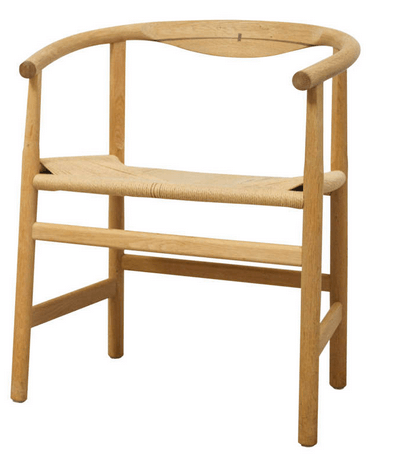
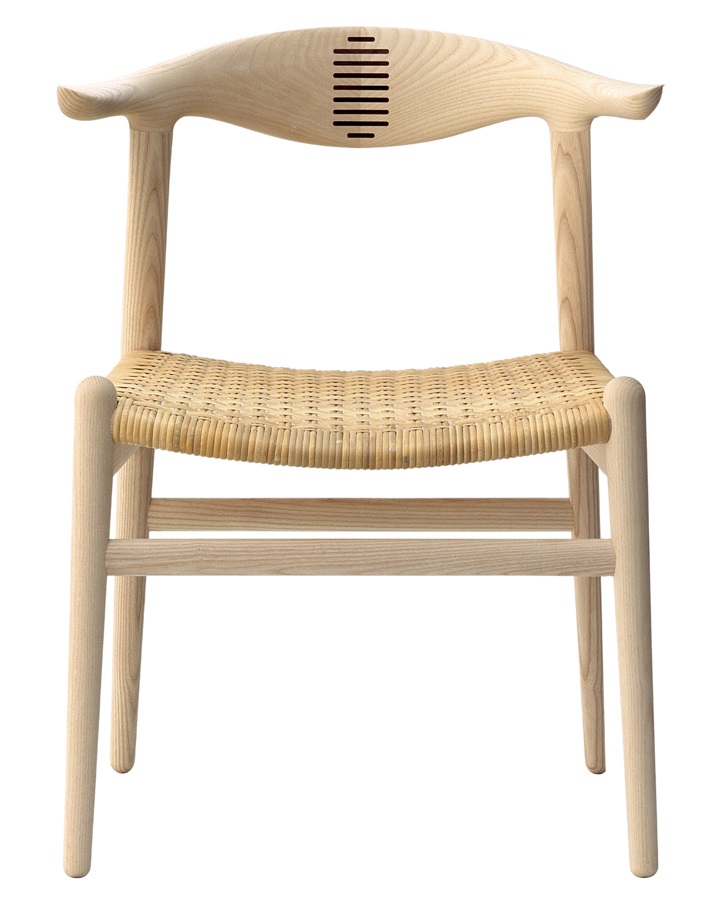
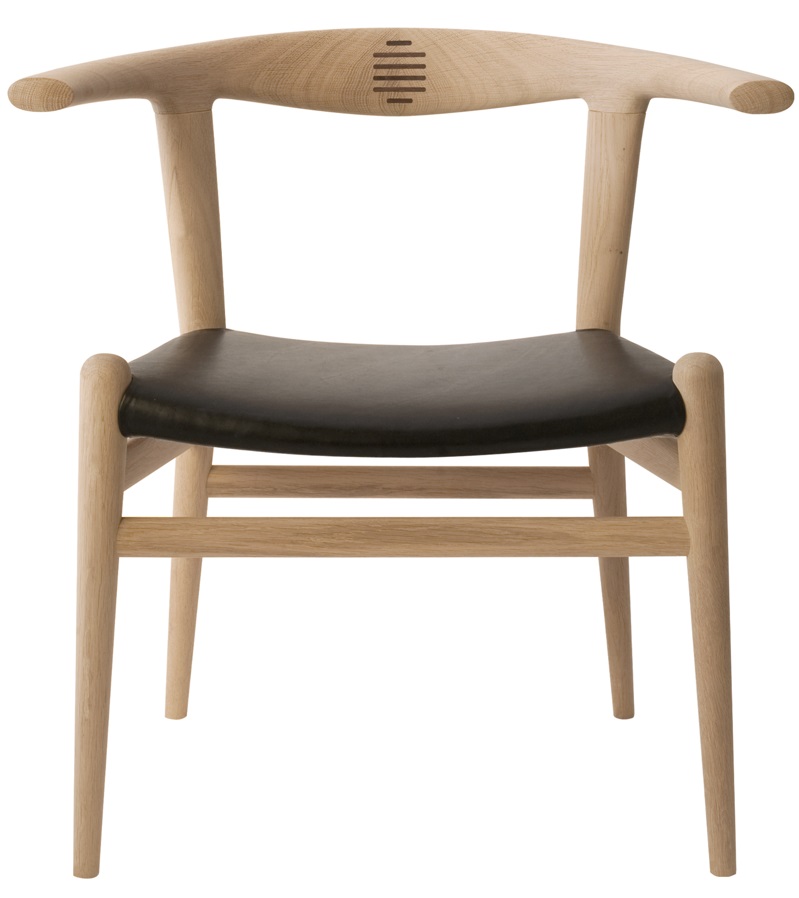
In 1961, Hans J. Wegner designed the Tyrestolen model 518 for Johannes Hansen Møbelsnedkeri. It got its name due to the strong armrest that goes out like a bull horn. The bull chair is today produced by PP Møbler and has over the years been produced in oak, ash, teak and mahogany.
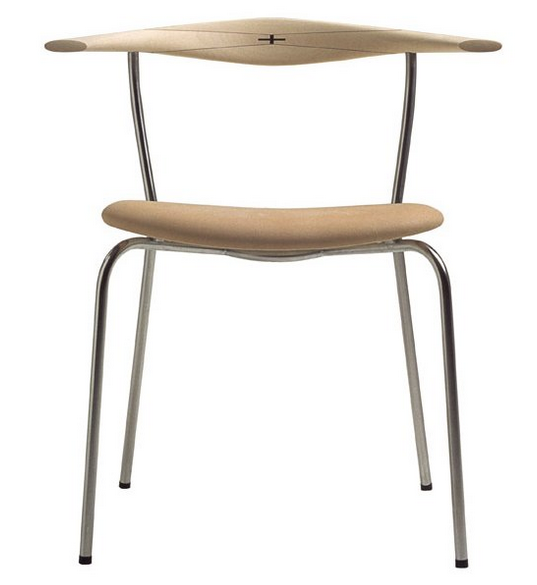
The beautiful and minimalist chair PP701 was designed by Hans J. Wegner in 1965. The chair is a combination of stainless steel, wood and an upholstered seat.Today it is produced by PP Møbler and is available in the materials ash, oak and walnut.
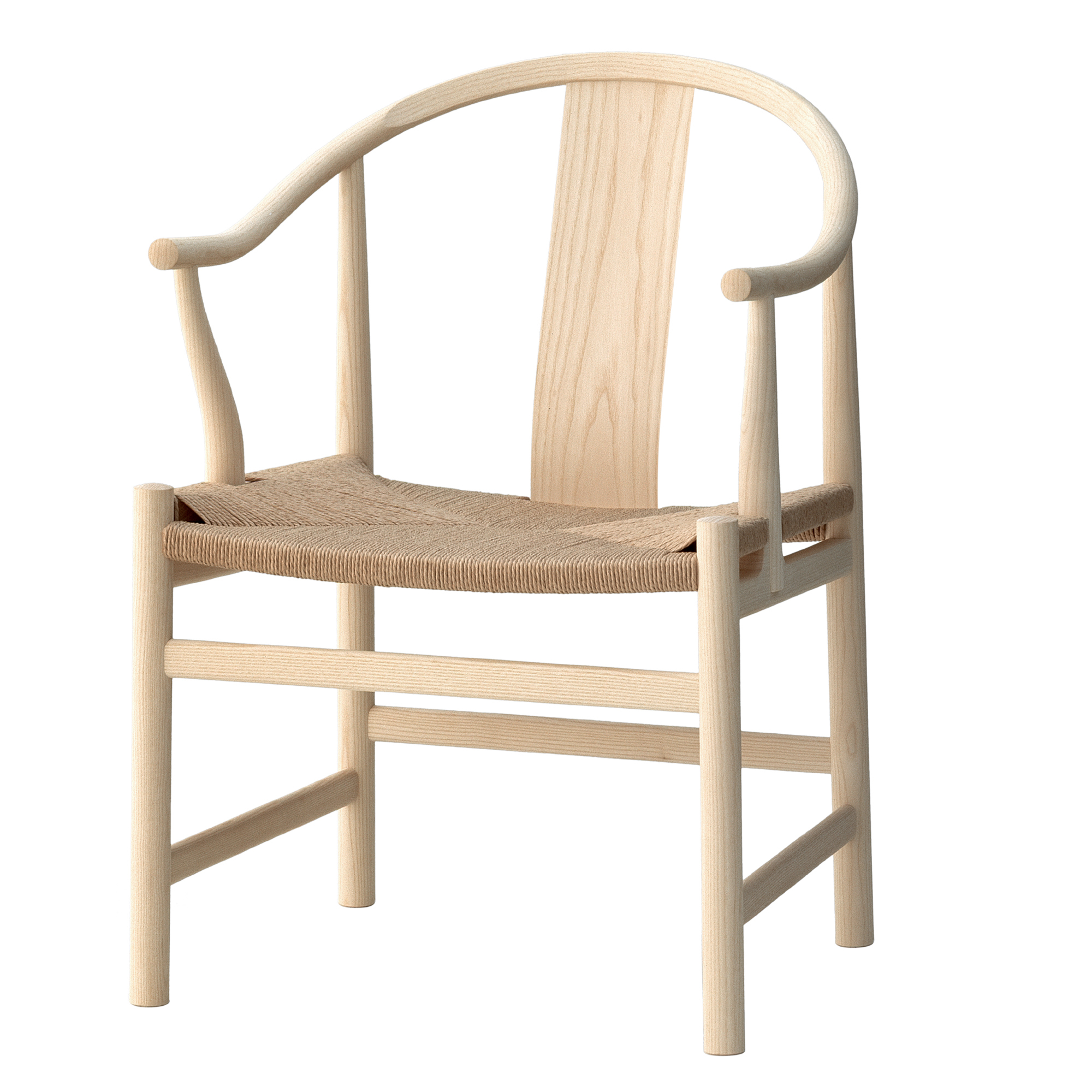
The Chinese chair was designed in 1944 by Hans J. Wegner. It is currently produced in two different editions by PP Møbler and Fritz Hansen. The chair is inspired by a classic Chinese chair which can be found at Designmuseum Denmark and originates from the Ming dynasty, which ruled in China from 1368 to 1644. The Chinese chair is found in the different woods: oak, ash, cherry, nut, walnut, mahogany, rosewood and beech.
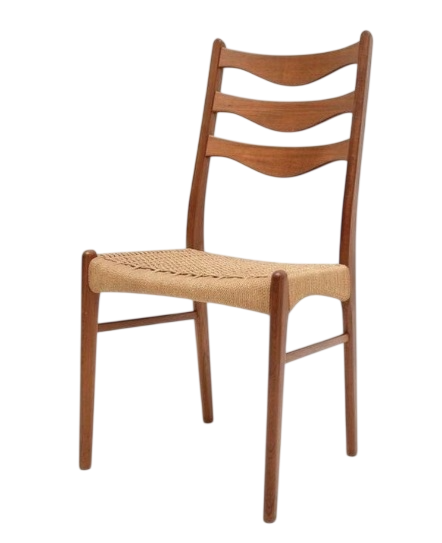
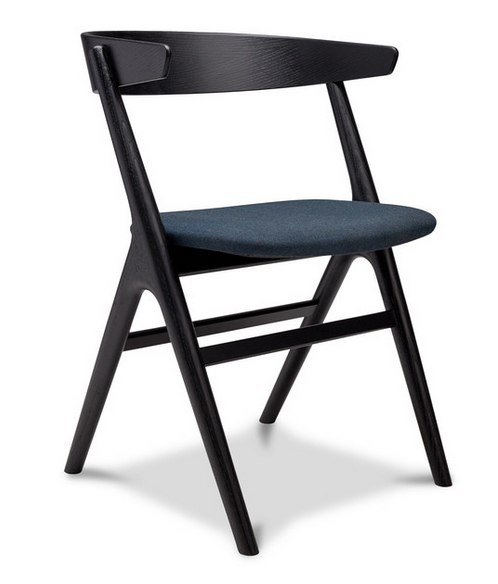
Designed by Helge Sibast in 1953, the Sibast No 7 with its sculptural wooden backrest is a true icon of Danish design. The characteristic curved back not only defines the chair’s bold and elegant expression, but also ensures exceptional comfort and support. With its gently tapered legs and refined proportions, the chair radiates a sense of lightness and craftsmanship. The wooden back highlights the natural beauty of the material and connects the design to its origin in classic cabinetmaking traditions.
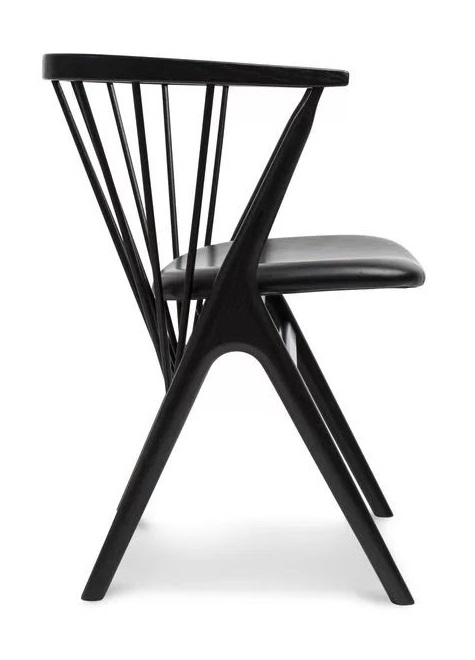
Designed by Helge Sibast in 1953, the dining chair Sibast No 8 soon made its way into homes all over the world due to its sublime quality and iconic design. The chair has been re-launched by the fourth generation of the Sibast family as a vital design classic from the Danish Modern movement and a signature design from Sibast Furniture. The chair’s characteristic Y-shaped legs, floating seat and moulded backrest demand high-quality craftsmanship in order to achieve the unique expression. The bold and complex design of the iconic chair was perfected by Helge Sibast in the workshop and has an inherent beauty that transcends time and place. A true design classic to treasure and pass on to future generations.
1953 was a productive year for the entrepreneurial furniture designer and cabinetmaker Helge Sibast, who spent it coming up with three of his most iconic designs Sibast No 7, No 8 and No 9. Sibast No 9 is a light dining chair with an unfailing sense of style. The chair features a hovering seat and front legs that angle slightly inwards – a design detail which gives the chair a slim, dynamic style seen from the front. From the side, the inverted Y-shaped frame stands out, accentuating the embracing top rail that enhances the chair’s unique identity.
The Panther chair was designed by Henrik Lehm in 2005. Based on exclusive leather furniture and the elegance of a light dining chair, Lehm created an uncompromising chair with fantastic seating comfort. The Panther chair is made in stainless steel with an upholstered seat and back. The back of the chair is made with upholstery in fabric, leather or with mesh.
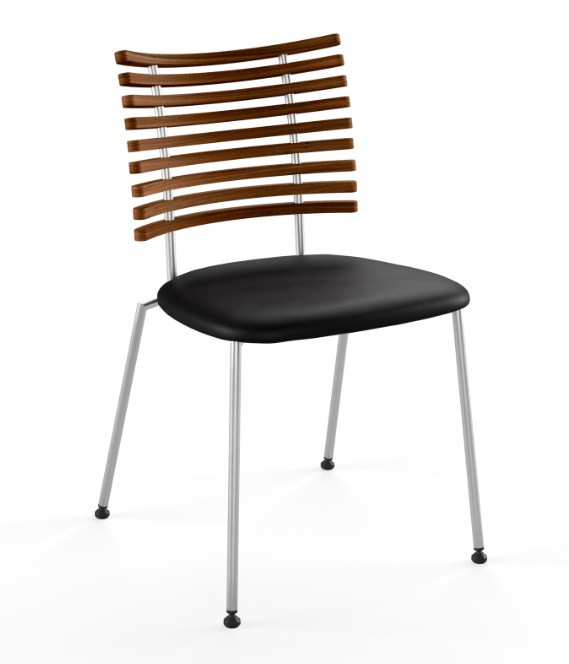
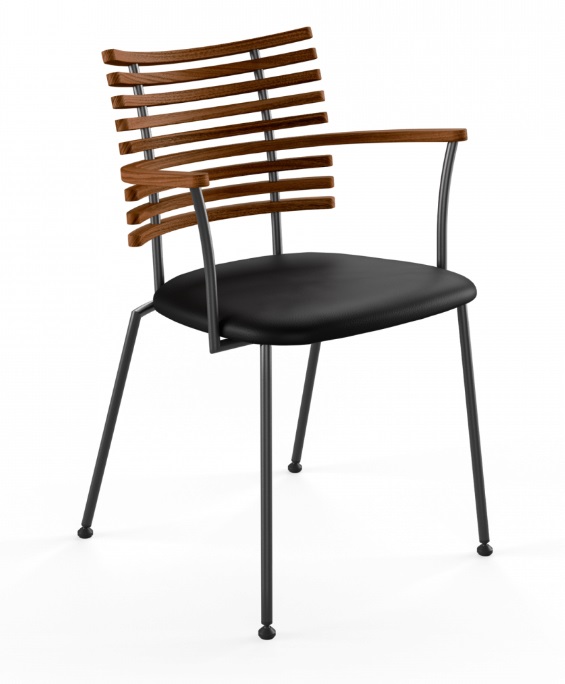
The iconic Tiger chair from Henrik Lehm is designed with an eye for aesthetics and excellent comfort. The Tiger is not only elegant but is also a chair that you can sit comfortably in at the dining table for hours. This timeless and beautiful design has gradually made the dining table chair a permanent fixture in Scandinavian homes, where the Tiger chair today, is more popular than ever.
The iconic Tiger chair from Henrik Lehm is designed with an eye for aesthetics and excellent comfort. The Tiger is not only elegant but is also a chair that you can sit comfortably in at the dining table for hours. This timeless and beautiful design has gradually made the dining table chair a permanent fixture in Scandinavian homes, where the Tiger chair today, is more popular than ever.
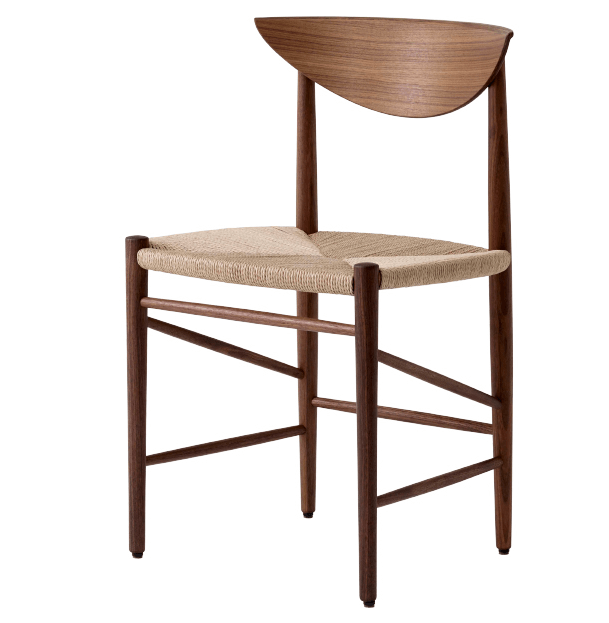
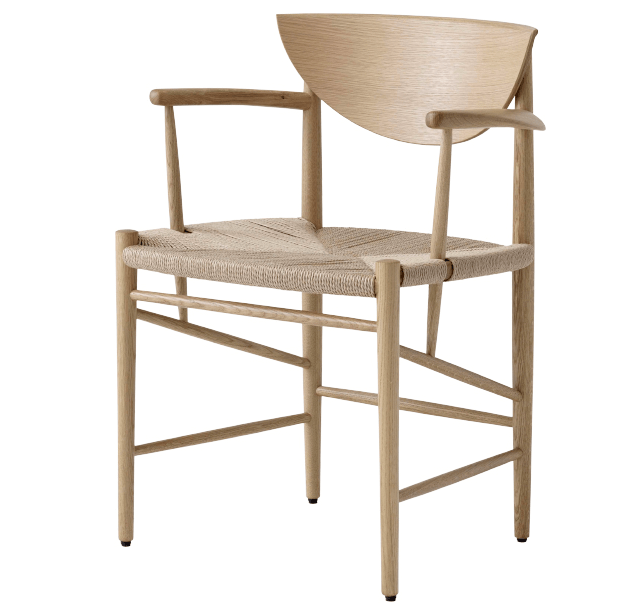
The 1956 Drawn chair by Hvidt & Mølgaard stands out as a definitive piece of Danish design. Built upon traditional craftsmanship techniques and made out of organic materials, it brings a sense of wholesome honesty to any space.
The 1956 Drawn chair by Hvidt & Mølgaard stands out as a definitive piece of Danish design. Built upon traditional craftsmanship techniques and made out of organic materials, it brings a sense of wholesome honesty to any space.
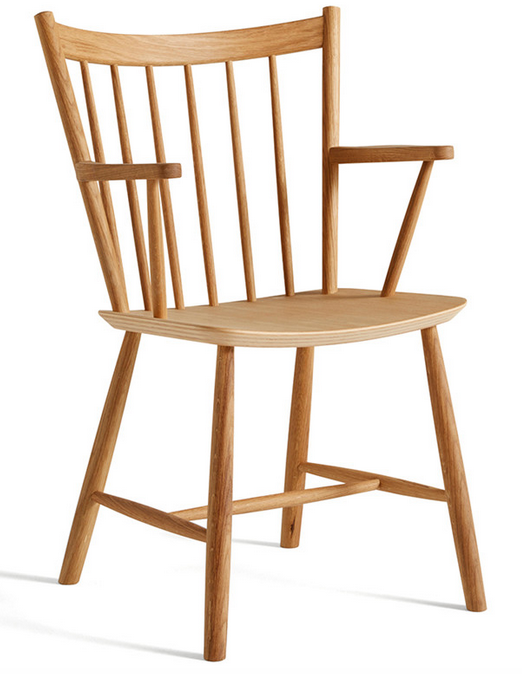
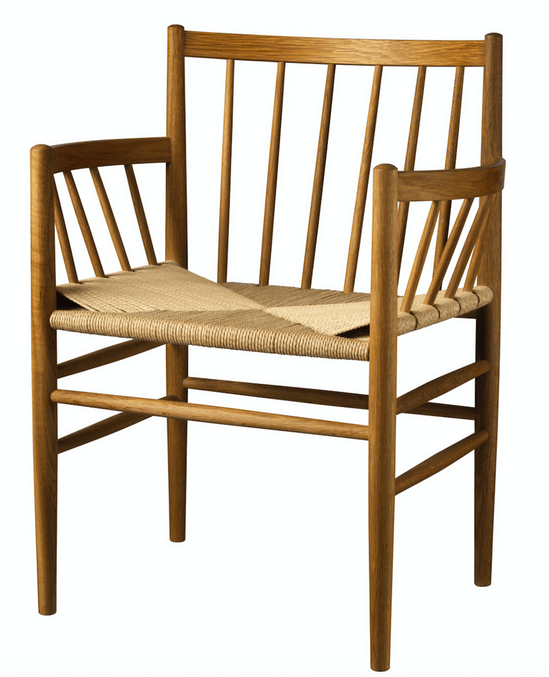
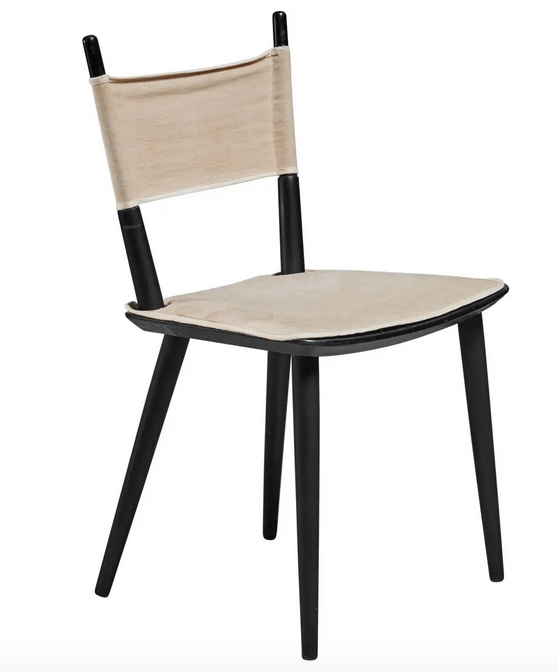
This woven series by the renowned FDB designer Jørgen Bækmark comprises several pieces of furniture, including the classic and iconic J80 dining chair. The chair harks back to the golden age of FDB Møbler in the 1950s and has survived to this day due to its elegant and timeless look. Also available with armrests and functioning as a freestanding chair, the J80 is comfortable to sit in for long periods of time as it is made from quality materials from the paper cord to the solid wood.
This woven series by renowned FDB designer Jørgen Bækmark comprises several pieces of furniture, including the classic and iconic J80 dining chair. The series harks back to the golden age of FDB Møbler in the 1950s and has survived to this day due to its elegant and timeless look. J81 is the version with armrests which also functions as a free-standing chair. It is comfortable to sit in for long periods of time as it is made from quality materials from the paper cord to the solid wood.
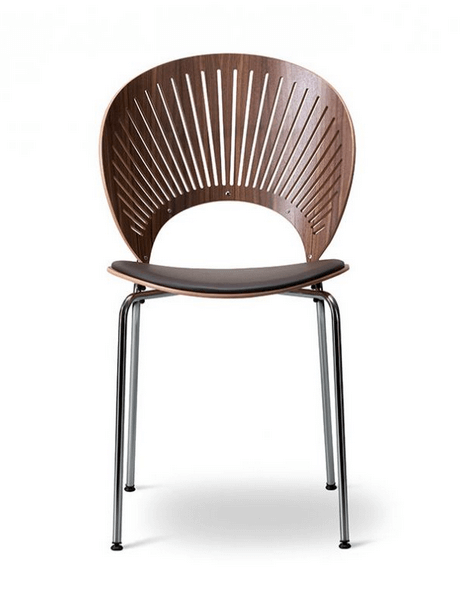
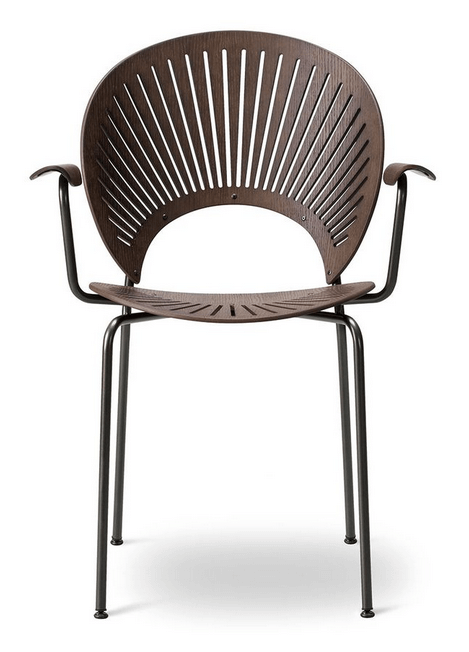
Nanna Ditzel designed the Trinidad chair for Fredericia Furniture in 1993. The beautiful chair is very sculptural and is both made with and without armrests. The popular Trinidad chair can be found everywhere in the world today.
Nanna Ditzel designed the Trinidad chair for Fredericia Furniture in 1993. The beautiful chair is very sculptural and is both made with and without armrests. The popular Trinidad chair can be found everywhere in the world today.
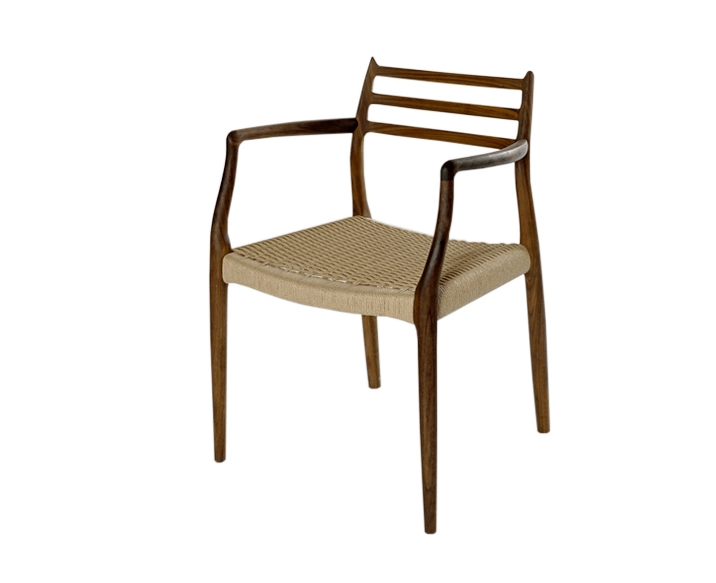
The armchair Model 55 is designed by the Danish carpenter and architect Niels Otto Møller in 1951.The chair is still produced at JL Møller Møbelfabrik.
The armchair Model 62 is designed by the Danish carpenter and architect Niels Otto Møller.The chair is still produced at JL Møller Møbelfabrik.The chair is produced in oak, rosewood, teak and walnut.
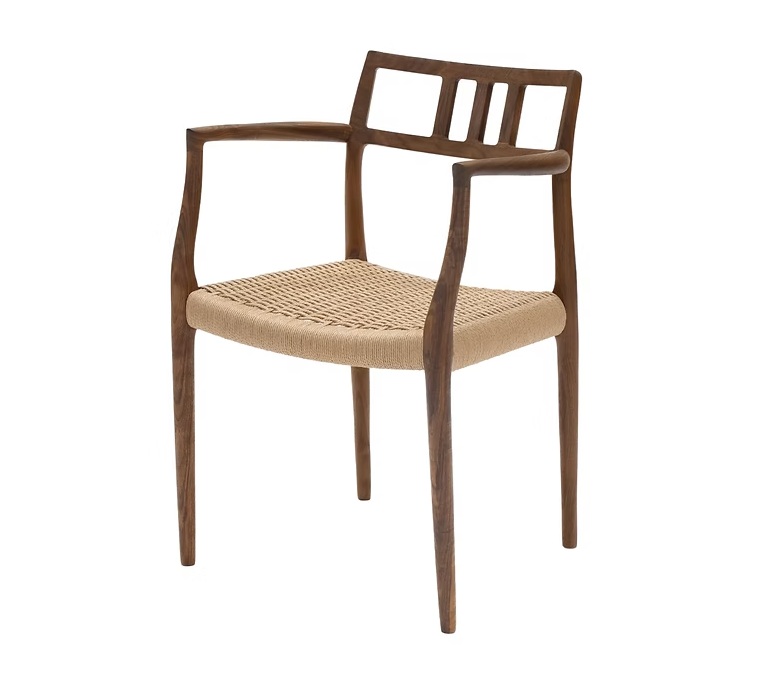
Model 64, designed in 1966, is the armchair version of the acclaimed Model 79. It features the same sculptural backrest with three vertical slats, while the armrests follow a gentle curve upward and outward. They end in delicate points that not only enhance ergonomic comfort but also contribute to a dynamic and precisely crafted silhouette. This subtle yet intentional detail gives Model 64 an expressive rhythm, combining softness with sharp precision.
Designed in 1974, this chair is a masterful blend of style, functionality, and exquisite craftsmanship. Its intricate joinery makes it one of the most demanding pieces to produce, showcasing exceptional design and unmatched woodworking skill. The seamless integration of the armrests not only highlights the chair’s sculptural beauty but also enhances comfort, while the gently curved backrest provides superior ergonomic support and lasting comfort, even during extended periods of sitting.
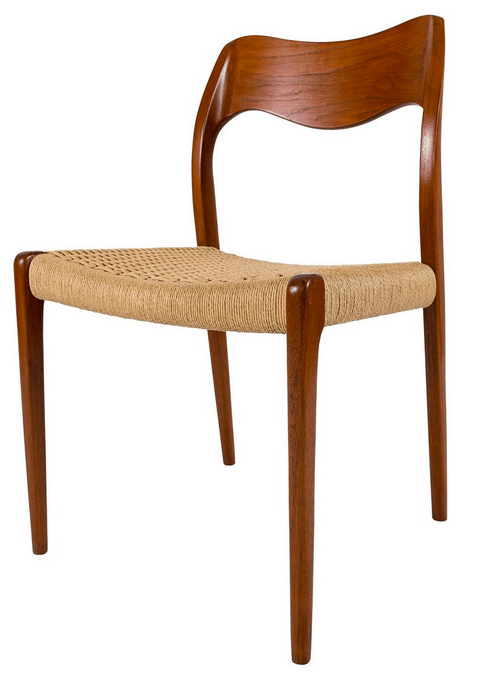
The No. 71 chair was designed by Niels Otto Møller in 1951. It is produced by J.L. Møller’s Furniture Factory in Højbjerg and has truly stood the test of time. The chair exudes timeless elegance and exceptional comfort, making it a popular choice among design enthusiasts and those who appreciate fine craftsmanship. With its simple and stylish design, the No. 71 chair fits perfectly into any room and suits any occasion.
Introduced in 1959, this chair epitomizes timeless elegance with its compact, cubic silhouette that effortlessly integrates into any interior. The gently curved backrest, shaped using the traditional steam bending technique, provides both anatomical comfort and sculptural grace. Striking a balance between refined aesthetics and practical versatility, the design adapts seamlessly to a wide range of interior styles as well as residential and hospitality settings. With its subtle presence and enduring charm, the chair stands as a quiet testament to thoughtful craftsmanship and modern design sensibility.
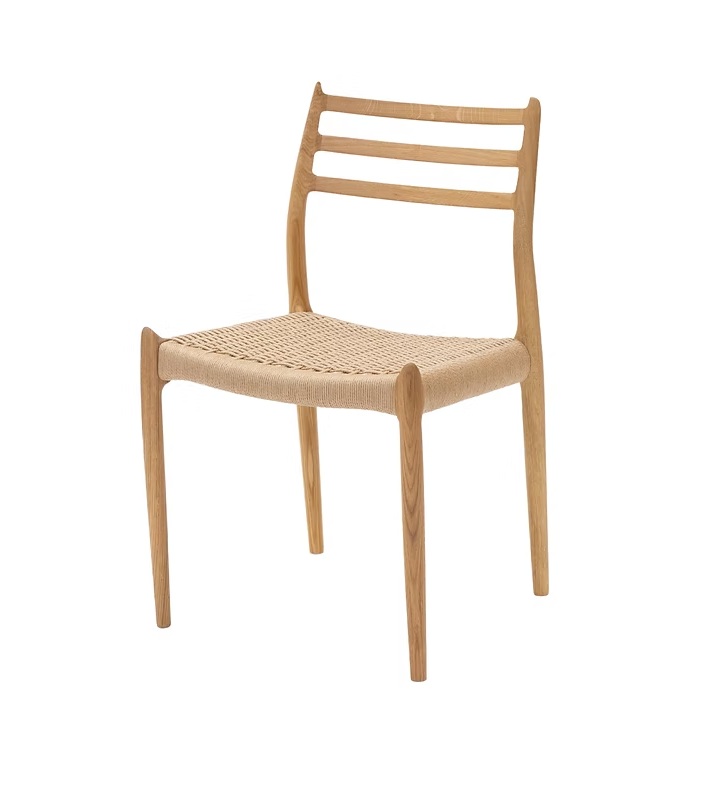
The No. 78 chair is a timeless classic designed by Niels Otto Møller in 1962. It is still produced today by J.L. Møller’s Furniture Factory in Højbjerg. The chair is available in a variety of woods, including oak, teak, rosewood, and walnut. With its simple and elegant design, the No. 78 chair fits seamlessly into any interior, adding a touch of Scandinavian charm to the space. With its emphasis on craftsmanship and quality, the No. 78 chair is a beautiful example of Danish design tradition that will endure for many years to come.
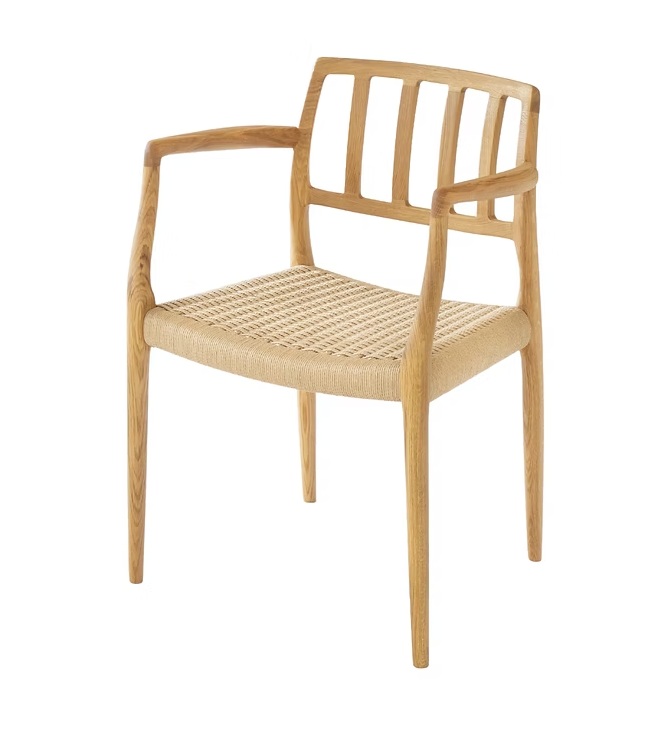
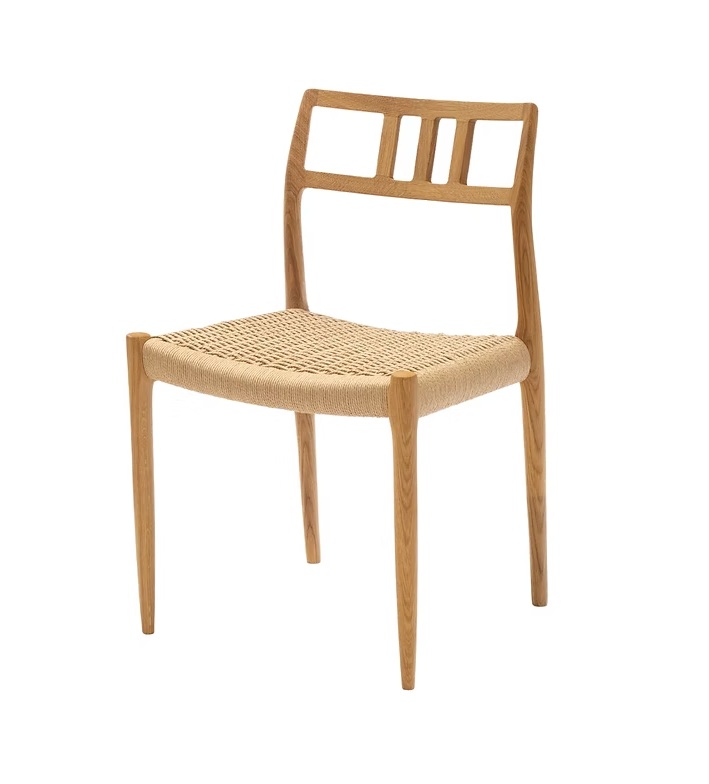
Designed by Niels Otto Møller in 1966, Model 79 exemplifies the elegance and integrity of Danish craftsmanship. Defined by its distinctive backrest with three vertical slats, the chair strikes a harmonious balance between sculptural form and functional clarity.A celebrated piece in the history of modern furniture, Model 79 has received numerous awards and was a part of permanent collections at the Victoria and Albert Museum in London and the Museum für angewandte Kunst in Vienna. Handcrafted from solid wood with Møller’s signature seamless joinery, it offers a refined silhouette that embodies both comfort and timeless design.
Launched in 1976, this chair masterfully blends expressive precision with a compact, well-defined silhouette. Its design harmonizes bold, sculptural lines with graceful proportions, creating a perfect balance of elegance and comfort. The seamless interplay of consistent thickness and refined detailing results in a piece that is both visually striking and enduringly timeless.
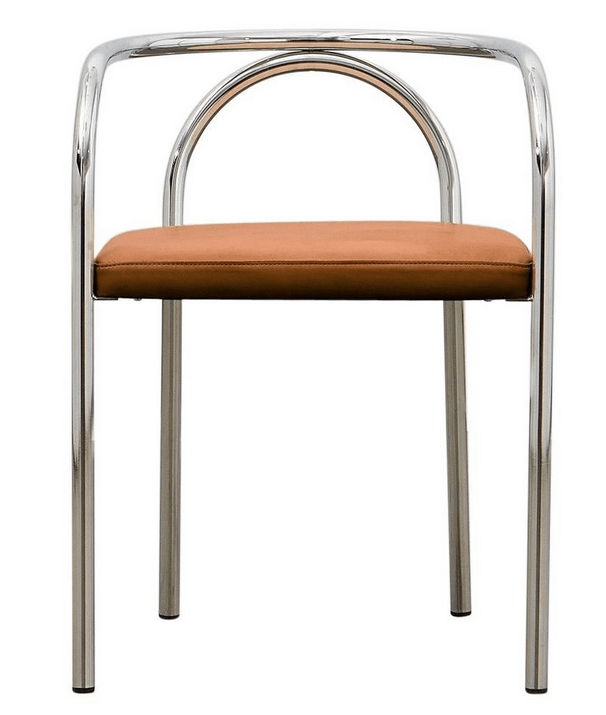
Designed in 1932 by Poul Henningsen, the PH Chair reimagines the classic bistro typology in bent steel – two continuous tubes meeting at the back for strength, lightness and clarity. The upholstered shell supports an attentive, upright posture suited to dining, conversation and meeting spaces at home or work; materials bring warmth while the frame remains precise and architectural.
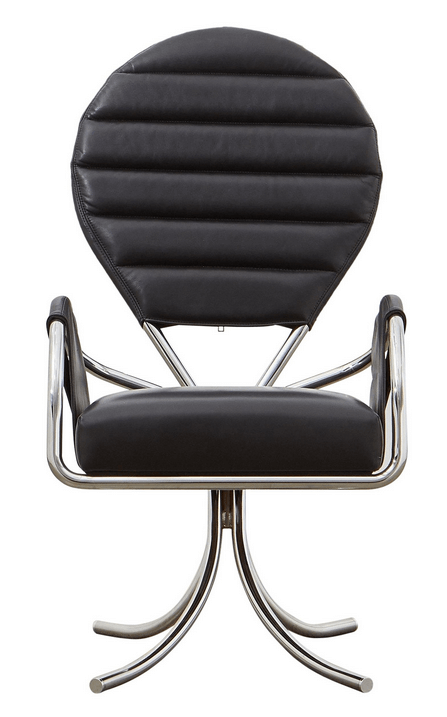
Designed in 1932 by Poul Henningsen, the PH Pope Chair sets a sculptural, upholstered shell on bent steel tube legs for lift and lightness. The backrest shaped after a papal mitre – supports an upright, conversational posture, bringing measured comfort and a calm, architectural presence to lounges, lobbies, meeting rooms and refined home interiors.
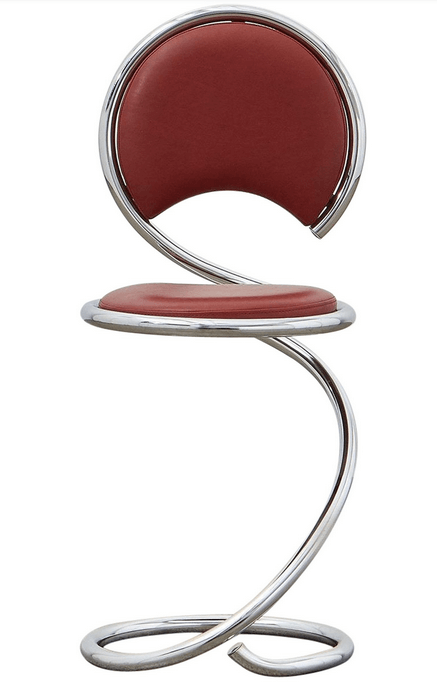
Designed in 1932 by Poul Henningsen, the PH Snake Chair draws a single, continuous loop in bent steel reminiscent of a coiled snake lifted by a precise circular seat. In the Full Upholstery edition, extended covering softens the line and adds a calm, tactile presence suited to entrances, lounges and bedrooms.
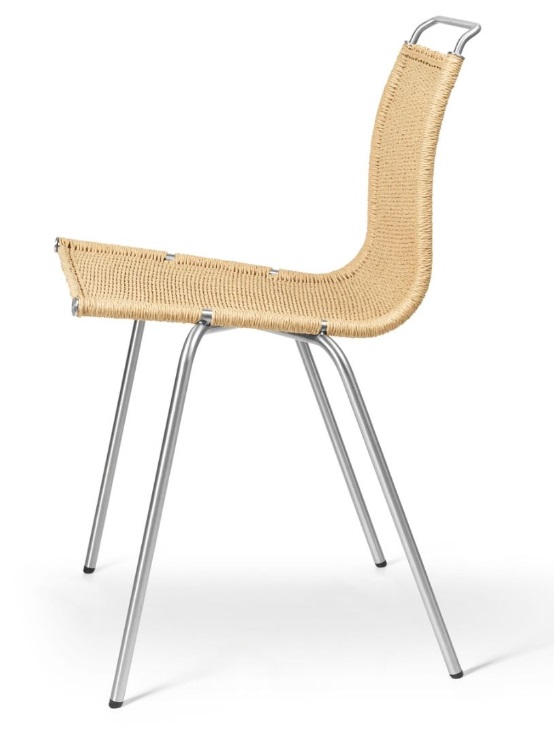
Poul Kjærholm was one of the star architects behind Danish Modern. With his functionalistic approach to furniture design, Kjærholm cultivated simplicity and lightness. Moreover, as a designer, he excelled at combining his favorite material, steel, with other organic materials. Both qualities are reflected beautifully in the PK1 dining chair.
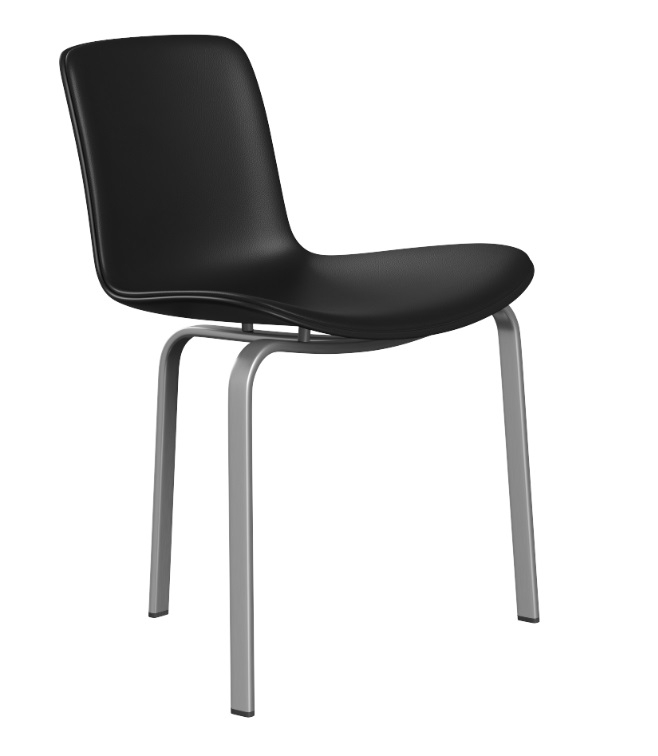
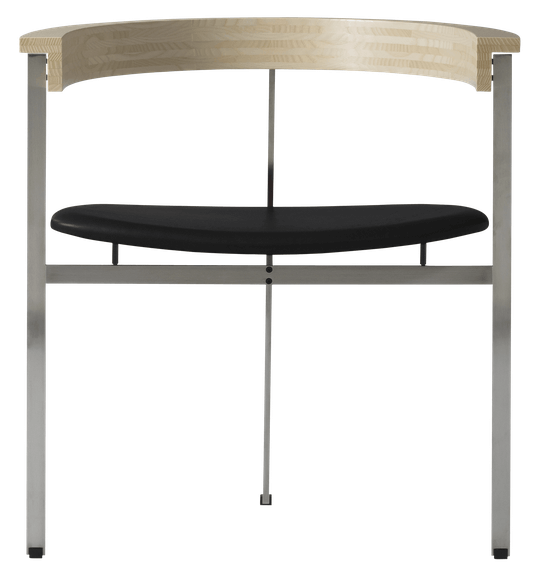
For many years, the PK8™ existed only as a prototype in the home of Hanne Kjærholm, the wife of Poul Kjærholm. Today, it’s widely recognised as a striking execution of Scandinavian craftsmanship. Its unique threelegged form and sinuous curves give it an expression all its own.
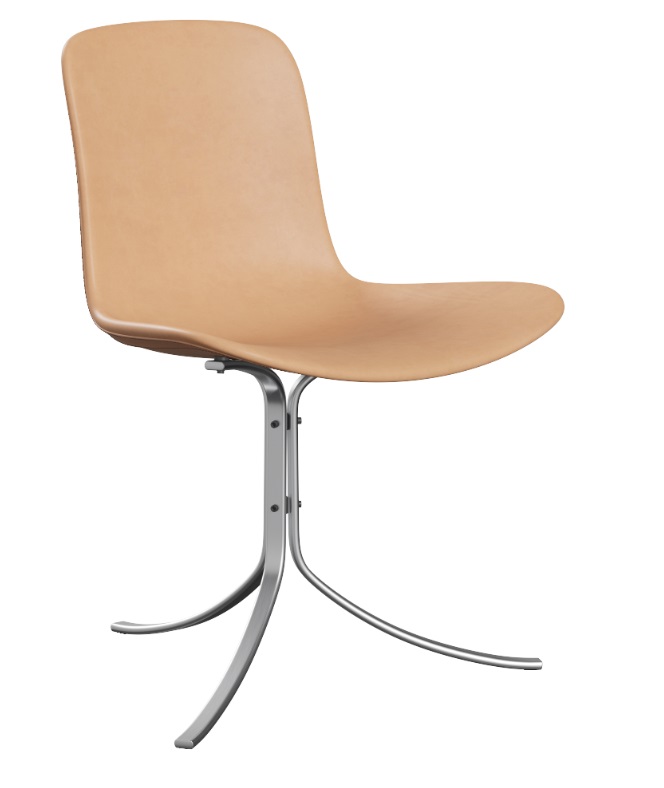
In 1960, Poul Kjærholm designed the beautiful and very unique chair PK9, also called the tulip chair.The PK9 chair is one of Poul Kjærholm’s most famous designs. The chair is incredibly stylish and timeless with a brushed steel frame and seat upholstered in the most amazing leather.
Characterised by its three-legged satin brushed stainless steel frame, PK11™ strikes the perfect balance of curves and bold angles. Designed by Poul Kjærholm in 1957, it is a complex yet elegant chair, created as a companion to the PK51™ worktable.
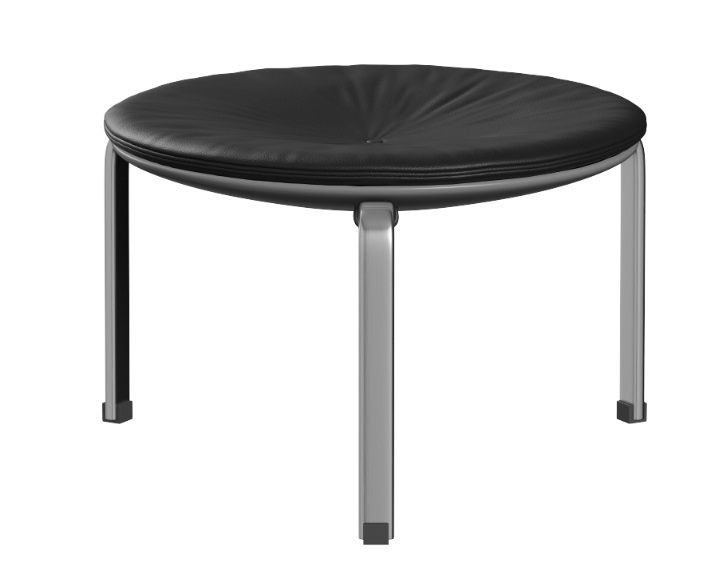
The iconic PK33™ epitomises Poul Kjærholm’s use of assembly techniques, his exploration of materials and his simplification of structure into a type-form. The three-legged matt chromed spring steel stool borrows elements from his other designs, while still maintaining its own unique expression.
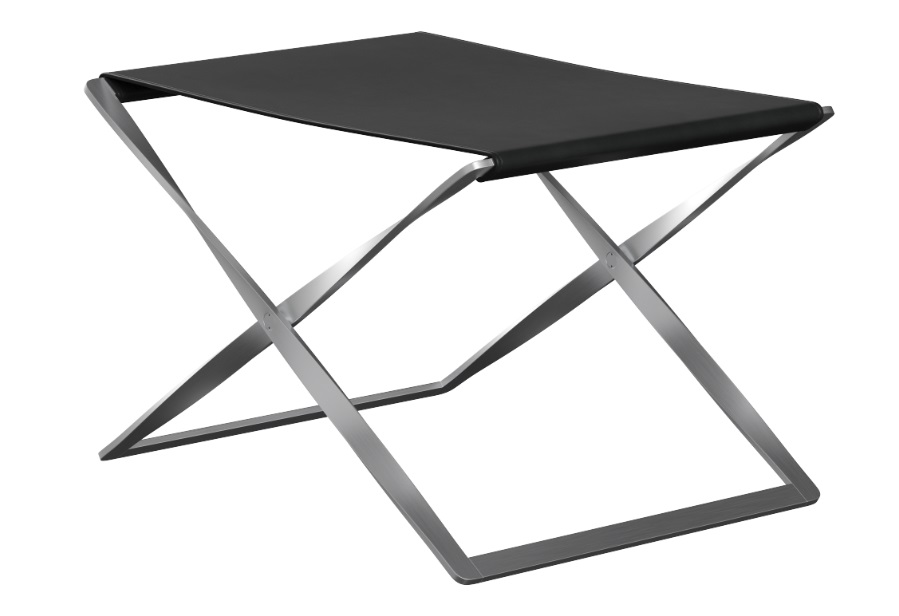
The PK91™, designed by Poul Kjærholm, is an homage to the designer’s mentor, Kaare Klint, who made a folding chair in wood in 1930. This folding stool is unmistakably a Kjærholm classic.
The strong character and attention to comfort and usability of the System 1-2-3 makes it a perfect choice for anyone not afraid to make a statement.
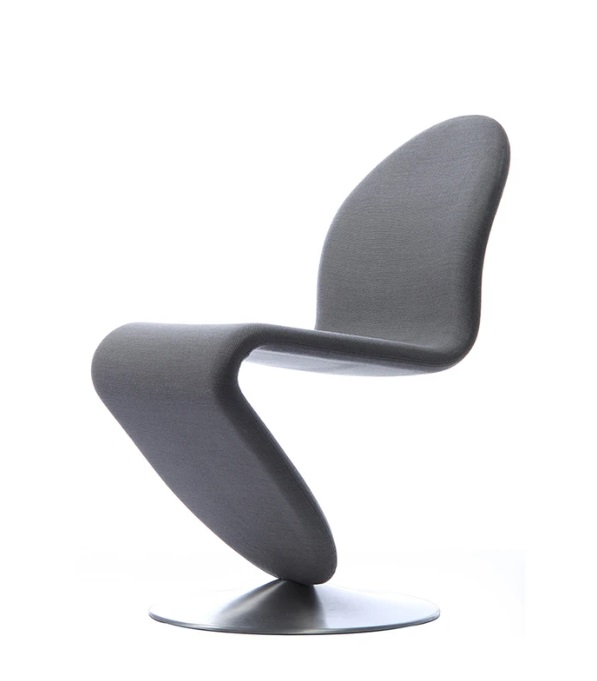
System 1-2-3 Dining Chair Standard – is a fully upholstered S-shaped swivel dining chair mounted on a brushed aluminum base. Available in Round and Butterfly base.
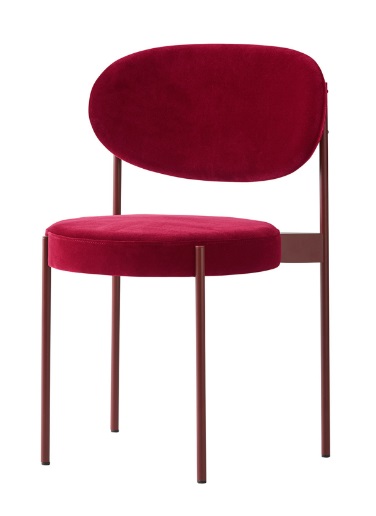
Verner Panton designed the Series 430 Chair as a study in simplicity, while providing the same comfort as an armchair. He did so by applying traditional webbing to the fully upholstered seat to adjust for body weight and create a wide nestling backrest and place it on a slender elegant frame that mounts on the outside of the seat and back.
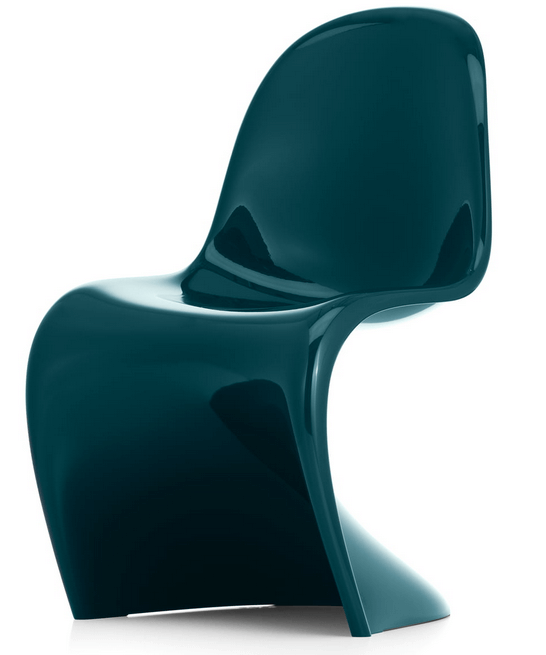
In 1959, Verner Panton designed the beautiful Panton Chair. The chair is produced in molded plastic. The chair is available in many colors and is produced today by Vitra. Panton chair can be seen in many places around the world.
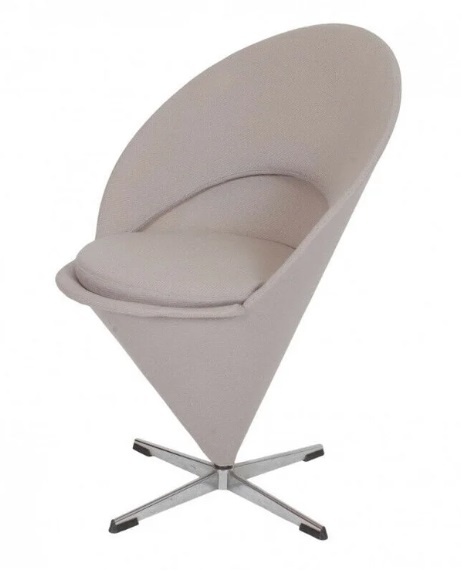
Verner Panton has designed a chair especially for the Kom Igen restaurant in Denmark: the Cone Chair. As its name suggests, the body of the chair takes the form of a cone. Standing on its tip, a semi-circular padded shell extends upwards to form the back and armrests, thereby creating a very comfortable armchair. The entire body is covered in fabric and the Cone Chair is supported by a flat, slender four-star base made of brushed stainless steel.
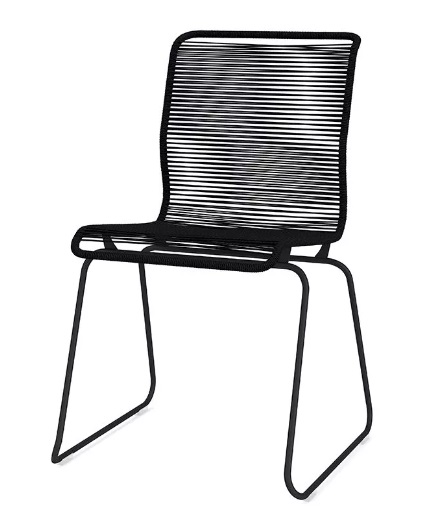
The Panton One classic by Verner Panton – chairs for every occasion. Verner Panton created the Panton One chair as his very first chair design in 1955.
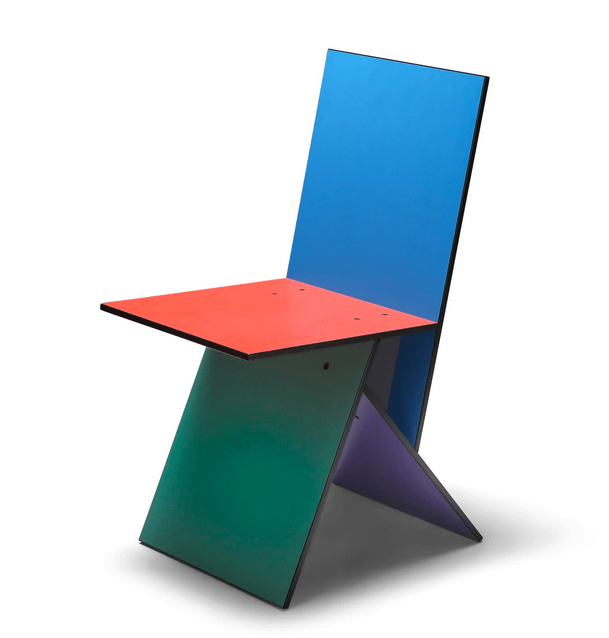
One of the last designs Verner Panton designed before he died was the very simple but sculptural chair ‘Vilbert’.Vilbert was produced in 1993/1994 for IKEA.However, it never became a sales success for IKEA so it was quickly taken out again.