Welcome to our exclusive collection of Danish lounge chairs, where form meets function in perfect harmony. A lounge chair is more than just a piece of furniture; it is a sanctuary within the home, designed for contemplation, relaxation, and aesthetic pleasure. At Danish Design Classics, we have curated the most iconic signature pieces from the golden age of Danish furniture design.
Chairs by arne jacobsen
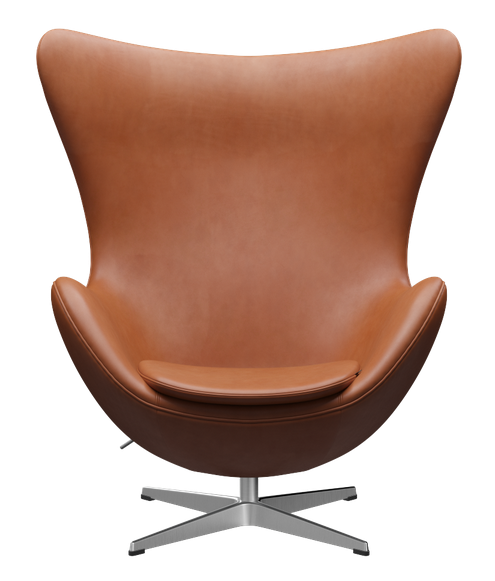
The egg by arne jacobsen
The Egg™ chair by Arne Jacobsen is masterpiece of Danish design. Jacobsen found the perfect shape for the chair by experimenting with wire and plaster in his garage. Today, the Egg chair is recognised worldwide as one of the triumphs of Jacobsen’s legendary career and a Scandinavian design icon.
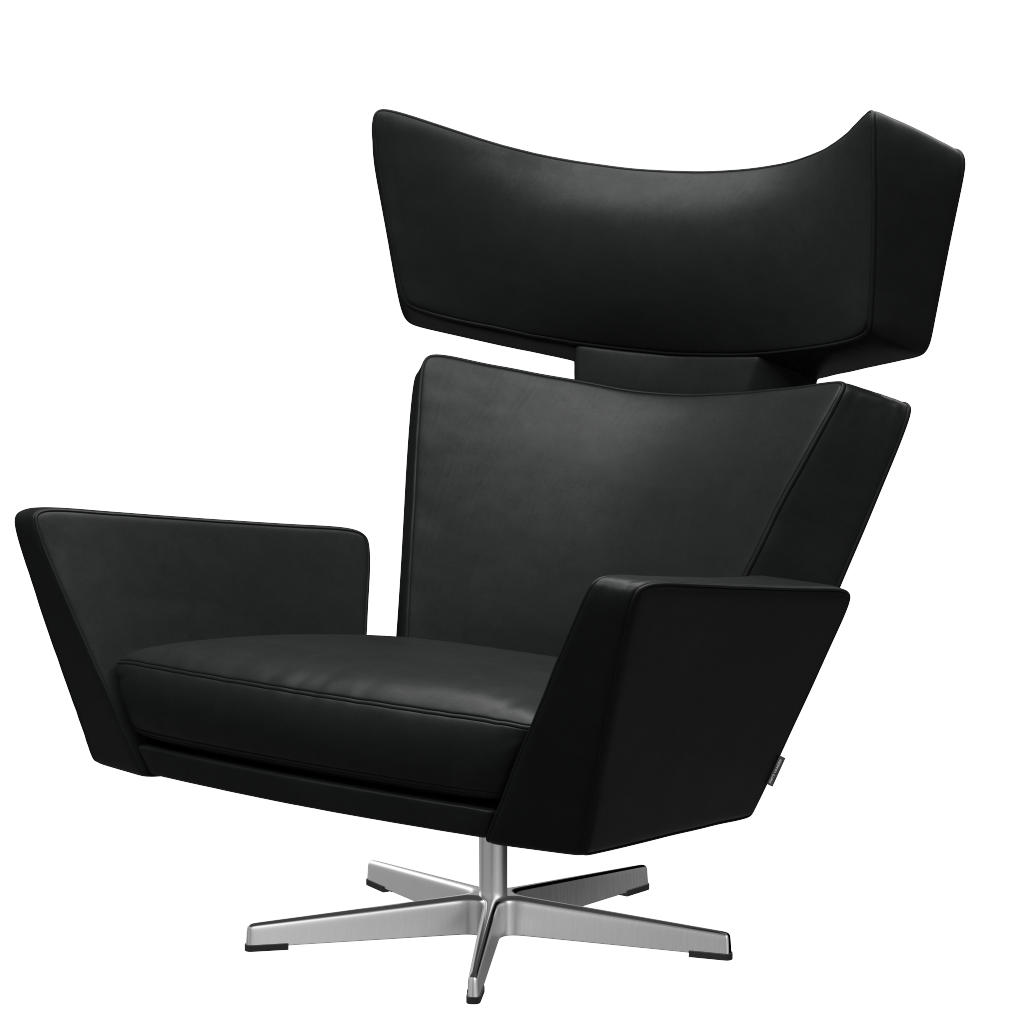
Ox chair by arne jacobsen
The sculptural and strong armchair “Oksen” was designed by Arne Jacobsen in the years 1962-1966. It took a full 5 years to develop Oksen as he returned over and over again over the years with new variations of it. When he first published it in 1966, he surprised design connoisseurs around the world as it was so different and edgy in design compared to his other round and soft armchairs. The inspiration for Oksen comes from the American recliner.
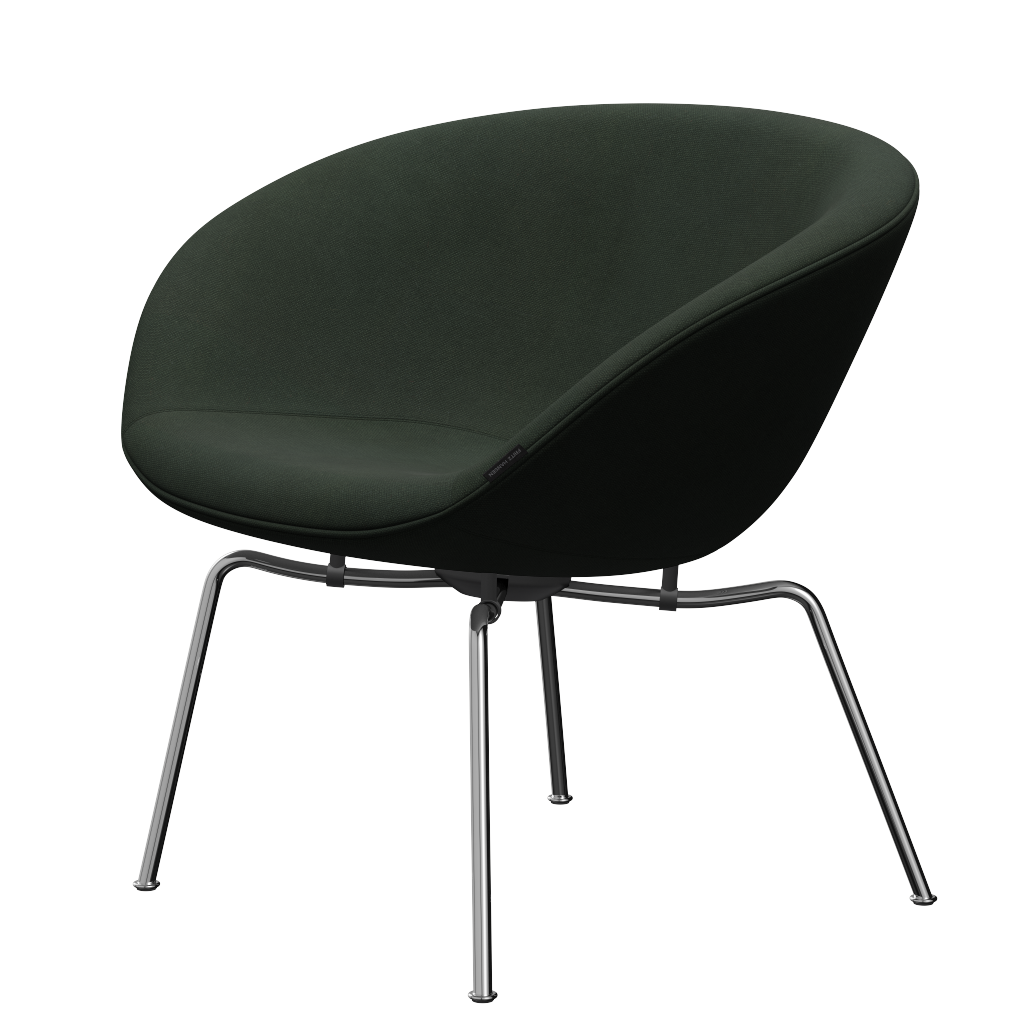
Pot chair by arne jacobsen
In 1959, Arne Jacobsen designed the “Pot” for the SAS Royal Hotel in Copenhagen. Over the years, it has had its seat and materials improved by Fritz Hansen in order to live up to today’s requirements for quality. Pot chair is simple, beautiful and timeless.
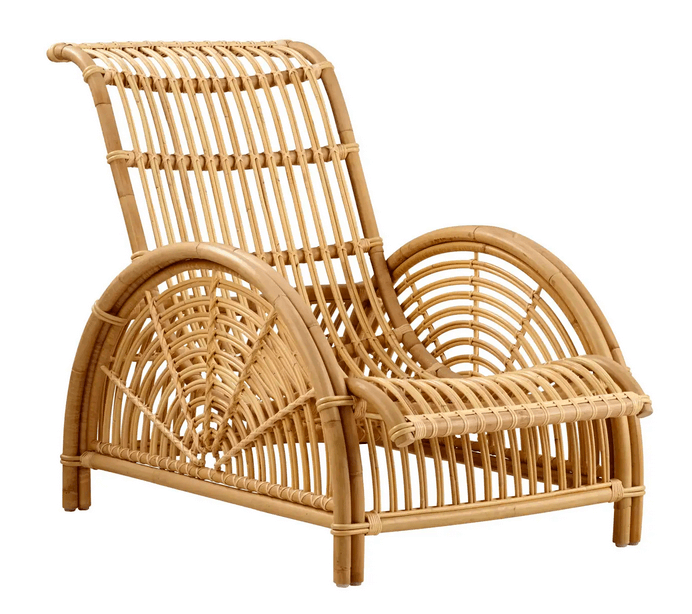
Paris Lounge chair by arne jacobsen
Arne Jacobsen, one of Denmark’s most iconic architects and designers, created the Paris Chair in 1925 as part of his early work. The chair was originally designed for a competition at the Exposition Internationale des Arts Décoratifs in Paris, which is also where it got its name. It won the silver medal at the exhibition and became an important milestone in Jacobsen’s career.
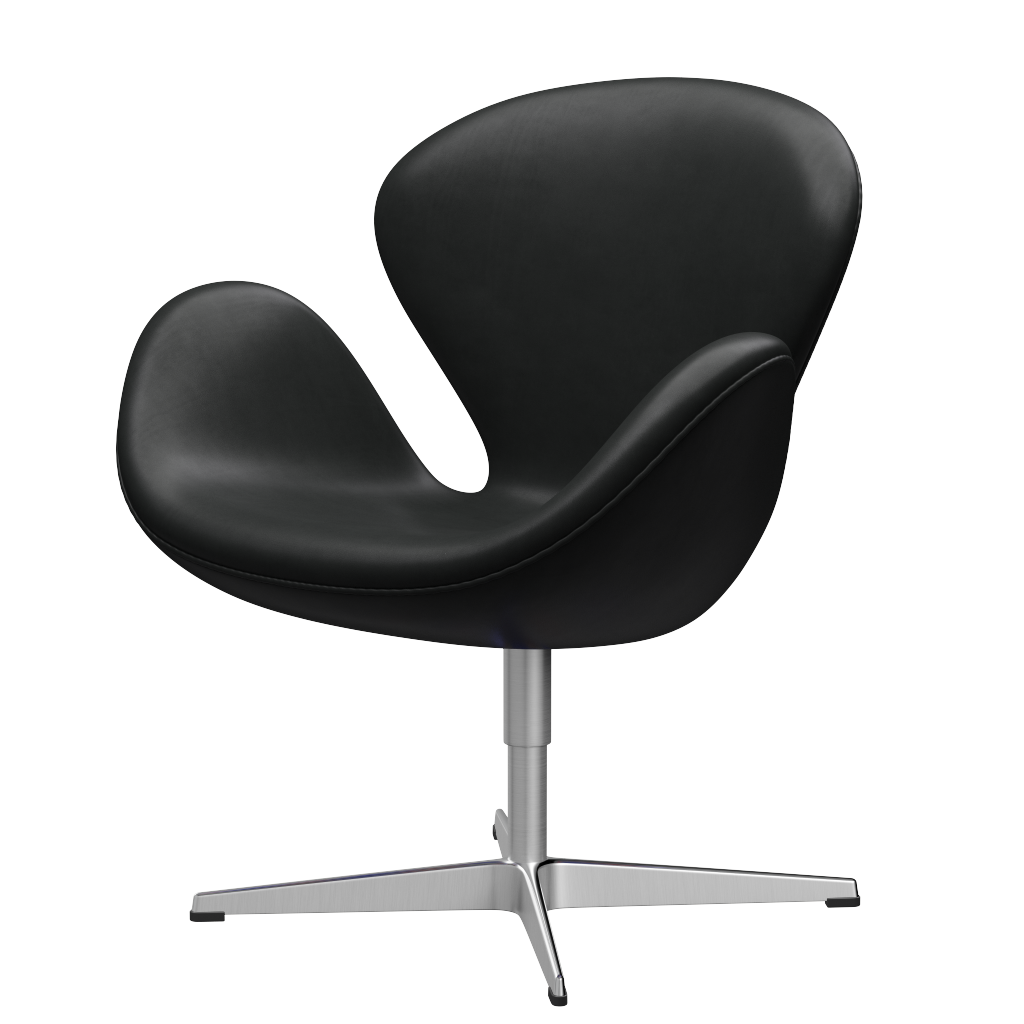
Swan chair by arne jacobsen
The Swan was designed by Arne Jacobsen in 1958. The Swan was originally designed for the lobby and lounge areas at the Royal Hotel in Copenhagen. The assignment gave Arne Jacobsen the opportunity to realize his ideas about integrated design and architecture. When the Swan was designed, it was a technological innovation. The chair had no straight lines – only curves.
This innovation was met with great respect, and the Swan therefore marked itself quickly as a recognized and prestigious design. The swan is available with or without a reversal, which makes the chair ideal for several different establishments. The chair is available in different materials, especially the black leather basic and classic red are extremely popular. No matter how you have set up in your home, you will definitely find room for this luxurious design chair. The chair can be used both at the desk, like a reading chair in the corner and much, much more.
Swan chair by arne jacobsen
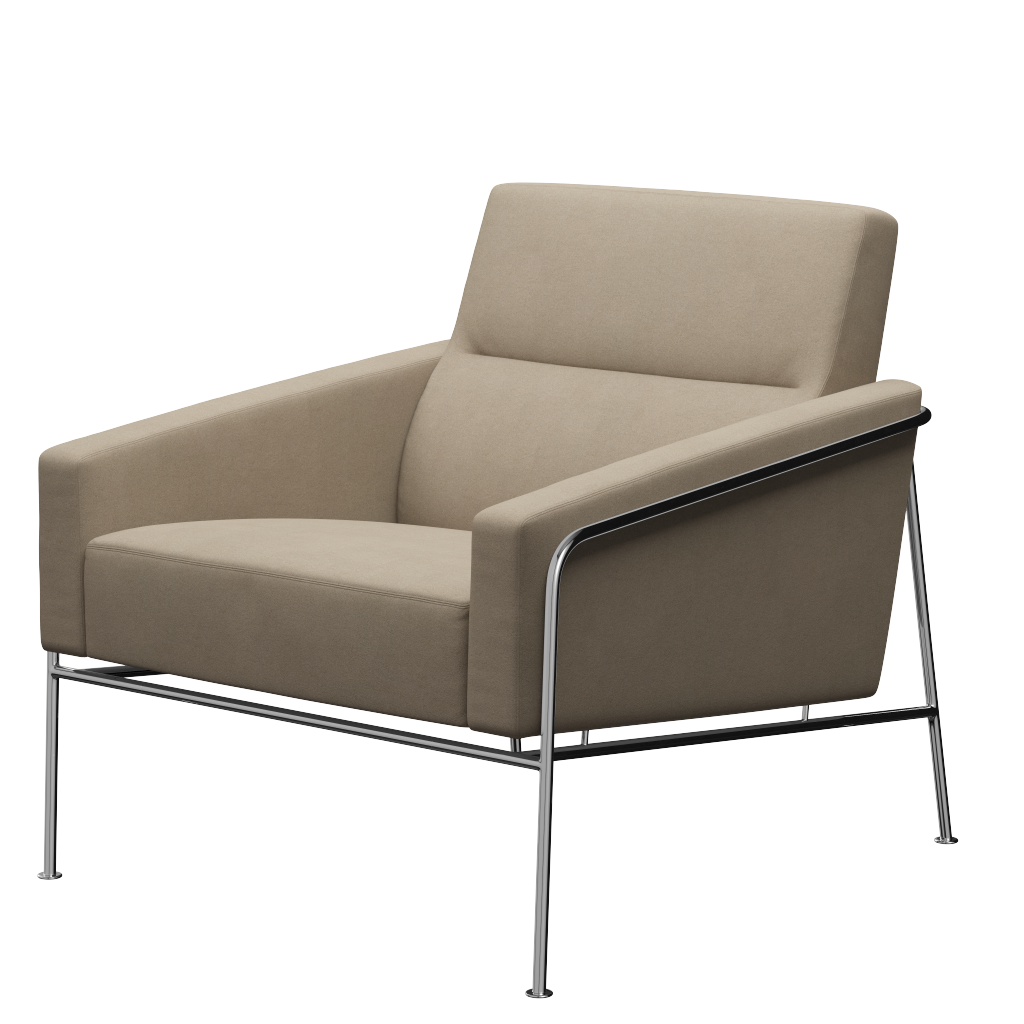
3300 Lounge Chair by arne jacobsen
Arne Jacobsen designed the 3300 series, including the sleek armchair, in 1956 as part of his work on furnishing the SAS Royal Hotel in Copenhagen. This series was created with a focus on combining timeless elegance, superior comfort, and modern aesthetics, showcasing Jacobsen’s unique approach to design and architecture.
The 3300 armchair is characterized by its clean lines and simple form. It features an upholstered frame and chrome-plated steel legs, giving the chair a minimalist and sophisticated appearance. Its streamlined design makes it suitable for both private homes and public spaces, where it adds a touch of understated luxury.
Chairs By Arne Vodder
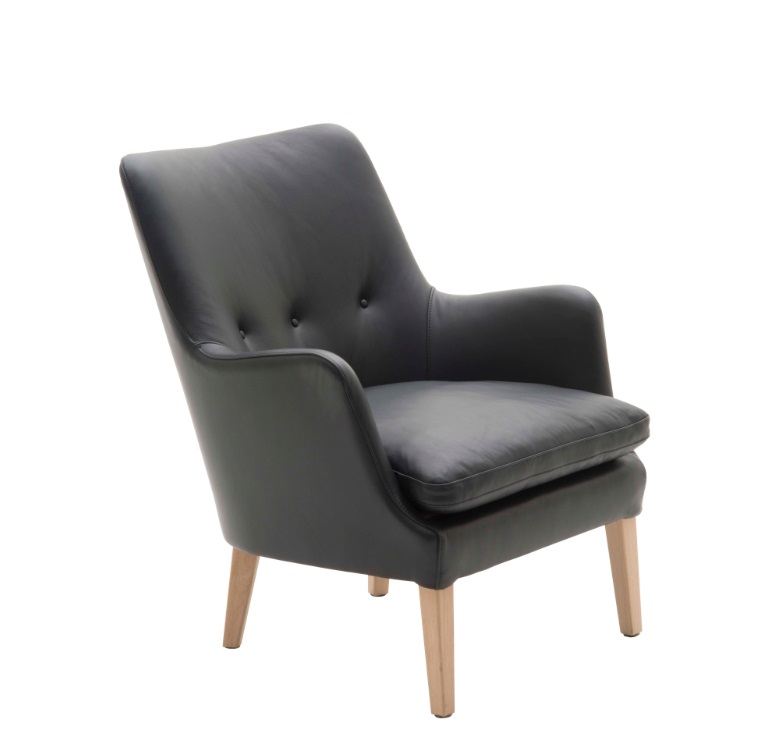
AV53 by arne Vodder
Arne Vodder, one of the most renowned Danish designers of the mid-20th century, created the AV53 lounge chair in 1953. The chair is an excellent example of Vodder’s ability to blend functionality and aesthetics with a particular focus on materials and craftsmanship.
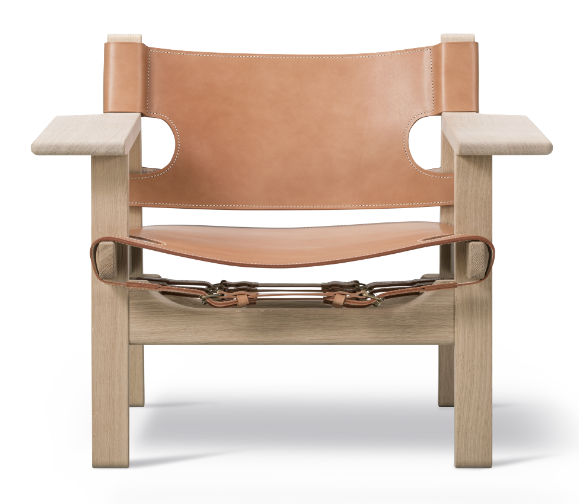
A beautiful and classic armchair designed by Børge Mogensen. The Spanish chair is an interpretation of a traditional chair type that was encountered in all the ancient Islamic cultural areas. The combination of solid wood and core leather provides a strong and rustic expression that fits perfectly into the modern decor. The Spanish chair is made of the best materials, and it only gets more beautiful over time. The chair is made of solid oak.
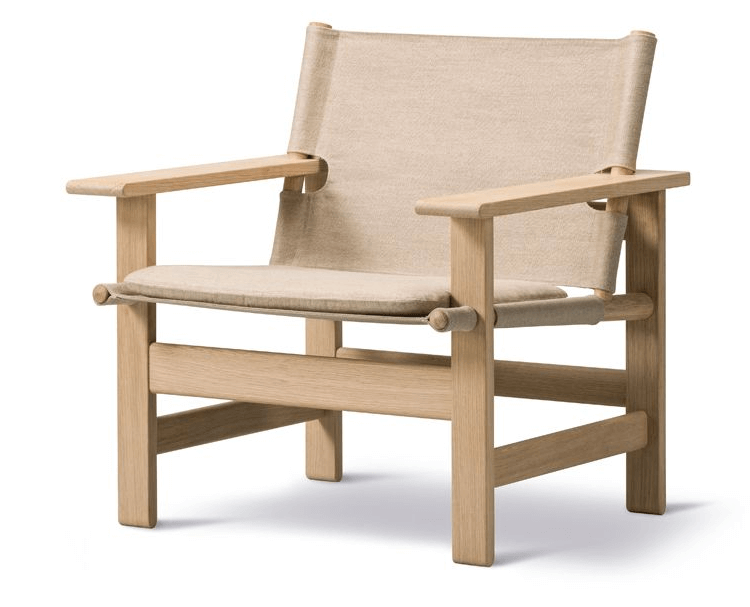
Canvas chair BY børge mogensen
The Canvas Chair is characterized by its lightweight, foldable construction, making it both practical and versatile. The chair features a solid wood frame, often crafted from oak or beech, paired with a durable canvas seat and backrest. This combination of natural materials gives the chair a warm and authentic feel, perfectly suited to Scandinavian homes and modern interiors.
2229 the hunting chair BY børge mogensen
The hunting chair was designed by Børge Mogensen back in 1950. It is made of oak and grain leather. With its simple and functional design, the hunting chair is an icon within Danish furniture design. It is a piece of furniture that only gets more beautiful with time. Børge Mogensen really managed to create a piece of furniture that speaks to both the eye and the body.
2204 chair BY børge mogensen
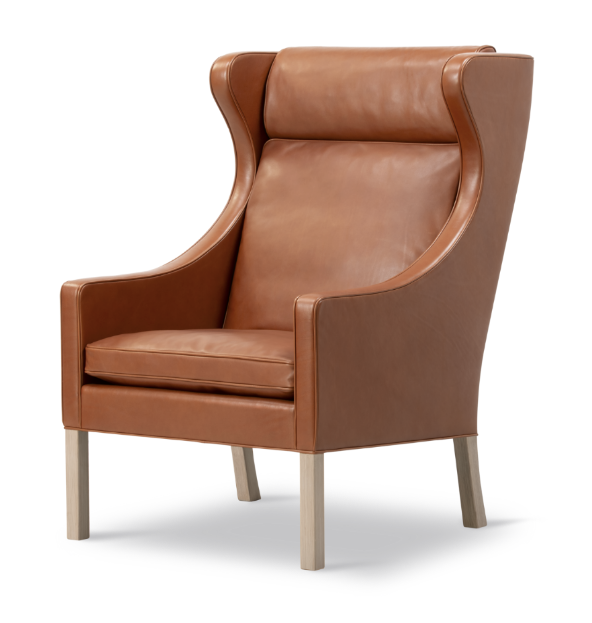
Børge Mogensen, one of Denmark’s most influential furniture designers, created the 2204 armchair as part of his iconic 2200 series. First introduced in 1963, the design embodies Mogensen’s dedication to combining classic elegance with practical functionality and superior craftsmanship.
The 2204 armchair is a high-back chair designed with a focus on maximum comfort. It features a distinctive padded form with gently curved armrests and a prominent backrest, providing a sense of support and luxury. The frame is handcrafted from solid wood, while the upholstery is often finished in high-quality leather or fabric, ensuring durability and visual appeal.
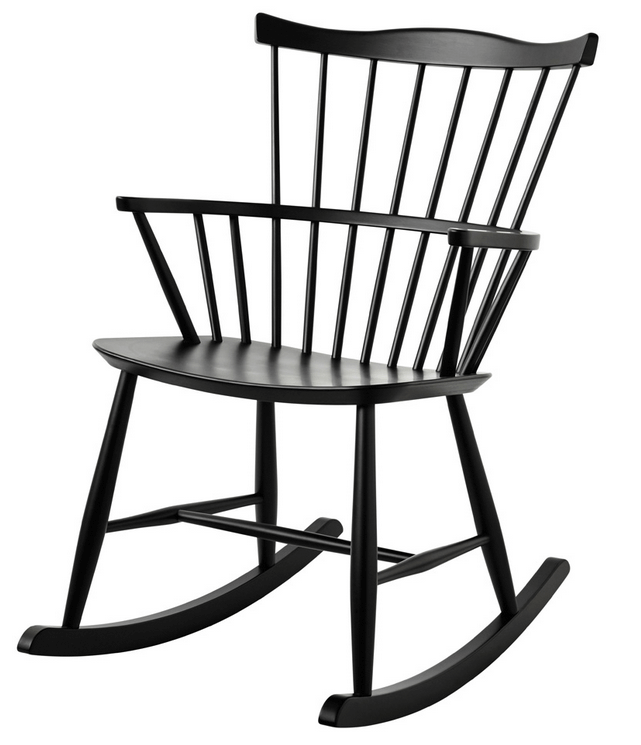
J52G Rocking chair BY børge mogensen
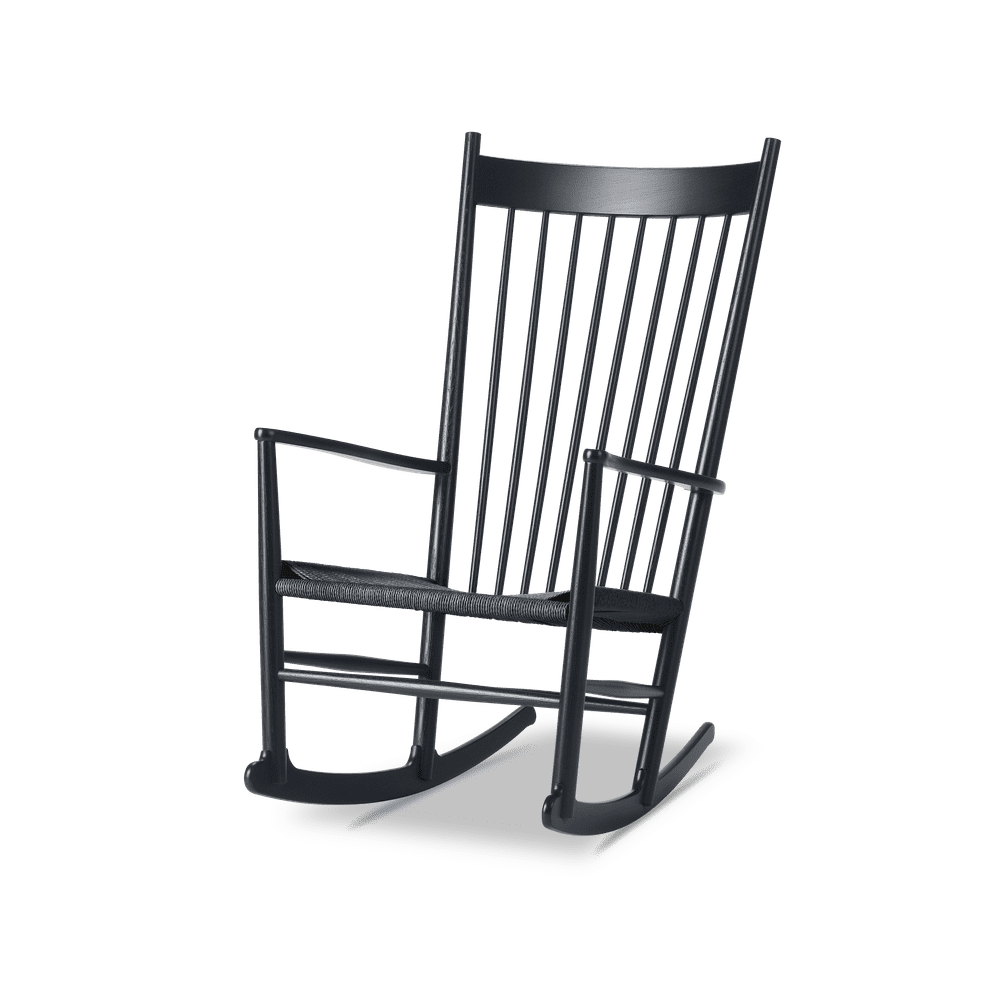
Both Børge Mogensen and Hans Wegner designed rocking chairs for FDB Møbler. In the 1950s Børge Mogensen was able to further improve on the already comfortable Windsor Chair when he added rockers to create the J52G rocking chair. The chair bears Børge Mogensen’s elegant, clean lines, and is available in many beautiful colours. A chair for total relaxation that fits into the living room or elsewhere around the home, wherever you want space for tranquility and contemplation.
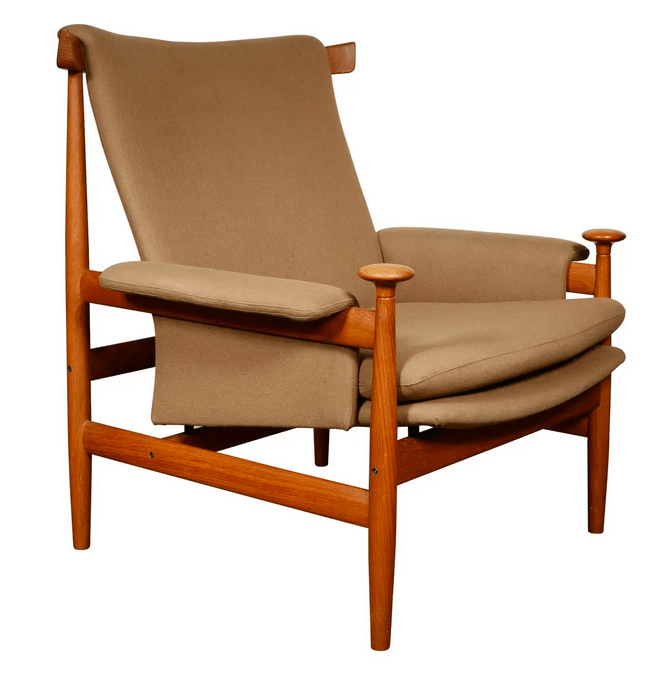
The Bwana Chair, designed by Finn Juhl in 1951, is an iconic example of Danish modern design. Inspired by African art, the chair features bold, sculptural forms and a low, inviting posture. Its organic teak frame and generously padded leather seat emphasize comfort while showcasing Juhl’s belief that furniture should be expressive and artistic. The Bwana Chair remains a timeless statement piece that blends craftsmanship, function, and sculpture.
chieftain chair by finn juhl
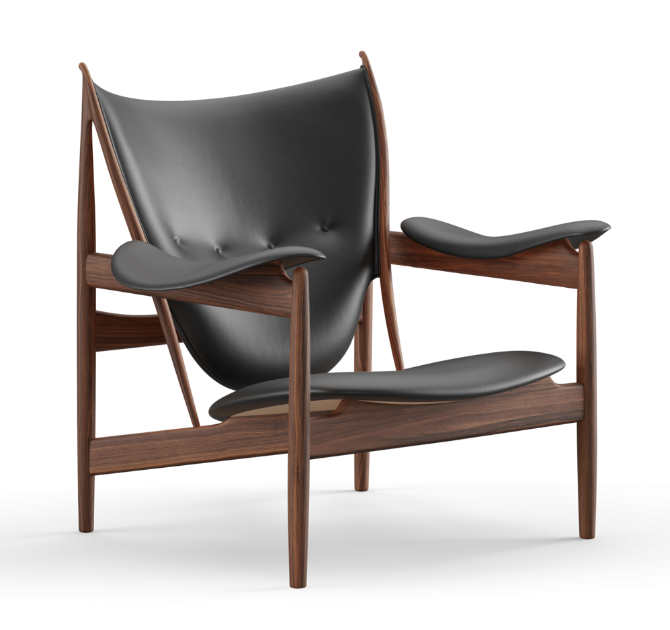
The chief chair is one of Finn Juhl’s absolute masterpieces and represents the highlight of his career as a furniture designer. At the presentation in 1949, it marked a renewal in Danish furniture art, and today it is one of the most important exponents of the Danish Modern movement’s dissemination in the United States in the 1950s. For this reason Finn Juhl, especially internationally, is considered the father figure for the Danish design tradition.
Inspired by contemporary art and with its organic forms, the Chief Chair released itself from the tradition-bound Danish furniture tradition and the strict functionalism, with its shape, design and material choice.
France chair by finn juhl
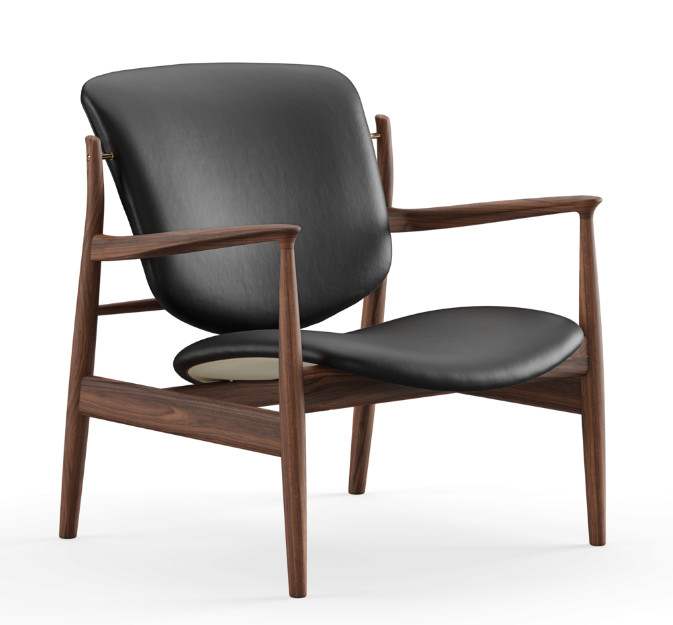
The France chair was designed for the American market in 1956 by Finn Juhl, and it has since achieved icon status in furniture design. With its elegant and timeless design, the chair has won many hearts around the world. Finn Juhl managed to create a chair that is both comfortable and stylish at the same time.
Grasshopper by finn juhl
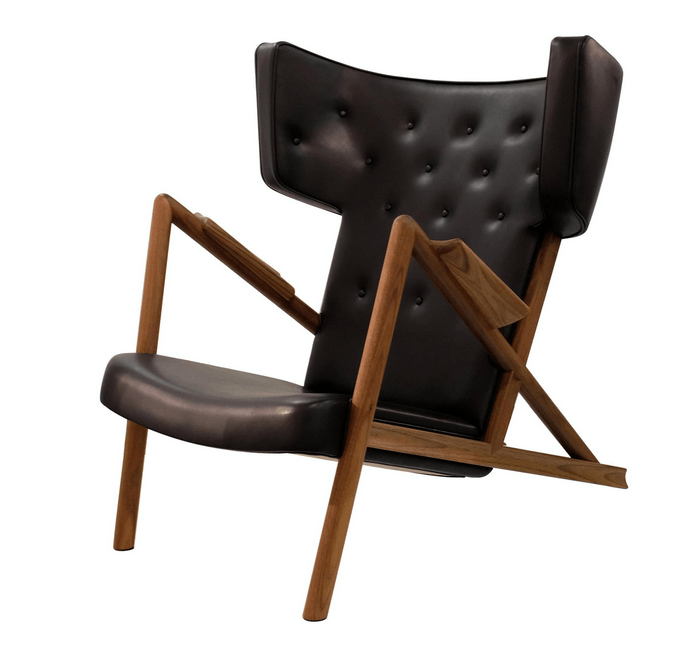
Designed in 1938, the Grasshopper Chair was one of Finn Juhl’s first attempts at expressing his artistic freedom through furniture, marking the beginning of a long line of designs that would establish his reputation. Although it was never produced during his lifetime, the chair gained iconic status through numerous illustrations in design literature and was finally put into production in 2019. The chair is hand-upholstered in Denmark, available in textile or leather, with a frame crafted in oak or walnut.
Kettelhut CHair by finn juhl
With its broad, enveloping armrests, the Kettelhut Chair is a striking example of Finn Juhl’s artistic approach to furniture design. Originally known as SW 86, the chair was first produced in Denmark, but Finn Juhl had international ambitions and sent the drawing to the American manufacturer Baker Furniture. Today, the chair bears the honorary name Kettelhut, after Mary Ellen Kettelhut, former Vice President of Marketing at Baker and owner of the original watercolor drawing. It is hand-upholstered in Denmark in either textile or leather, with a frame crafted from a refined combination of solid oak and walnut.
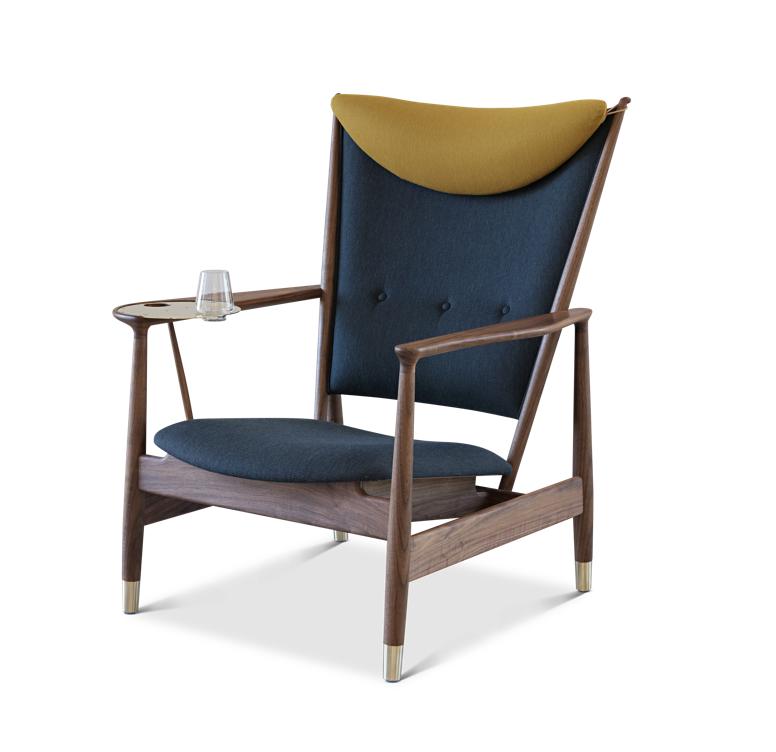
The Whisky Chair by finn juhl
Defined by Finn Juhl’s artistic sense of shape, function, and detail, this exclusive chair was originally presented at the Cabinetmakers’ Guild Exhibition in 1948, but was not put into production at the time. Unconcerned with critics who found his designs too extravagant, Finn Juhl always dared to stand alone. Now known as the Whisky Chair, it comes with a unique mouth-blown whisky glass. The chair is crafted in walnut and upholstered by hand in Denmark in textile or leather.
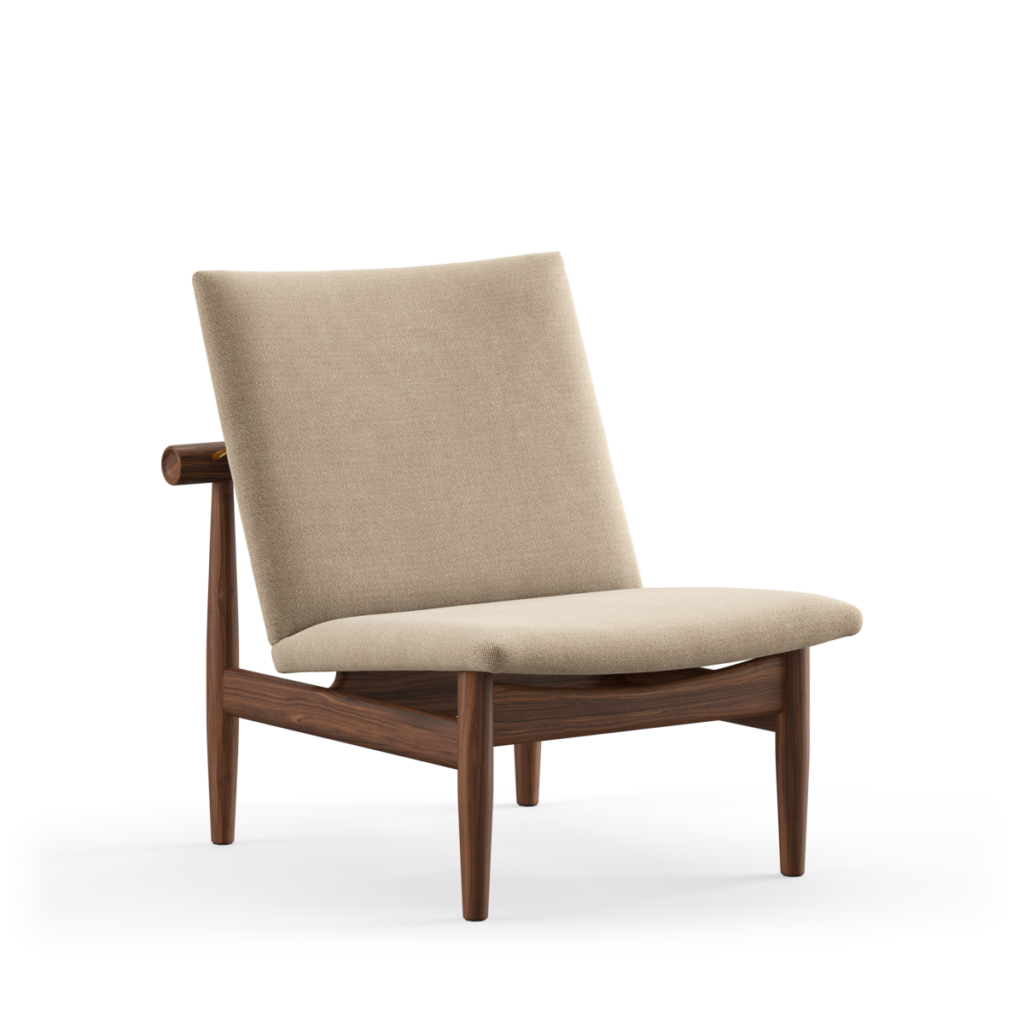
Japan Chair by finn juhl
Even with its more minimal construction, the Japan Chair reflects Finn Juhl’s commitment to emphasizing the distinction between the carried and carrying elements by separating the backrest from the supporting frame with brackets as spacers. Drawing inspiration from Japanese aesthetics, the chair embodies a sense of refined simplicity, lightness, and sophistication. The Japan Chair is available in oak or walnut with upholstery options in textile or leather.
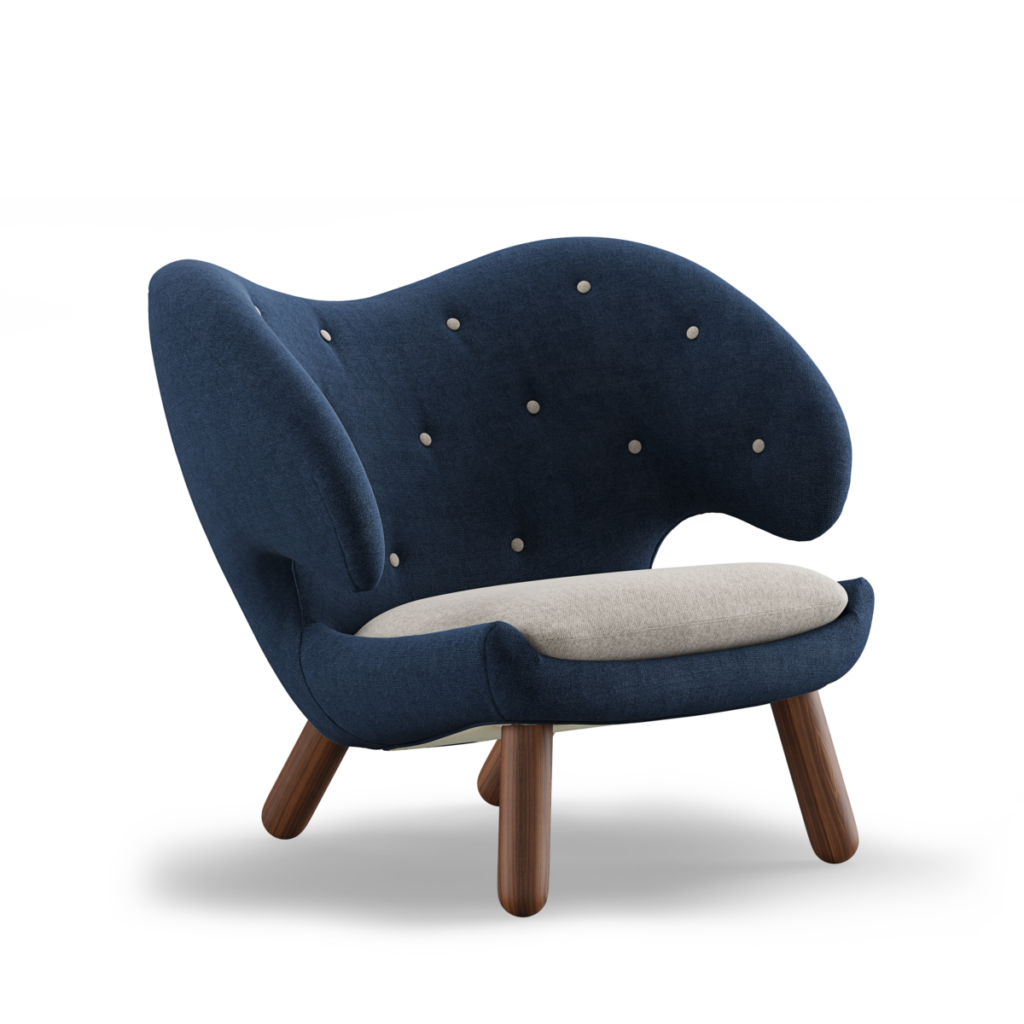
Pelican chair BY Finn juhl
A really beautiful and organic lounge chair designed by Finn Juhl.The Pelican is an extremely comfortable chair that creates an excellent seating experience.The unique shape frames the body beautifully and is made according to best crafts traditions.The pelican is a wonderful piece of design that fits perfectly into the modern decor with a focus on shape and aesthetics.Use the chair in the living room or office and create your very own free space with this eye-catching beauty.
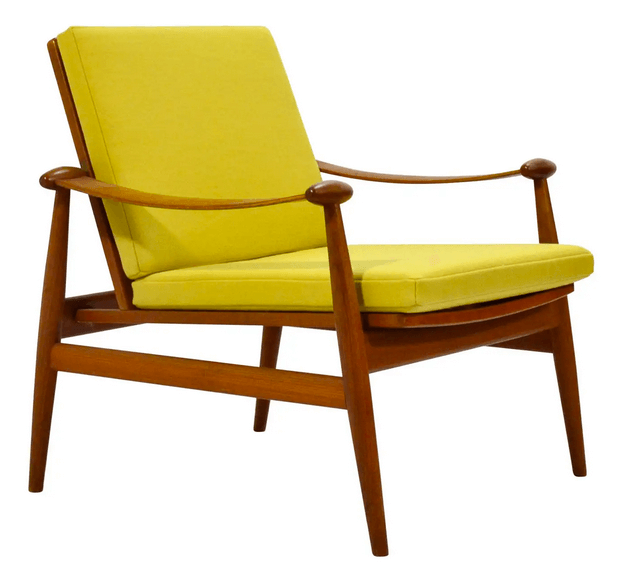
133 Spade chair BY Finn juhl
Designed in 1954 the Model 133 ‘Spadestolen’ was Juhl’s first collaboration with Danish producer France & Son. The frame was originally made in teak with loose foam cushions, sprung back and ‘knock-down’ construction for easier export.
BO 59 / Fireplace Chair by finn juhl
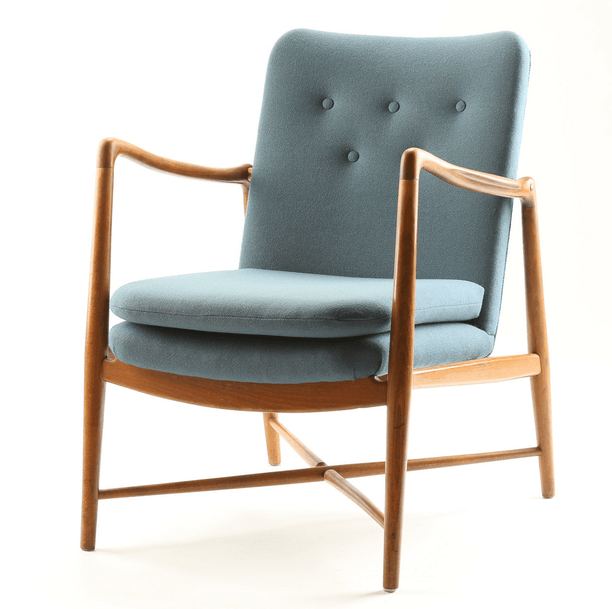
With its sensual details – from the paper-knife armrests and crossed frame to the discreet buttons and relaxed, luxurious comfort – the Fireplace Chair embodies Finn Juhl’s signature approach to modern design. Originally created in 1946 for the company Bovirke, the chair is also known as the BO59 and has since become a beloved classic. Each chair is hand-upholstered in Denmark in either textile or leather, and the frame is available in oak, ash, or walnut.
45 Chair by finn juhl
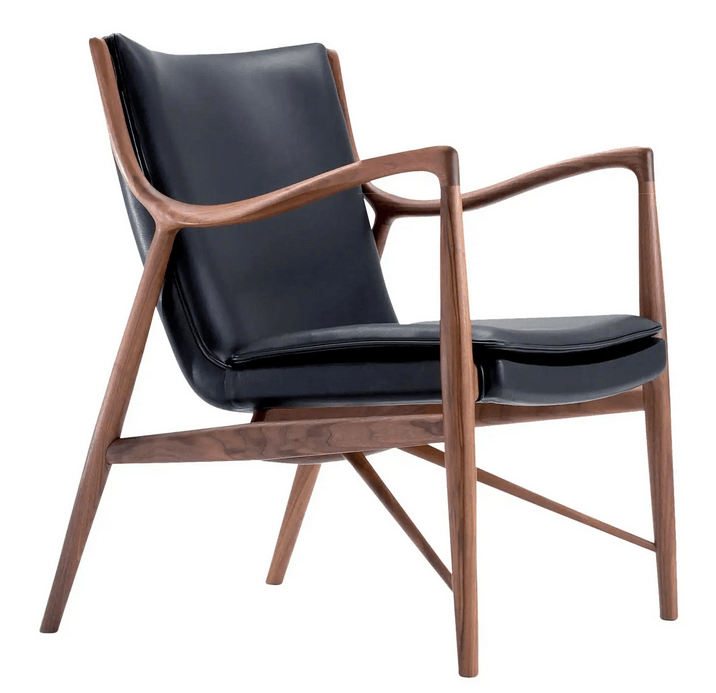
In the fall of 1945, Finn Juhl unveiled the 45 Chair at the Copenhagen Cabinetmakers’ Guild Exhibition. With this chair, he introduced a groundbreaking design separating the carried from the carrying elements – something previously unseen. Today, the chair is widely regarded as one of the most revolutionary and iconic pieces in Danish furniture design. The chair is upholstered by hand in Denmark in textile or leather. The frame is available in oak or walnut.
48 Chair by finn juhl
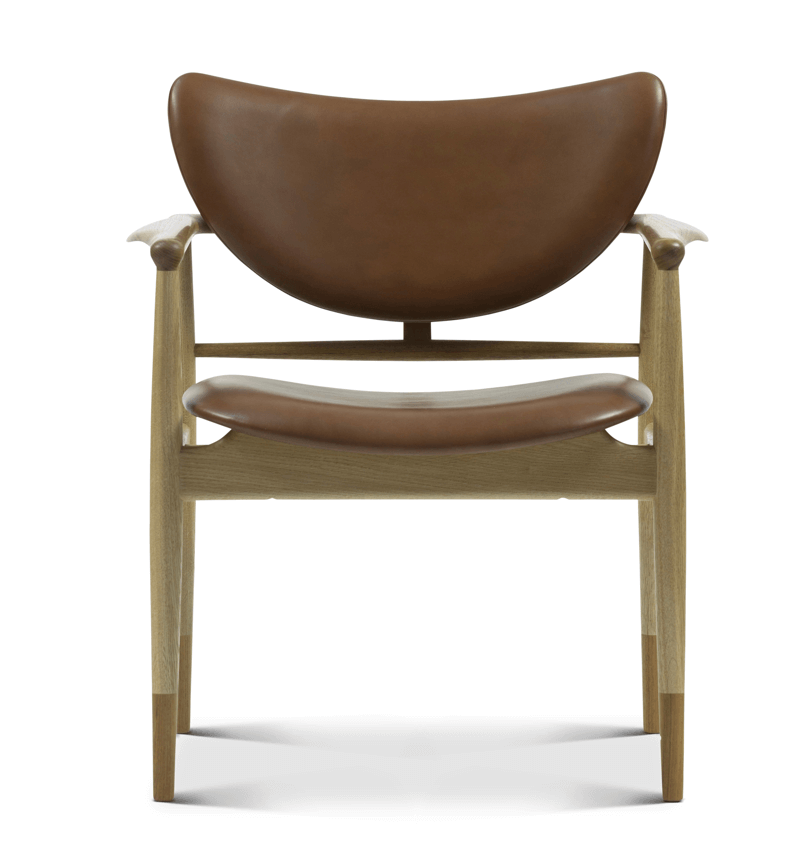
Ideal for an executive office, Finn Juhl’s striking 48 Chair is easily recognized by its signature sculptural forms and refined details. The organically shaped seat and backrest are elevated from the carrying frame, visually lifting the seated person and creating the illusion of defying gravity. The 48 Chair is available in two versions. The first with a frame in a combination of oak and walnut and the second crafted entirely in walnut. The chair is upholstered in textile or leather.
FJ 51 Chair by finn juhl
The FJ51 Chair, designed by Finn Juhl in 1951, reflects his sculptural approach to furniture design. With its light, elegant frame and softly curved seat, the chair appears almost to float, highlighting the separation between the wooden structure and the upholstered elements. This design showcases Juhl’s focus on comfort, craftsmanship, and visual lightness, making the FJ51 a refined example of Danish modernism.
FJ 53 by finn juhl
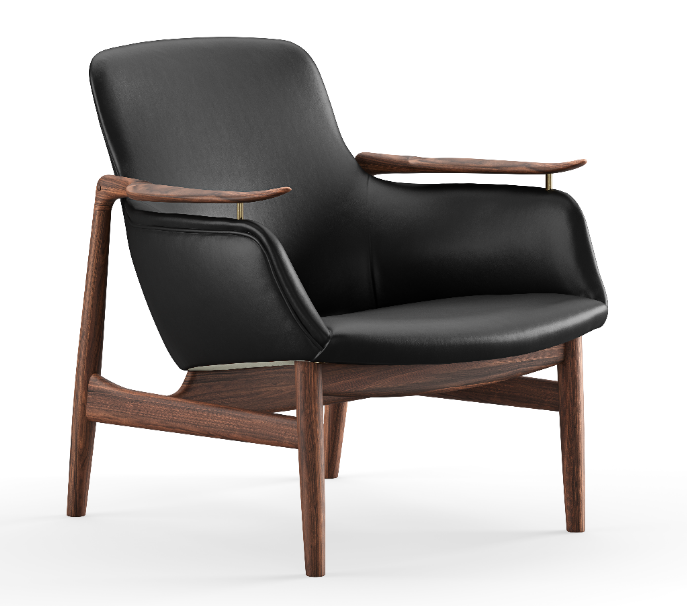
Originally introduced in 1953 as NV 53 – named after master joiner Niels Vodder – this extravagant chair was designed for the Cabinetmakers’ Guild Exhibition. With its elegant, sculptural lines and softly embracing form, the 53 Chair offers both visual lightness and exceptional comfort. It is hand-upholstered in Denmark in textile or leather, and the frame is available in oak or walnut. An optional cushion can be added for extra comfort.
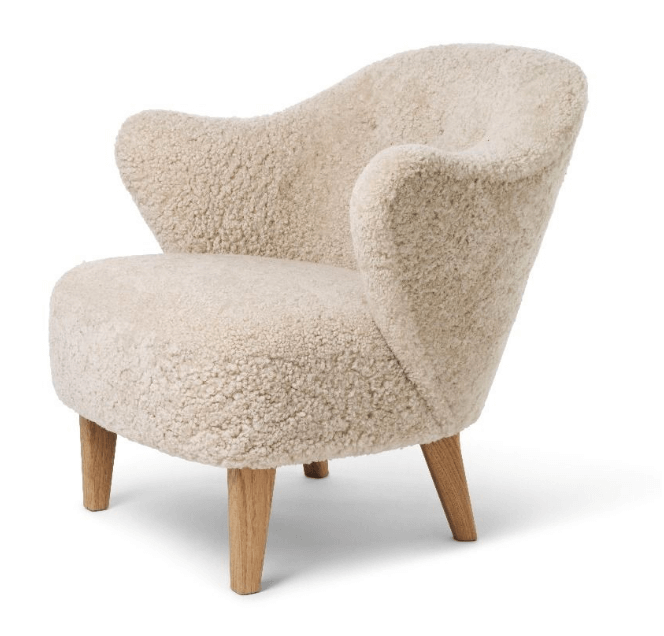
Inspired by the designer’s artist mother, Ingeborg Winding, the Ingeborg Lounge Chair (1940) welcomes with open arms and an irresistibly charming expression. Its elegant sculptural armrests and angled frame ensure comfort in a compact size, making a bold statement in any room. With its versatile beauty and space-saving design, Ingeborg effortlessly blends into any space.
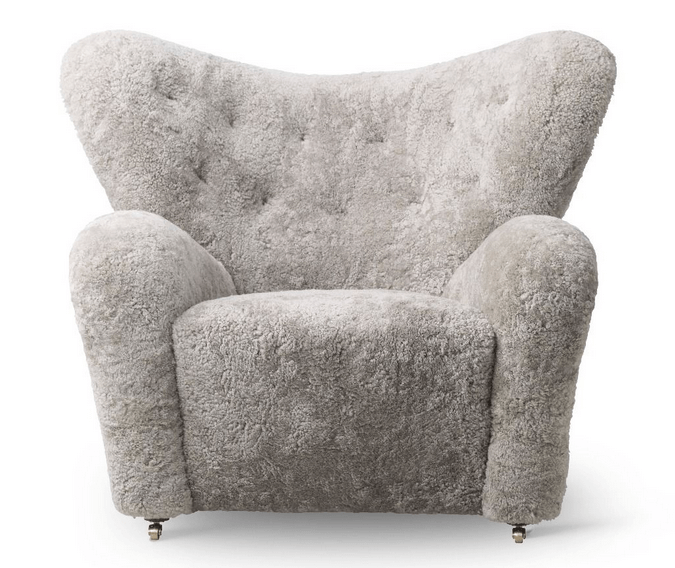
The Tired Man also known as “Den trætte mand” was launched at the Copenhagen Cabinetmakers’ Guild Exhibition in 1936 and has since become an icon of Danish design. The epitome of craftsmanship and comfort, the characteristically curved armchair was designed by Flemming Lassen to feel “as warm and snug as a polar bear cub in the arms of its mother.” Relaunched in 2015, the award-winning design is offered in plush upholstery, including sheepskin in a nod to the original, and with natural or dark-oiled oak heartwood legs and front brass casters for easy movement.
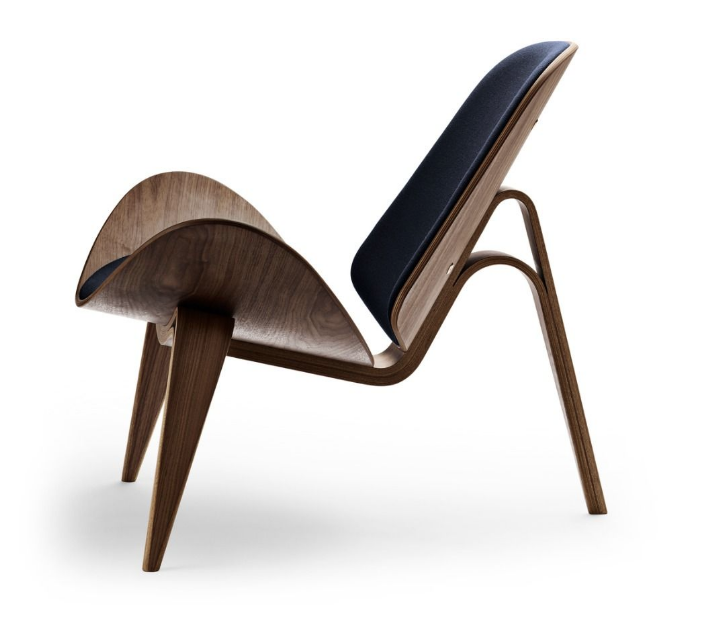
Beautiful and sculptural armchair designed by Hans J. Wegner in 1963. CH07 is produced by Carl Hansen & Son, who, with their solid craft, completes Wegner’s elegant design. The wing-seat seat of the shell gives a dreamy and floating expression, and therefore, CH07 has become a very prominent piece of furniture in Danish furniture design. The unique shape and the delicious materials make the skull fit perfectly into the modern decor today. The CH07 is aesthetically beautiful, but at the same time, the tapered veneer creates an extremely comfortable seating experience. The scalpel is ideal as an extra seat in the sofa corner and as a decoration in the living room with a plaid and some nice pillows.
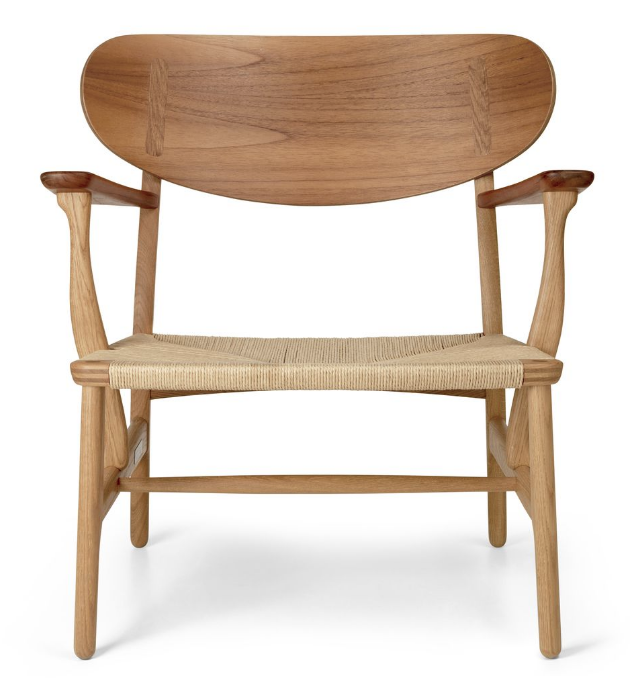
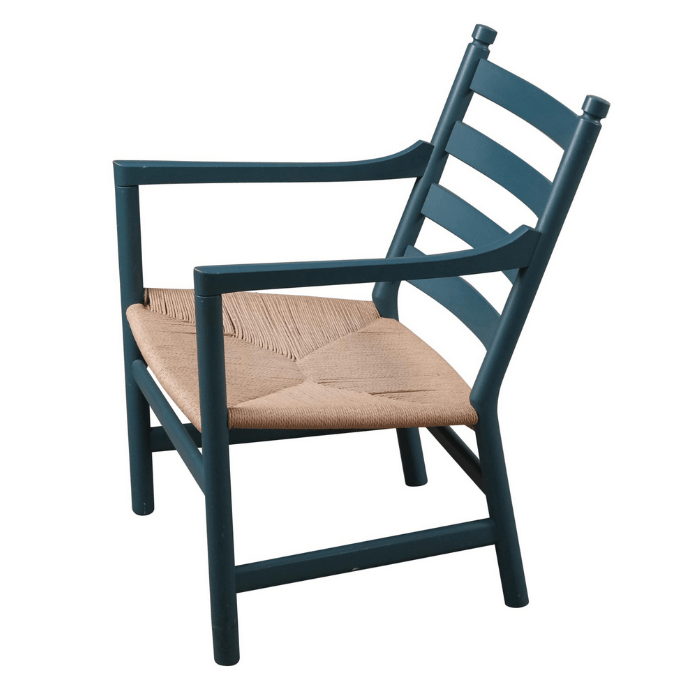
The CH22 lounge chair, manufactured from 1950, was part of Hans J. Wegner’s debut collection for Carl Hansen & Son. The chairs were all made of wood with seats in paper cord instead of upholstery. They are among the designer’s most well-known and sought-after creations today.
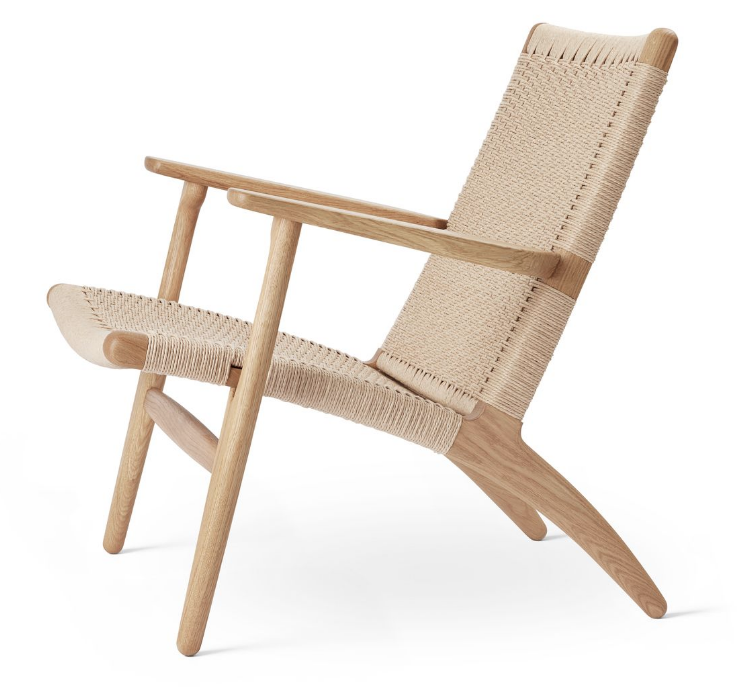
The classic CH25 lounge chair was designed by Hans J. Wegner, and it was one of the first chairs he designed for Carl Hansen & Son. The CH25 lounge chair was launched in 1950 and has been in production ever since. At launch, the chair attracted much attention because of the seat and backrest, which are braided in paper yarn. This material had not yet been used for furniture at that time, and Hans J. Wegner’s CH25 lounge chair was therefore a revolutionary product in the furniture world.
Hans J. Wegner’s CH27, designed in 1949, is an early example of the ideas that would come to define his contribution to Danish modern design. Created at a time when Wegner was exploring the balance between comfort, structure, and visual lightness, the CH27 reflects his belief that a chair should be shaped by the human body as much as by aesthetic principles.
Hans J. Wegner’s CH28P Lounge Chair, designed in 1951, includes many of the master’s characteristic design features. The chair, which was put into production the following year, is not only functional, but also very comfortable.
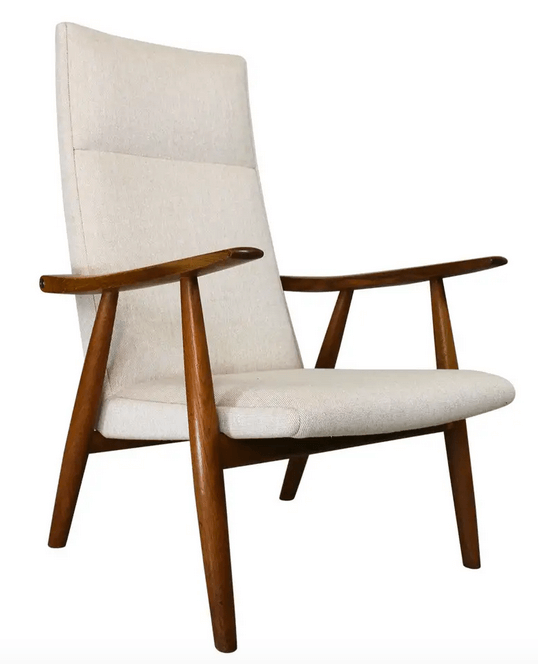
With the heart of a cabinetmaker and the mind of a modern functionalist, Hans J. Wegner continually pursued simplified forms and perfect functionality. The CH44 lounge chair is one of the results of these efforts.
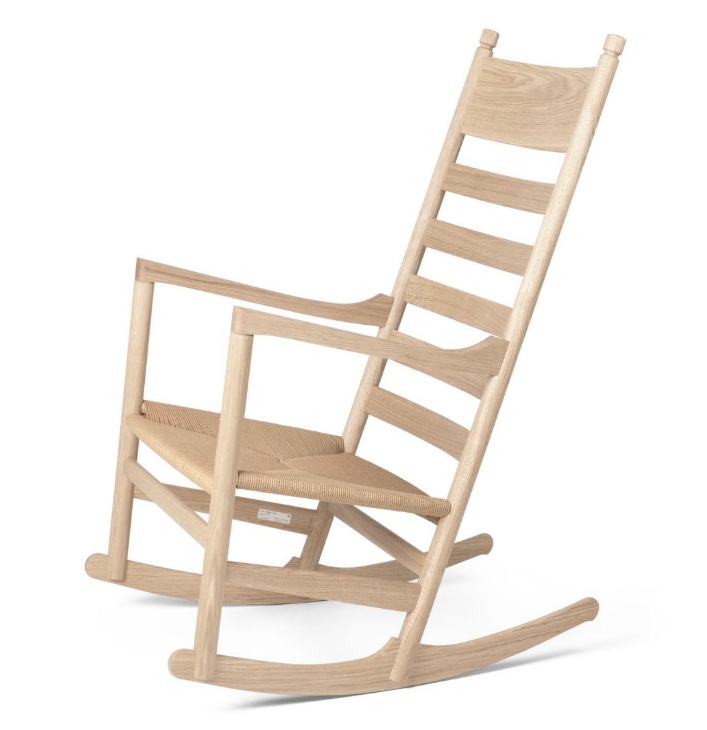
The CH45 Rocking Chair was created for Carl Hansen & Søn in 1965 as part of a more extensive series of furniture, carrying the distinct hallmarks of a Hans J. Wegner design. Wegner’s rocking chair displays a careful balance of poise and elegance with a modern Nordic aesthetic.
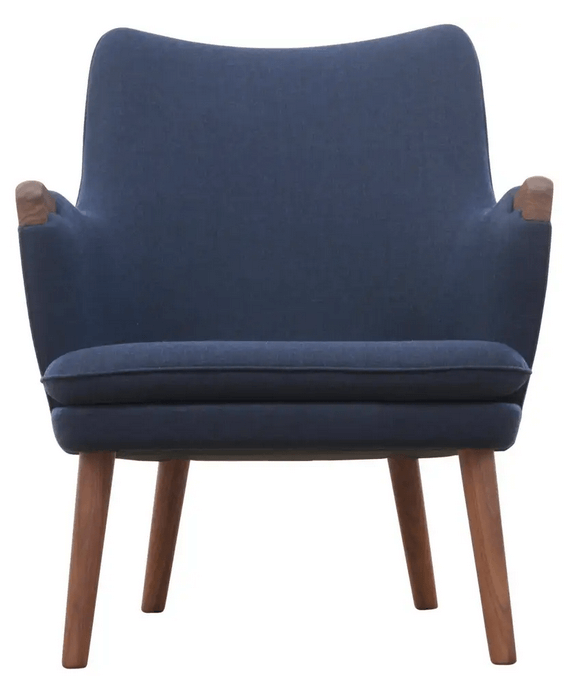
Created in 1952 by pioneering Danish designer Hans J. Wegner, the masterfully designed CH71 Lounge Chair is perfectly proportioned to be both elegantly compact and supremely comfortable.
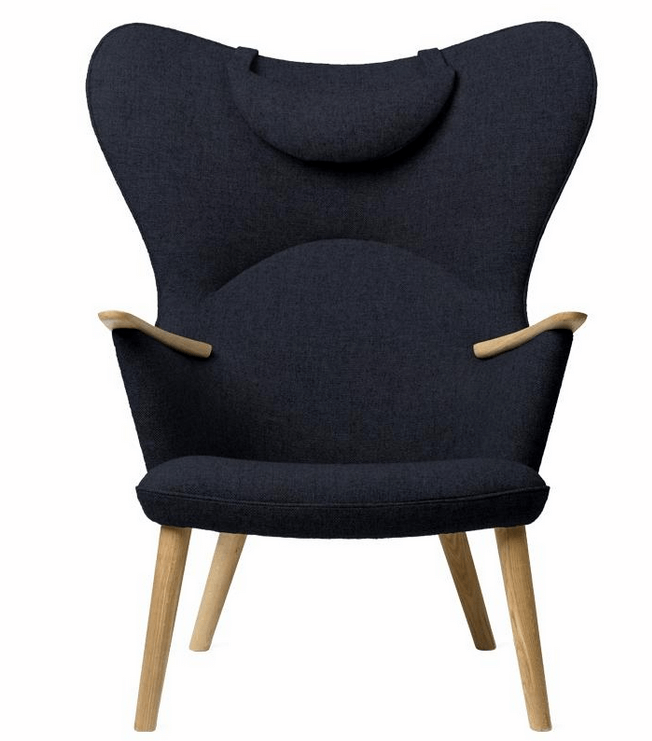
Affectionately known as the Mama Bear Chair, the CH78 Lounge Chair by Hans J. Wegner was originally introduced in 1954 as an extension of his CH71 Chair (1952) design. An antidote to the often-heavy lounge chairs of his time, Mama Bear’s sculptural silhouette is defined by a series of inviting curves that offer up a warm embrace. Frame, armrests, and legs are crafted for stability from solid wood.
In Hans J. Wegner’s CH101 lounge chair from 1970, industrial elements are combined with natural materials in a pure design which continues to remain relevant and inspiring many decades later.
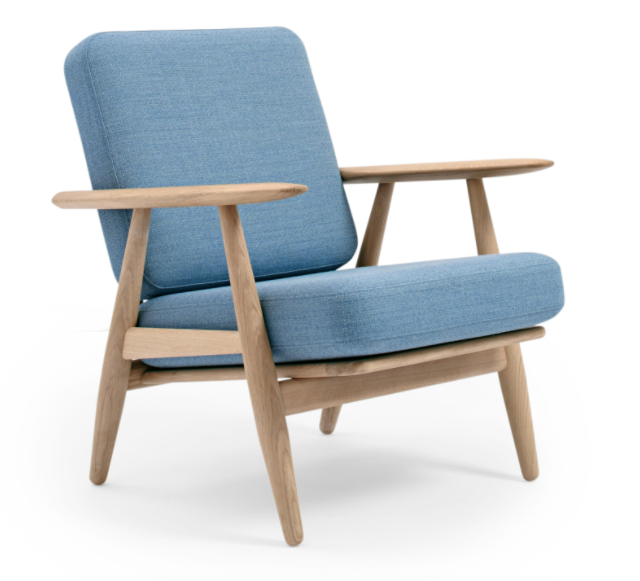
The GE240 Chair, designed by Hans J. Wegner in 1955, is a classic of Danish modern design. Known as the “Cigar Chair,” it features softly rounded armrests and a generously upholstered seat that offers exceptional comfort. The solid wooden frame combines strength with elegance, reflecting Wegner’s mastery of craftsmanship and his focus on honest materials and everyday usability.
The GE260 Chair, designed by Hans J. Wegner in 1950, is an early example of his functional and human-centered approach to design. The chair features a simple, sturdy wooden frame paired with a low, comfortable upholstered seat and adjustable backrest. Its clear construction and practical details reflect Wegner’s focus on craftsmanship, comfort, and timeless simplicity in Danish modern furniture.
Designed in 1962, the GE290 Lounge Chair showcases classic Hans J. Wegner hallmarks in a stringent solid wood frame. Part of the CH290 Series, the chair demonstrates precise craftsmanship in dynamically angled legs, wide armrests and visible back slats.
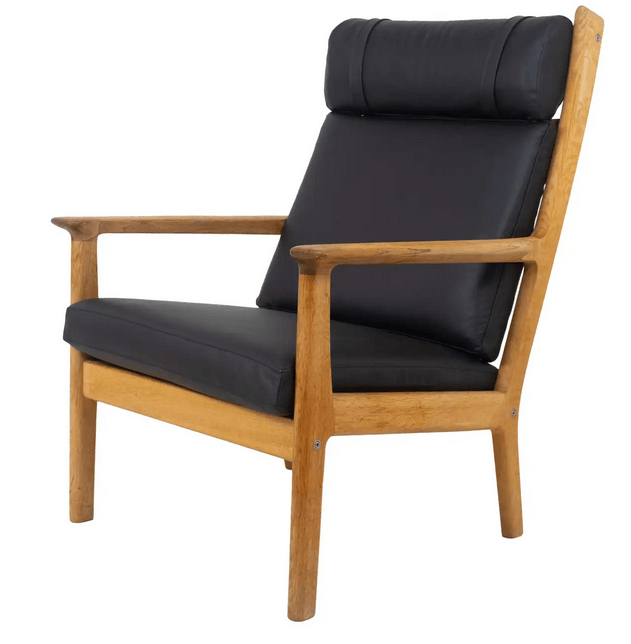
The GE290A Lounge Chair was designed in 1962, showcasing classic Hans J. Wegner hallmarks in a stringent solid oak frame and contrasting, relaxed upholstery. Part of the GE290 Series, the chair demonstrates precise craftsmanship and supreme comfort in a supportive, tall backrest and neck pillow. Dynamically angled legs, wide armrests and visible back slats are accentuated by an elegant, carefully upholstered seat and backrest cushion in fabric or leather.
The GE375 Chair, designed by Hans J. Wegner, is a striking example of his sculptural yet functional approach to furniture design. Characterized by its distinctive wooden frame and generous upholstery, the chair offers both visual strength and high comfort. Its bold proportions and refined craftsmanship reflect Wegner’s ability to combine durability, comfort, and timeless Danish modern aesthetics.
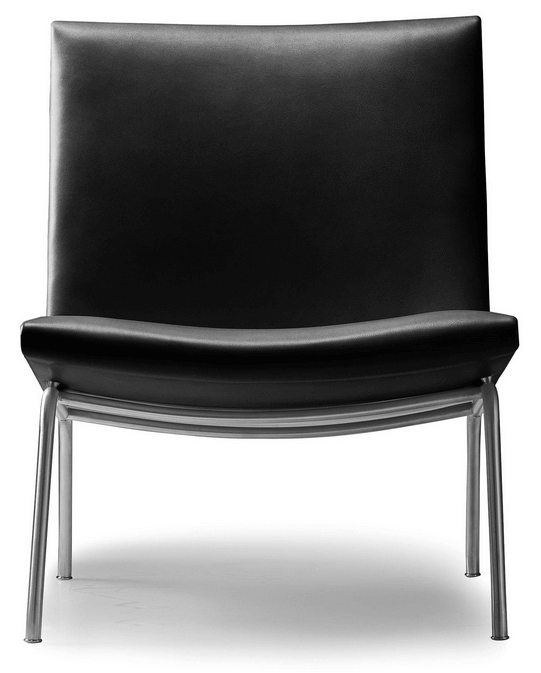
In 1958, Hans J. Wegner designed the CH401 also called The Airport Chair. The beautiful and simple chair is perfect in the private or public space. It is still to this day part of the interior design at Copenhagen Airport. CH401 gives a very simple and clean look.
The GE1936 Chair by Hans J. Wegner is a true masterpiece.
The name “Venus” is no coincidence—it draws inspiration from Botticelli’s iconic painting of the goddess of love, standing gracefully on a seashell. Wegner captured the same sense of elegance and beauty in the design of this chair and sofa.
The story behind the series is as fascinating as its name. Wegner originally developed the sofa and lounge chair as a follow-up to his concept for an American competition in 1948. Inspired by the use of plywood in aircraft during World War II, he began experimenting with molded plywood shells in furniture design. The GE1936 series became his first furniture to use this innovative technique.
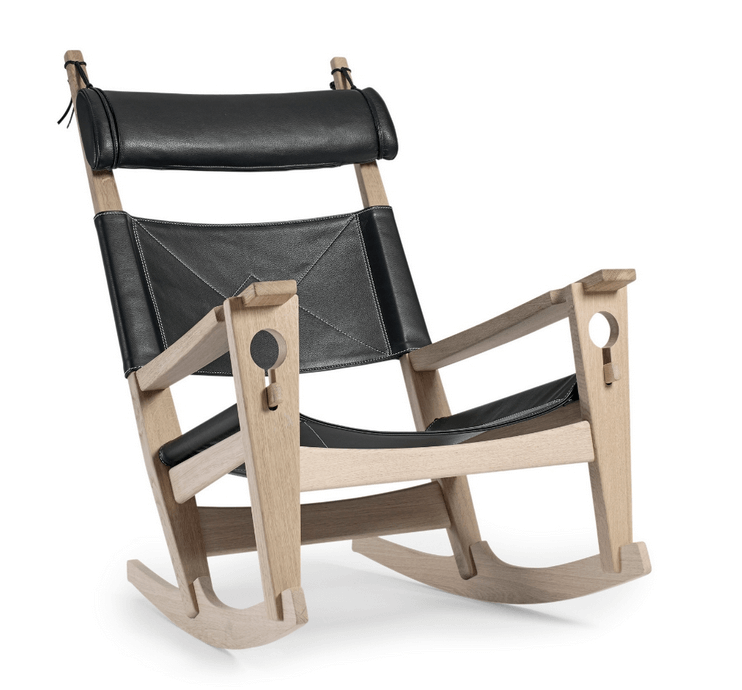
Hans J. Wegner showed an early interest in the rocking chair as a design object, and J16 was one of his first chairs ever put into production. The very first version was designed in 1944. After a process to make the chair easier to manufacture, the production could start. Wegner’s J16 has proved so viable that it has been in demand ever since it first came on the market.
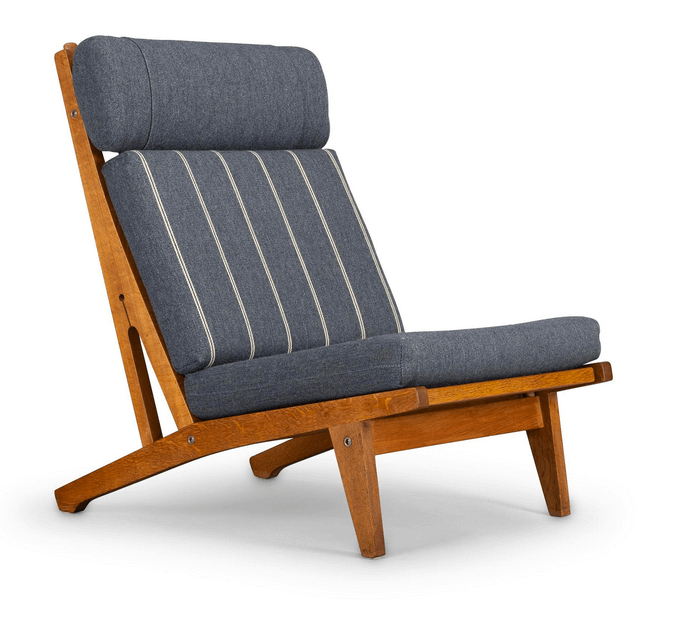
The JH510 “Dolphin” Chair by Hans J. Wegner, designed in 1950, is a rare and elegant lounge chair. It features an oak frame, star-woven seat and back, and brass fittings. This folding chair was produced in limited numbers by master cabinetmaker Johannes Hansen, combining Wegner’s signature craftsmanship, functional design, and refined Danish modern aesthetics.
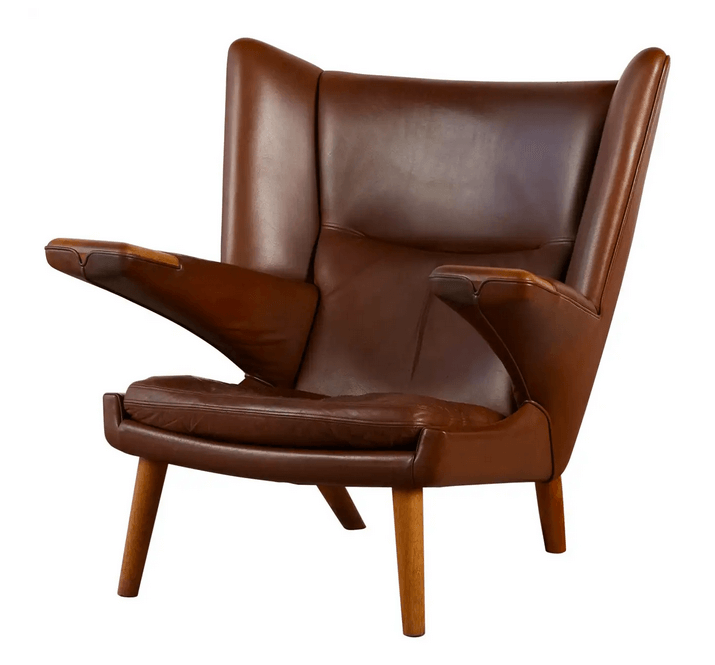
Hans. J. Wegner resigned the papa bear chair in 1951. It was a freer, easier and more modern version of earlier earlobe chairs, which both himself and others had drawn.
It is a chair that seats many seats – a big wish for Hans J. Wegner. When sitting in the chair, it must be possible to change position without compromising the comfort and comfort of the seat. The greatest importance on this point is the open armrest, where you can get your legs between the armrests and the seat. At the same time, the armrests are so pleasantly shaped that it is possible to relax while slamming their legs over them. The teddy bear chair is an expensive chair to produce. It is built with a rig that is strong and which is created to last year after year. The hind legs walk through the chair and get to the armrest. The outermost piece of armrests are not padded, but appear in wood. That way, you are free to get the pig the piece where your hands rest or leave when you get up. At the same time, the wooden pieces or bumpers, as they are called, hide where they are stuck. The padding consists of materials like springs, thighs and horsehair which, regardless of how you sit or move around in the chair, provide optimal support. Exactly as Hans J. Wegner wanted it.
This Danish armchair named ‘New Papa Bear’, model AP69, is a design by Hans J. Wegner for AP Stolen produced in 1968/69. Hans J. Wegner, often hailed as the “Master of the Chair,” created some of the most iconic furniture pieces of the 20th century. While the “Teddy Bear Chair” (PP19) is perhaps his most famous upholstered work, the AP69, commonly known as the New Papa Chair, stands as a refined evolution of his organic, functionalist philosophy.
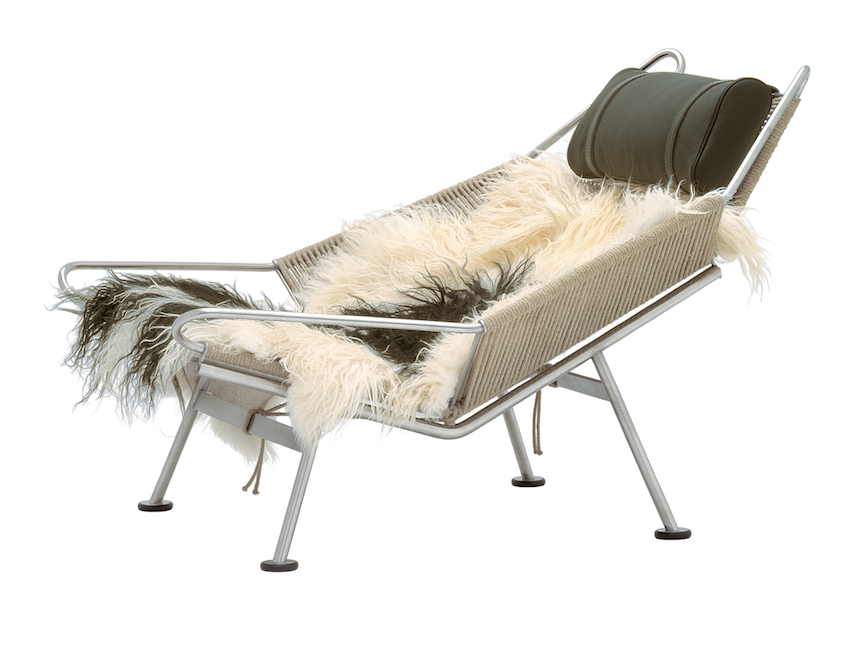
Super beautiful and classic armchair designed by Hans J. Wegner.The flagstone chair was designed in 1950, but is still part of the modern decor. The chair is made of solid stainless steel, 240 meters specially crafted flagline cord, and the long-haired sheepskin puts the dot on it. The chair has a very futuristic expression and in 2002 PP Furniture was honored with Bo Better’s Classic Award to resume production. The chair embraces quality and good craftsmanship, and the pompous shape creates an excellent seating experience.
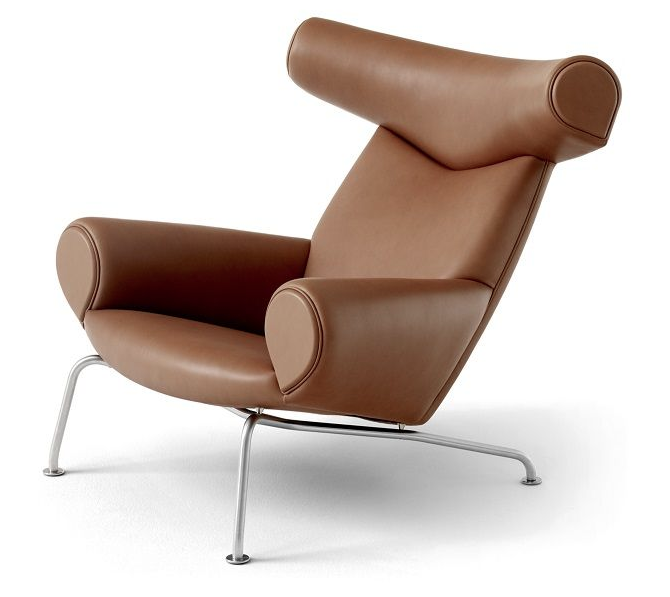
Very eye-catching and iconic armchair designed by Hans J. Wegner. Oxchair was designed in 1960, and it is the epitome of masculinity. The tight design creates the ultimate recliner as comfort and relaxation are highly prioritized. Oxchair has been a must-have in Danish furniture design since 1960, since its characteristic appearance has made it irresistible. The chair invites you to relax with a good book, and it is the ideal living room. The frame is made of chromed steel.
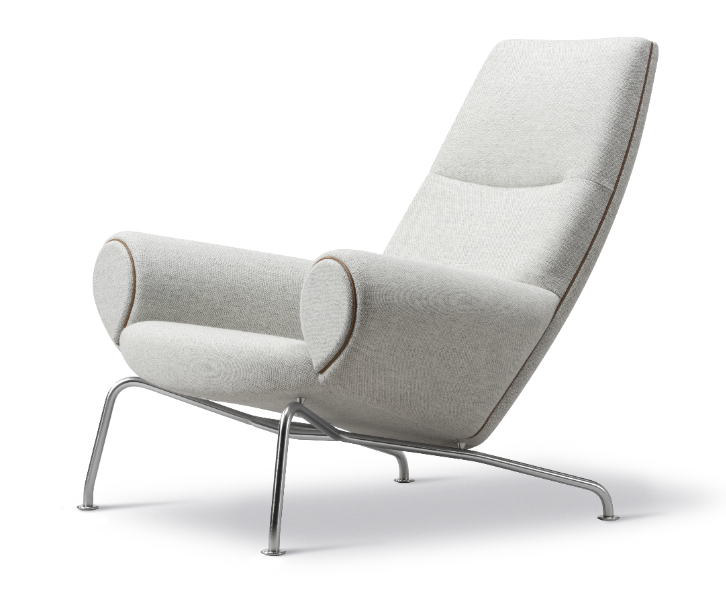
The lighter counterpart to the Ox Chair is Hans J. Wegner’s Queen Chair which shares many of the same features. With its ample armrests and high, majestic back that extends up to support the neck. Regal, yet relaxed, the Queen Chair embodies Wegner’s belief that for a design to be striking it must be based on practicality.
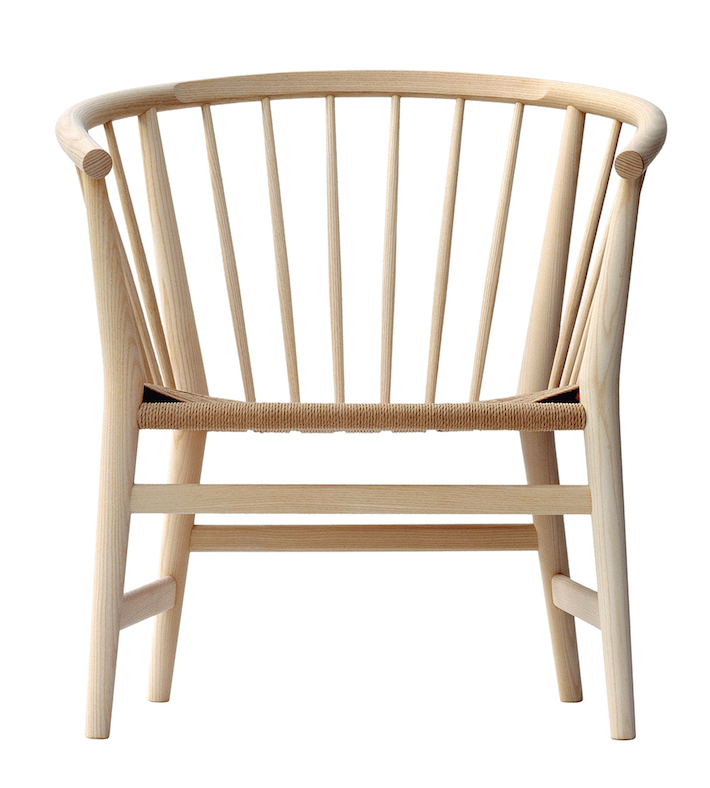
PP112 is a hybrid design comprising features from Wegner’s series of Chinese chairs and his many attempts at creating a modern version of the British Windsor Chair. Consequently this easy chair is light and elegant, and it is a brilliant example of Wegner’s insistence on traditional simplicity in both construction and design.
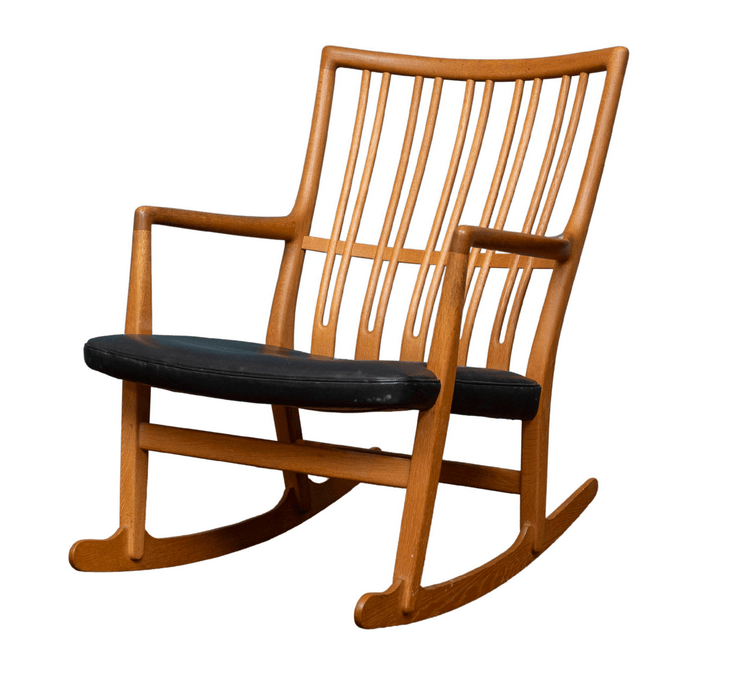
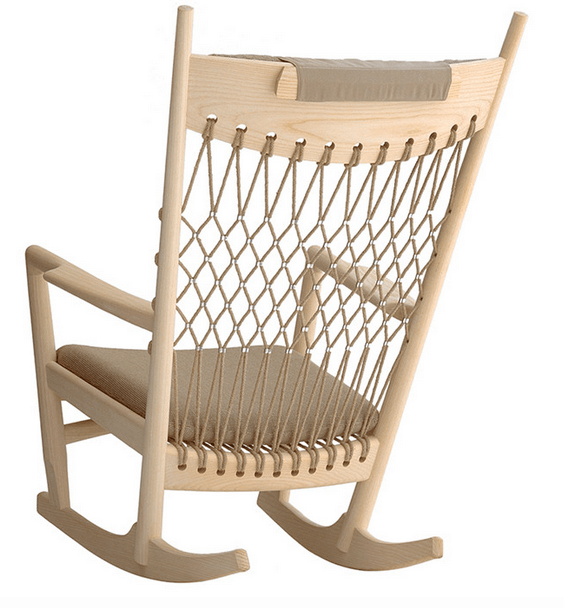
A well made rocking chair provides various seating angles and is easy to access and exit. With the PP124 Wegner has created a sophisticated and comfortable rocking chair with particular attention to thorough craftsmanship and functionality.
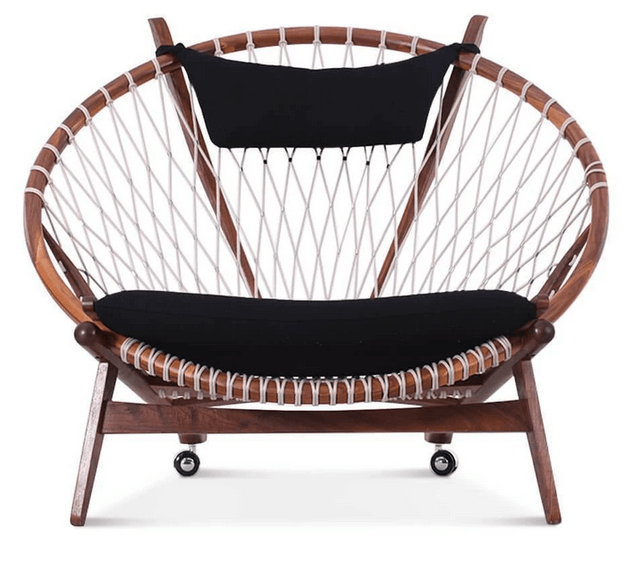
The idea of making a chair based on the most simple and elegant shape of them all, the circle, remained a distant dream until Hans J. Wegner eventually completed the design at the age of 72. The concept of the Circle Chair matured over a lifetime, and became one of Wegner’s most visionary projects.
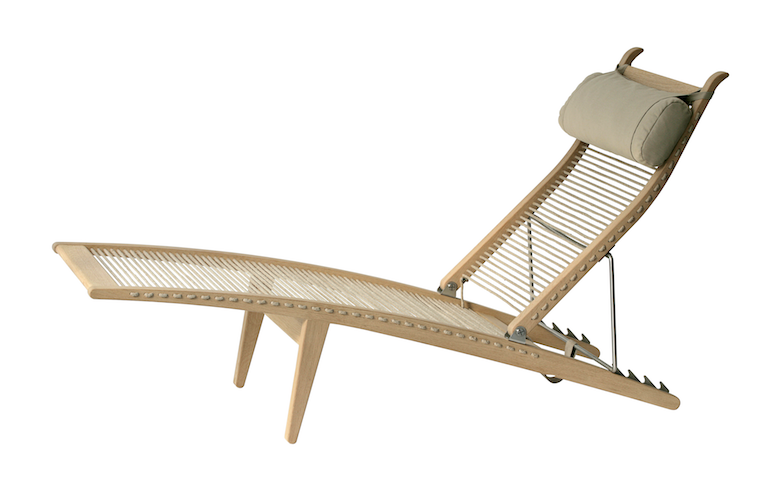
The Deck Chair is true to the goal that its name implies. The Deck Chair is a meticulous piece of craftsmanship that forms an archetype for what a luxurious deck chair looks like. Nevertheless, it refers to a number of earlier Wegner designs and its design is derived from the pp512 Folding Chair and the beautiful but rare Dolphin Chairs adding an adjustment mechanism for the back very similar to the one on the pp530 Tub Chair.
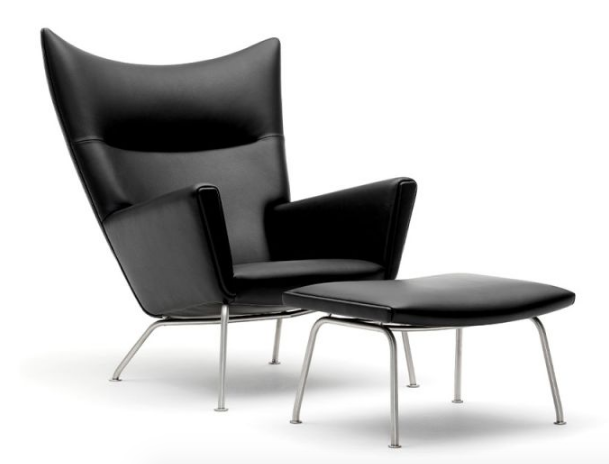
Exceptional comfortable lounge chair designed by Hans J. Wegner.The Wingchair Armchair was designed in 1960 and has been a sought after piece of furniture design.The beautiful sculptural shape has made the CH445 a design icon all over the world, and the chair is still part of the modern decor today.The wings provide a good back support, and the CH445 is therefore ideal as an armchair in the living room or for relaxation in the office.The legs are made of stainless steel.
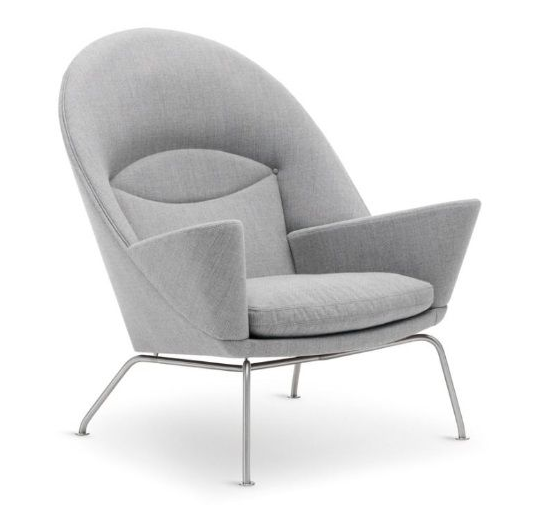
Oculus lounge chair is designed by Hans J. Wegner. Oculus was designed in 1960. Oculus got organic shapes and are so incredibly beautiful and at the same time the chair is very comfortable. The chair is very spacious and has a wide rounded back, which is a nice contrast to the lightweight frame.
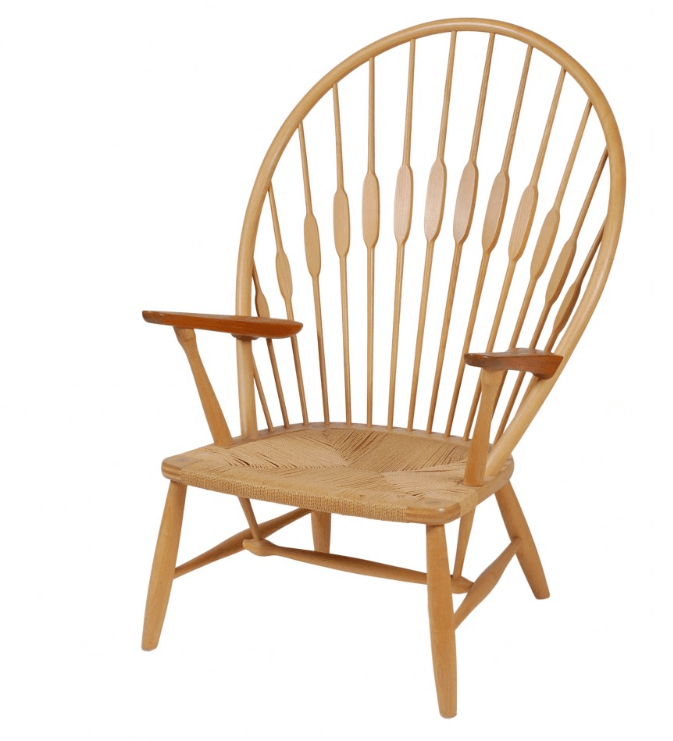
The Peacock Chair is historically anchored in the classic British Windsor Chair. As were the case with many of his early works, Wegner updated his sources of inspiration to a modern version while adding sophisticated details that required the greatest accuracy from highly skilled craftsmen.
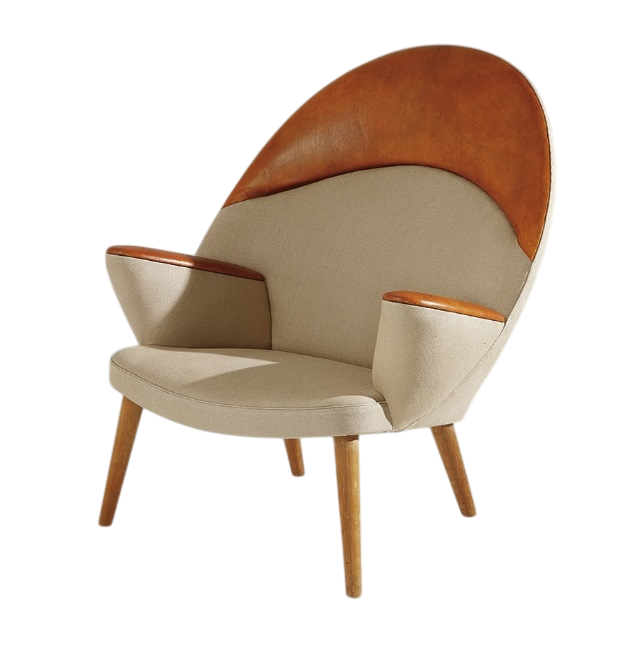
The Upholstered Peacock is, as the name implies, an upholstered interpretation of the pp550 Peacock Chair from 1947, one of Wegner’s all time classics and one of his personally most beloved designs.
The almost complete covering of the chair makes it subtle, but at the same time a very integral piece to any room.
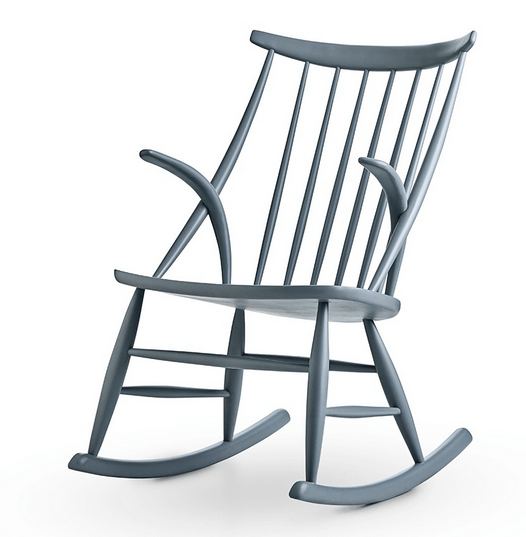
IW3 is the name of a rocking chair designed in 1958 by the Danish furniture architect Kristian Illum Wikkelsø.That the choice just fell on this chair is its comfort and its myriad opportunities to be colored in a multitude of shades. EILERSEN has chosen to spray paint IW3 in eight colors from the graphic shades between white and black as well as in matte pastels. The simple design and honest design of the chairs make them suitable for any interior and sofa.
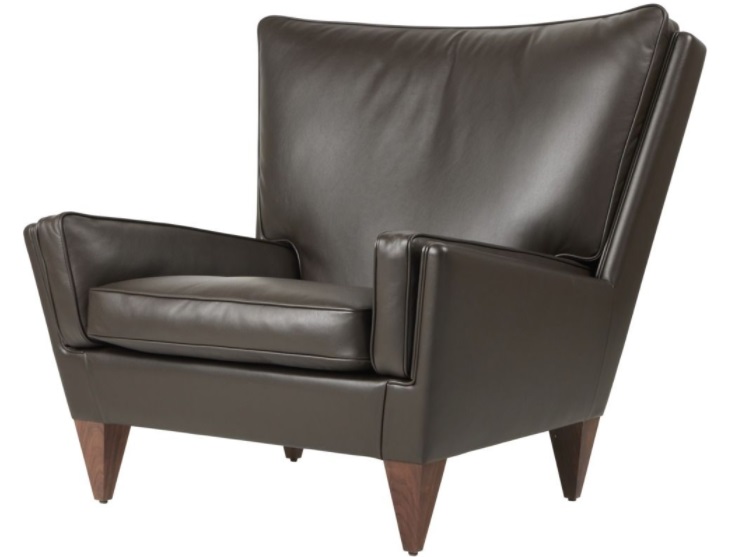
First designed in 1965, the V11 Lounge Chair is one of the most revered and highly sought-after seating designs by the leading 20th-century Danish designer Illum Wikkelsø.
In 1962 Jørgen Høvelskov designed the world famous and fantastic Harp chair. The harp chair / viking chair is much simpler in construction than you might have expected. The harp chair consists of only two parts and a string. The harp chair is still in production today. The chair is available in ash, cherry and oak.
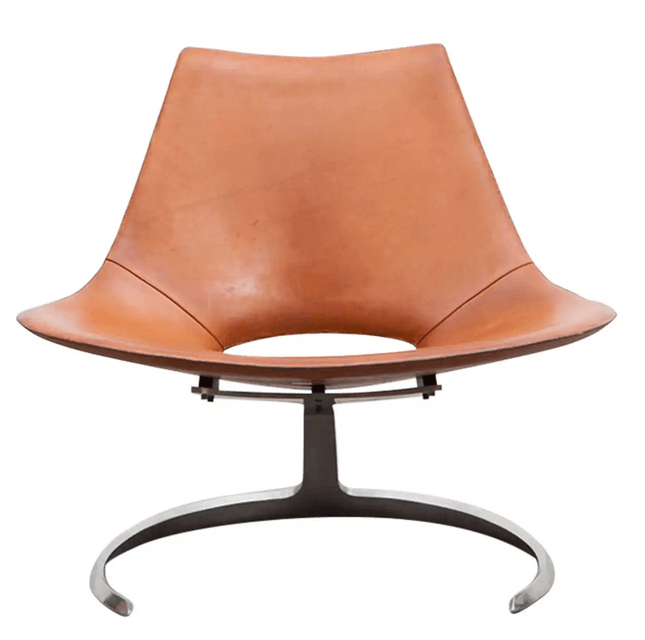
The Danish furniture designer Jørgen Kastholm created furniture where Form, Function and Finish comes together beautifully. He produced a collection of furniture that is today an intrinsic part of Danish design DNA. Kastholm first trained as a blacksmith, and later went to study architecture at the School of Interior Design in Copenhagen under Finn Juhl. He graduated as an Architect in 1958. Together with the cabinetmaker Preben Fabricius he designed for the German manufacture Kill International until 1967. It was after this period in 1968 he designed the JK 710 Skater Chair.
The Danish furniture designer Jørgen Kastholm created furniture where Form, Function and Finish comes together beautifully. He produced a collection of furniture that is today an intrinsic part of Danish design DNA. Kastholm first trained as a blacksmith, and later went to study architecture at the School of Interior Design in Copenhagen under Finn Juhl. He graduated as an Architect in 1958. Together with the cabinetmaker Preben Fabricius he designed for the German manufacture Kill International until 1967. It was after this period in 1968 he designed the JK 810 Chair.
A beautiful and functional armchair designed by Kaare Klint. The safarichair was designed in 1933, and functionality was given high priority. The chair can be easily assembled and separated without the need for tools. For this reason, the safarichair has become a timeless classic that fits perfectly into the modern interior design. The beautiful design and the good materials make the safarichair a sought after piece of furniture that is ideal as an armchair in the living room or bedroom. The chair provides a formidable seating experience, and the materials only become more beautiful over time. The seat cushion is available with or without buttons.
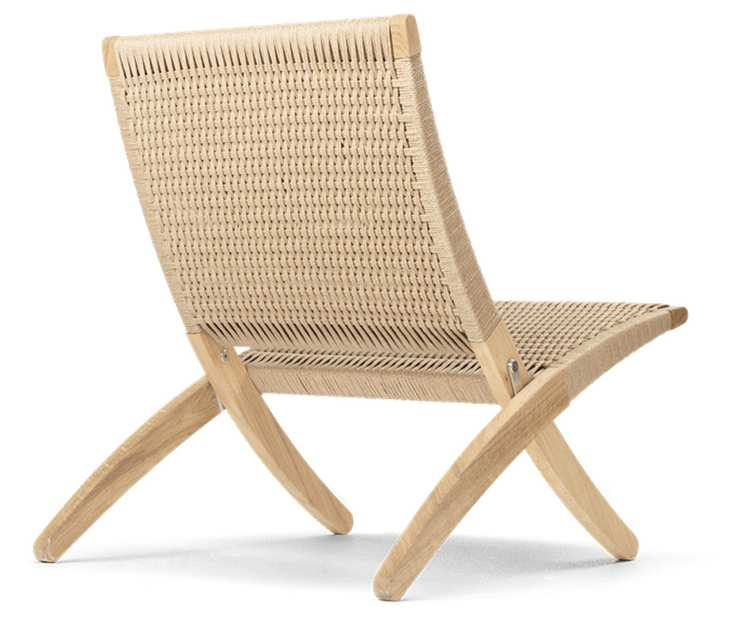
Designed in 1997, Morten Gøttler’s elegant Cuba Chair is a good example of the Scandinavian design heritage and the careful balancing of clarity of form and function.
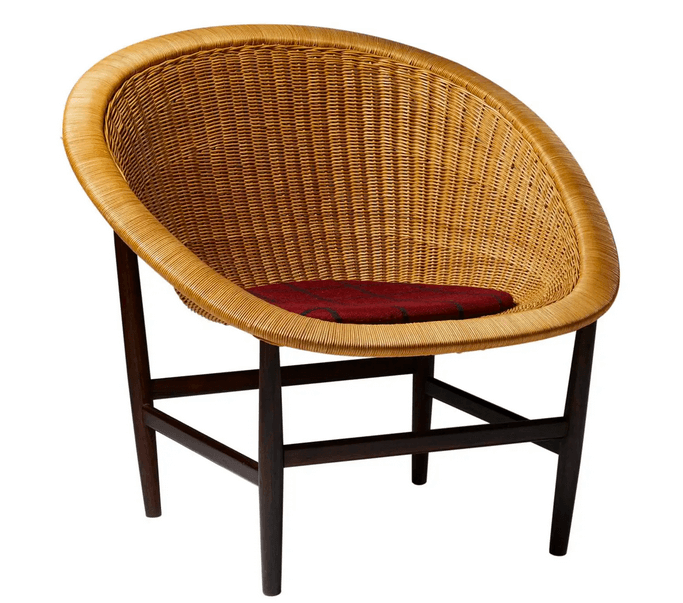
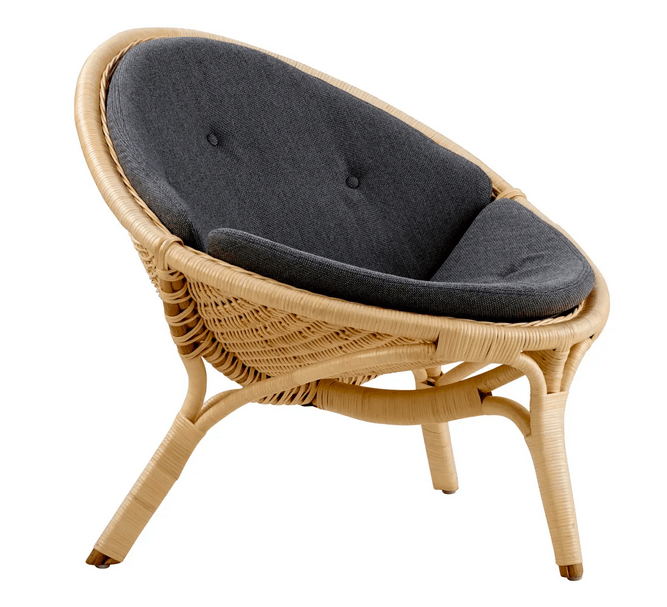
Nanna and Jørgen’s first wicker seat shell was suspended on a teak frame and made in collaboration with basket maker R. Wengler and master carpenter Ludvig Pontoppidan. Separating the supporting structure from the shell makes the chair appear light and the shell almost to float. For many years, Nanna and Jørgen used these wicker chairs as armchairs in their own home.
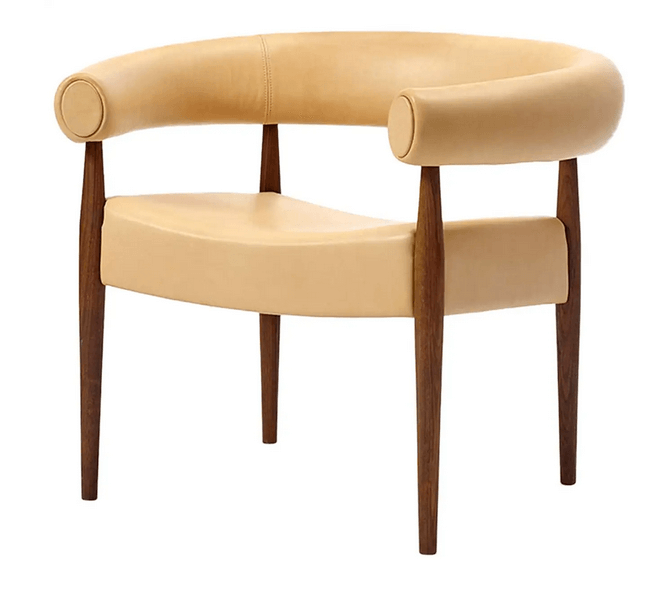
The Ditzel Lounge Chair designed by Nanna Ditzel and Jørgen Ditzel in 1953 offers an intimate space in a comfortable lounge chair without loose cushions. The clearly defined shape is imbued with poetic expression, typical of the work of Nanna Ditzel, which earned her a place as one of the most important Danish designers in her generation.
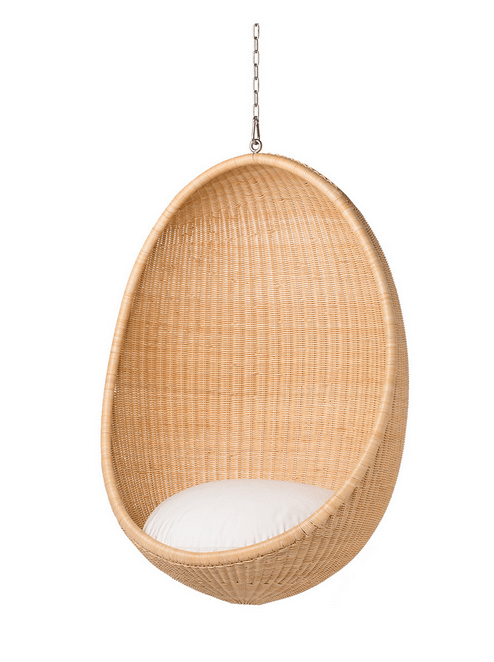
The design of Nanna Ditzels The Hanging Egg Chair has long been considered as timeless, whereas the material Rattan had its heyday in the 1960s, where fashionable furniture sculptors and architects made beautiful sculptural furniture in the tough yet craftsmanship-demanding material. However, this development is reversing and, inter alia, consumer focus on sustainability has again boosted the sale of rattan furniture.
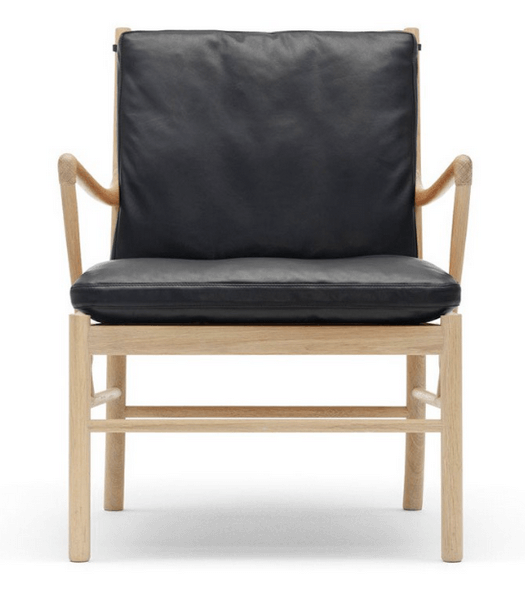
The OW149 Colonial Chair was designed by Ole Wanscher in 1959. Wanscher wished to create furniture that paid tribute to classic conservative trends but also stood the test of time. He achieved this balance with the design of the Colonial Chair, and it remains his most famous design to this day. As a minimalist, Wanscher had a preference for the slim and refined. Yet despite its slender dimensions, the Colonial Chair is very stable. Its strength lying in the carefully designed bracing. The design’s sophisticated, slightly curved armrests rise to a point before taking a turn downward – a trademark Wanscher feature. The front and back legs are made of roundwood timber, with the back legs curving gently outward for added stability and a more refined result.
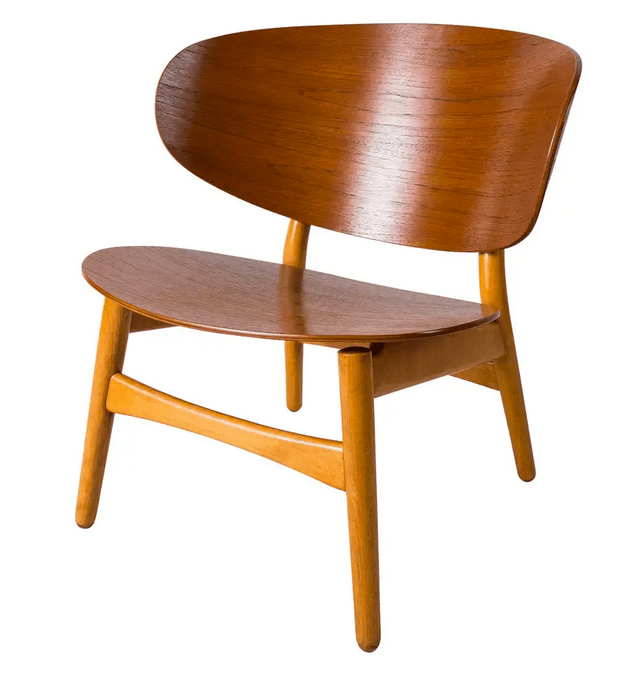
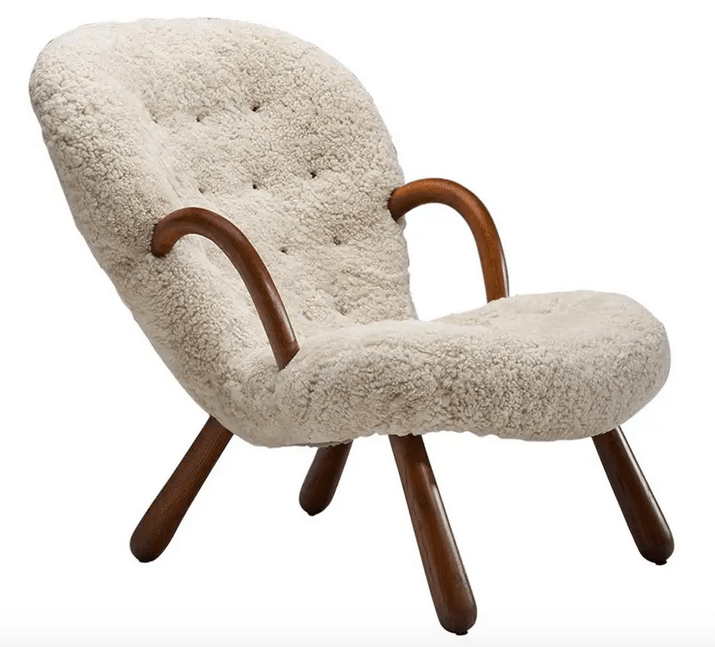
In 1944, architect Philip Arctander designed The Clam chair / Arctander chair, which today has become a design classic. It was produced in limited numbers in the late 1940s.
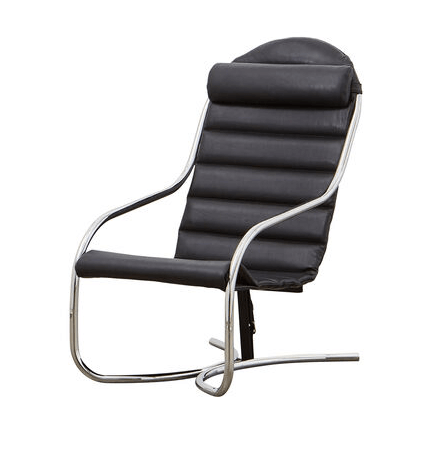
Designed in 1932 by Poul Henningsen, the PH Lounge Chair is a calm place to pause—its frame reading as one continuous bent steel tube set in generous, dynamic lines. Where the tube meets the floor, two concave circles create a distinctive signature, while the upholstered seat follows an ergonomic sweep that supports the back for unhurried sitting in lounges, lobbies and refined living spaces.
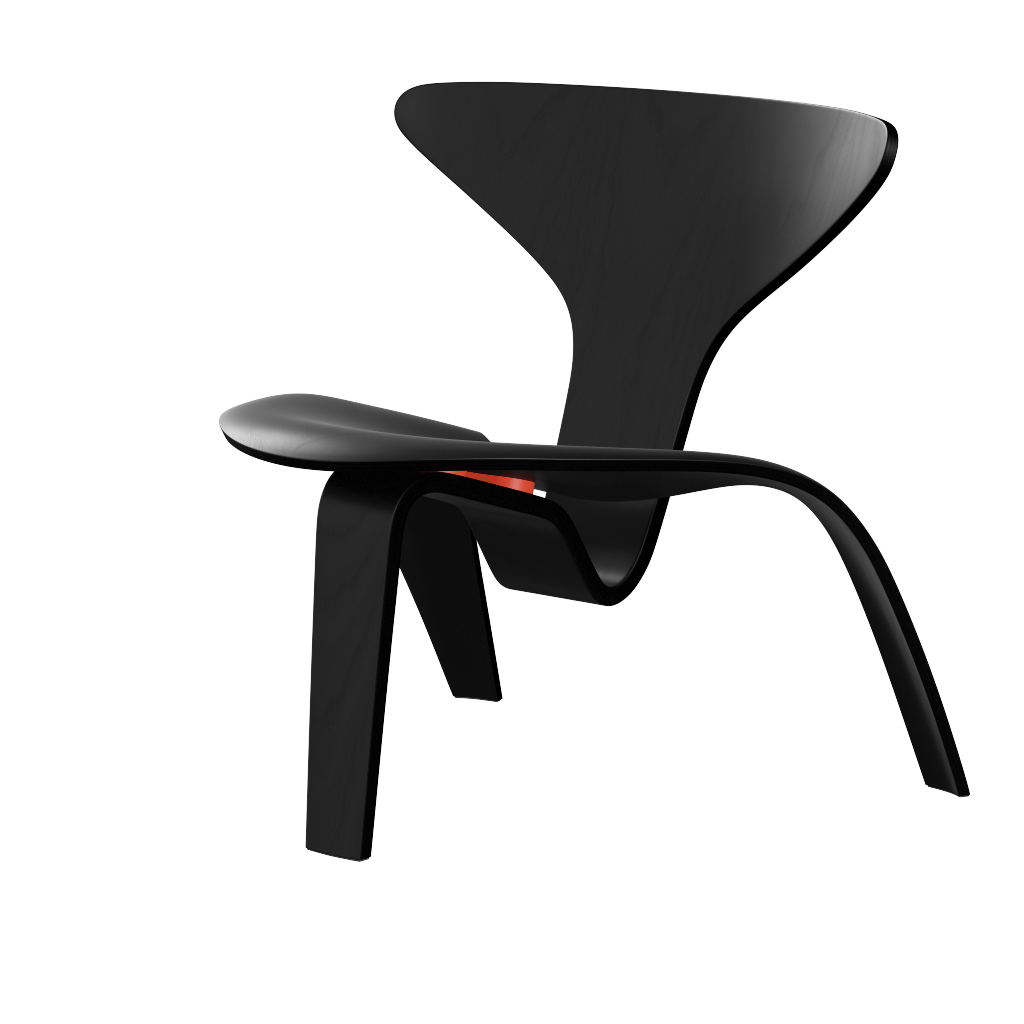
Poul Kjærholm’s one-of-a-kind PK0 A™ chair was designed in 1952, at the very beginning of the Danish designer’s tenure at Fritz Hansen. Highlighting the range of his talent as a furniture designer, the curved chair – now reissued in Oregon pine or black coloured ash with cinnabar red spacers – is a functional sculpture and a seminal piece of modern design history.
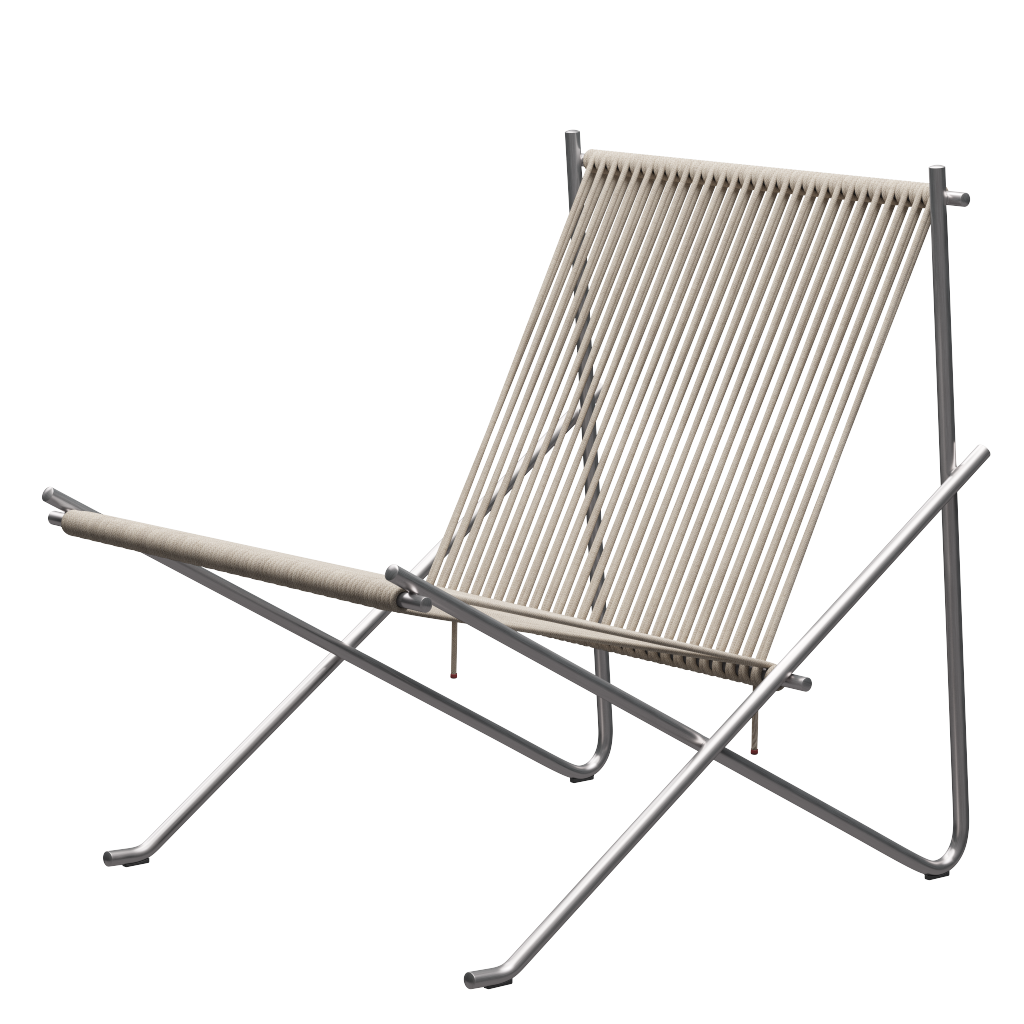
The PK4™ is a modern, relaxed lounge chair designed by Poul Kjærholm in 1952. It radiates the designer’s distinctive elegance through a light, minimalistic expression in steel and flag halyard and perfectly exemplifies Kjærholm’s visionary approach where art and design intersect. The chair consists of two materials – one flag halyard length and seven steel tubing pieces welded into a unified frame. It is available in three configurations: Black powder-coated steel with natural halyard, Stainless steel with natural halyard, or Stainless steel with black halyard.
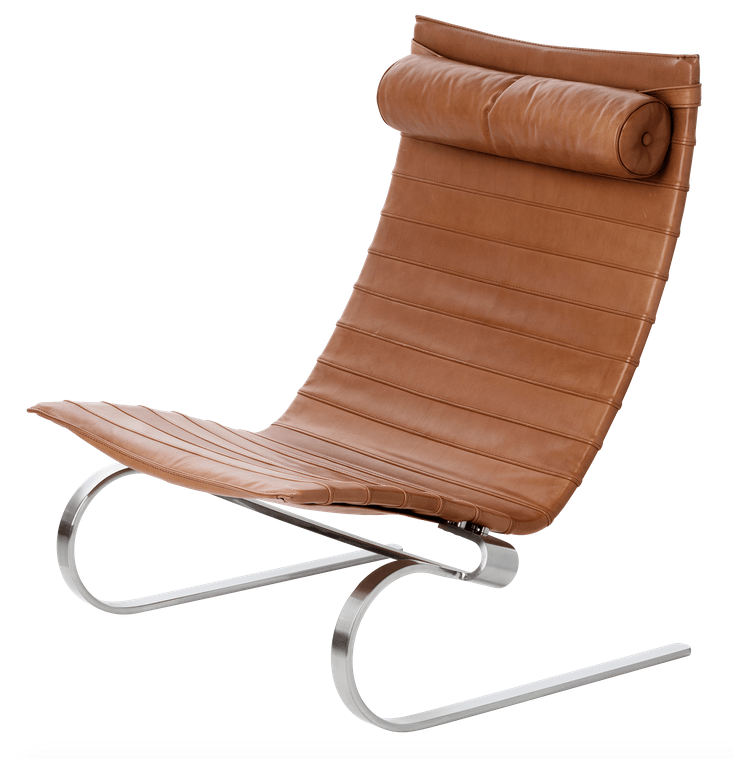
The PK20™ is a laidback and elegant easy chair, designed by Poul Kjærholm. Handcrafted in both wicker and leather, the chair features soft leather upholstery and a reclining headrest, resting on a flexible matt chromed spring steel frame. Over the years, the PK20 has become a Poul Kjærholm classic – as well as a permanent fixture at the Victoria and Albert Museum in London.
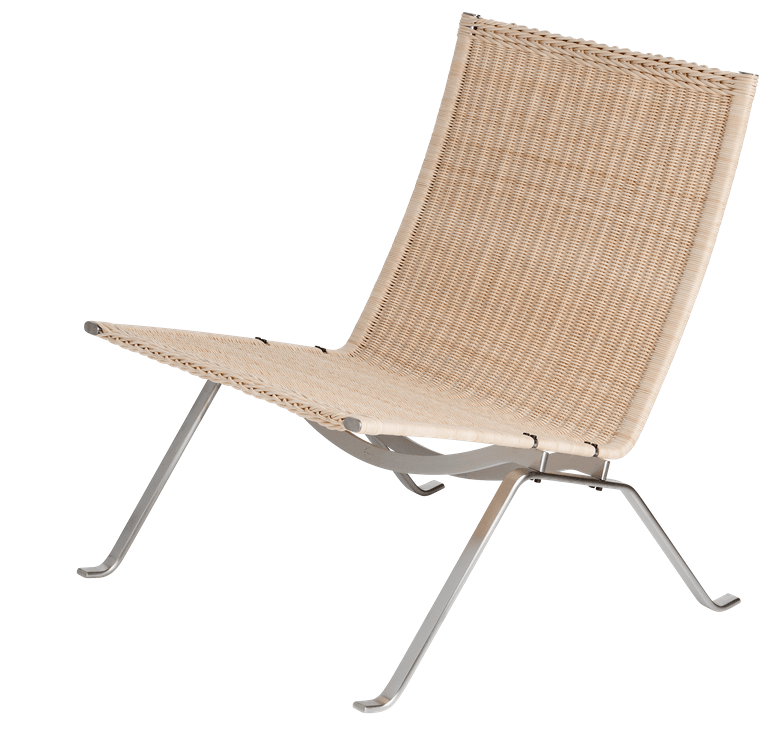
The discrete and elegant PK22™ lounge chair epitomises Poul Kjærholm’ssearch for the ideal form and showcases the industrial dimension always present in his work. The profile of the steel frame structure originates from the PK25™, his graduation project at the School of Applied Arts in Copenhagen. The PK22 was an immediate commercial and critical success. In 1957, the chair was awarded the Grand Prix at the Milan Triennale, the world’s premier design fair. The prize catapulted Kjærholm’s career onto the international scene, where his name has enjoyed a coveted position ever since.
pk23 by poul kjærholm
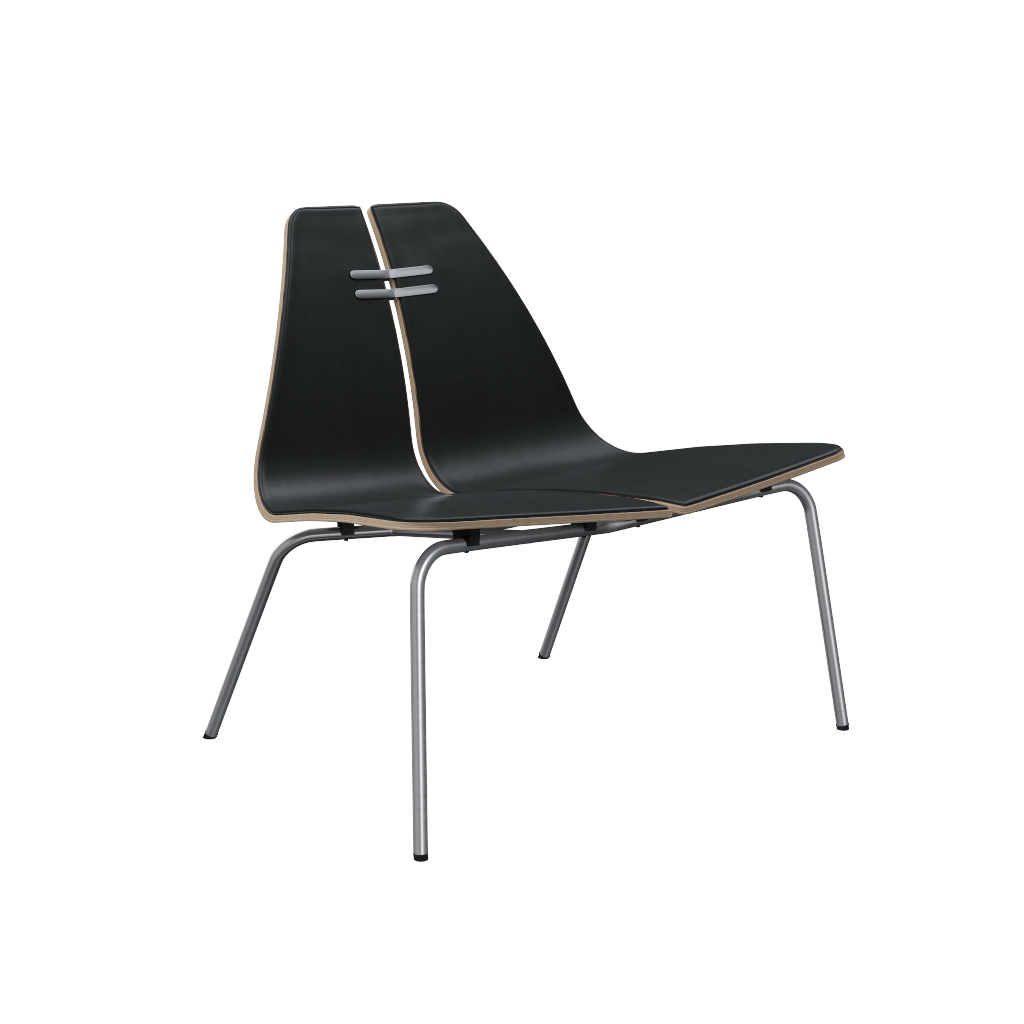
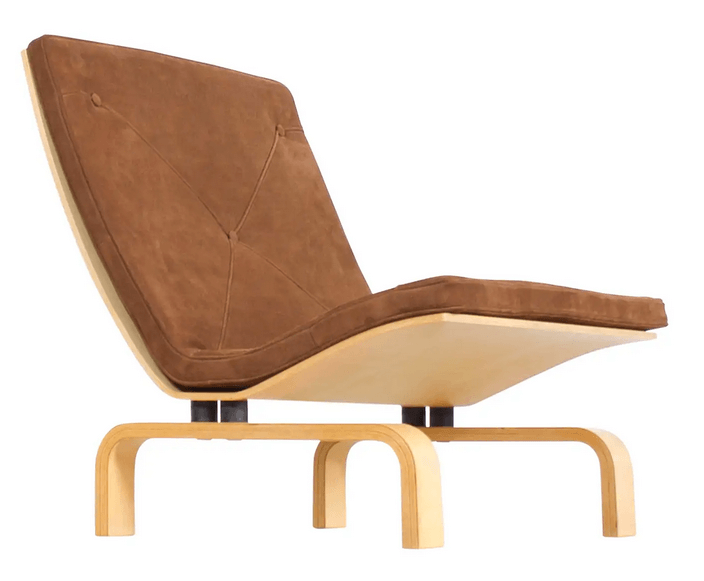
The PK23™ was originally conceptualised by Poul Kjærholm in 1954 but remained in the form of sketches until recently. Characterised by its wide, low-profile form tailored for relaxed conversations, the chair features vertically divided laminated veneer shells for both the seat and backrest, bridged by an elegant connector detail. The PK23 chair represents an evolutionary stage in Kjærholm’s design journey, blending elements from his earlier PK4 and PK0 models while foreshadowing the structural and minimalist style that would come to define later works. The PK23™ chair’s laminated veneer shells for the seat and back come in 3 varieties: black-painted ash veneer, walnut veneer or oak veneer. A double bracket connector detail elegantly bridges the backrest divide. The chair’s base comes in stainless steel and black powder-coated steel and can be mixed across the different shell offerings.
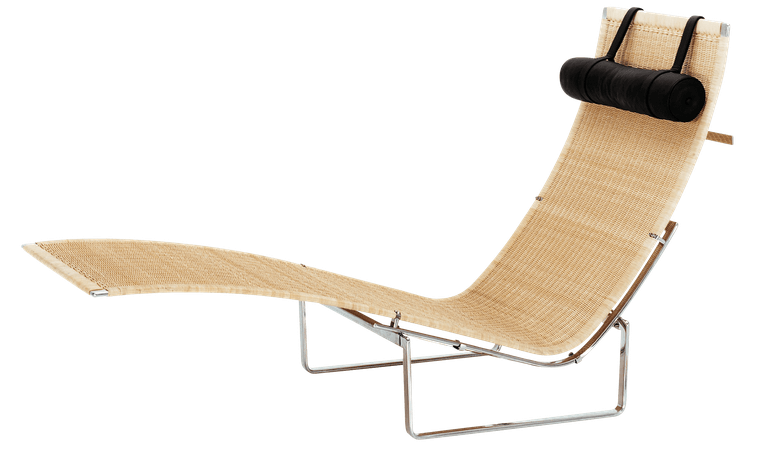
The PK24™ chaise longue chair stands out as perhaps the most recognisable chair in Fritz Hansen’s Poul Kjærholm’s collection. Inspired by the Rococo period and the French chaise longue, Kjærholm used steel to support a curvy, flowing form. He labelled it the ’Hammock Chair’ to stress that it functions by suspending the body between two points.
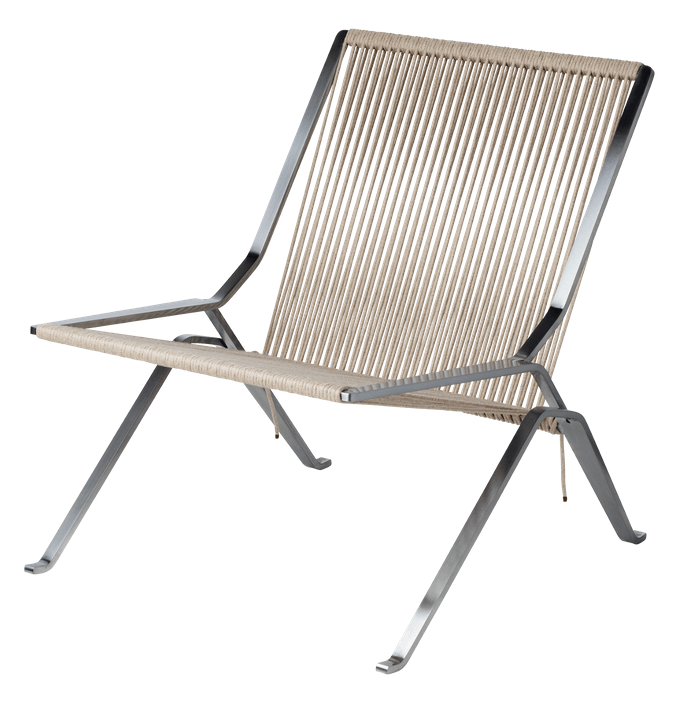
The PK25™ was designed by Poul Kjærholm for his final graduation project at the School of Arts and Crafts in 1952. Also known as the ‘Element’ chair, the PK25 is a striking example of Kjærholm’s eagerness to transform common, industrial materials into striking works of art. Kjærholm was determined to reduce the chair to a single piece of each material, resulting in its overarching hallmark: the continual steel frame that bends through the form without interruption.
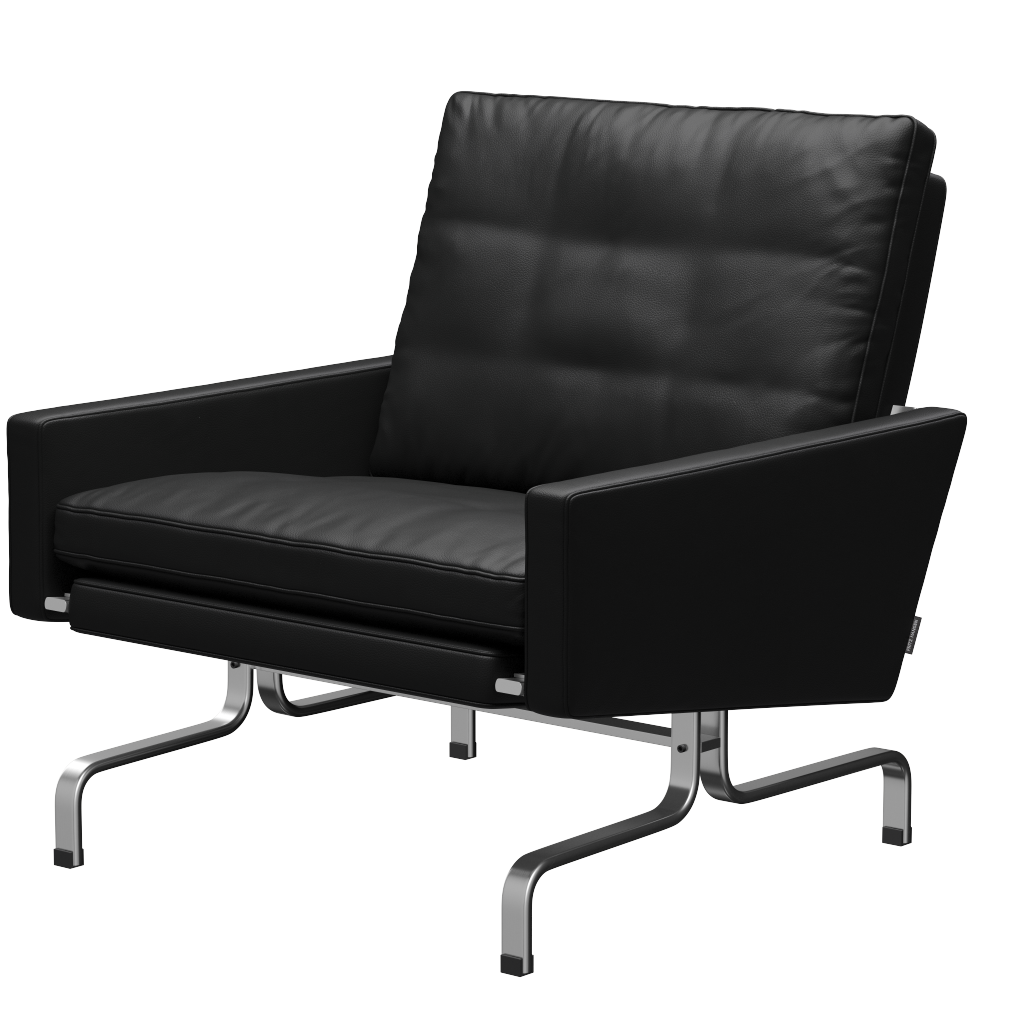
The PK31™ chair and sofa series is a prime example of Poul Kjærholm’s ability to work with exquisite materials and minimalism. In the search for the ideal form, Kjærholm created the PK31 – a fusion of elegance, luxury and comfort. The PK31 series is available as an armchair and a 2- or 3-seater sofa and features a matt chromed spring steel frame.
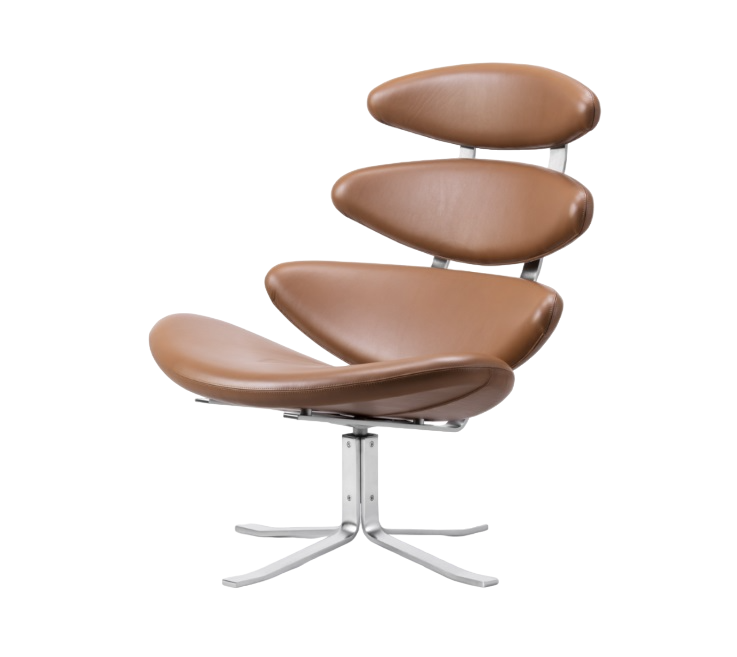
Super modern and classic lounge chair designed by Poul M. Volther. Corona was designed in 1964, and it sparked great enthusiasm all over the world. The corona chair was light at once, but at the same time it had a sculptural gravity that was hard to forget. This unique design has therefore been part of countless movies, fashion shows and music videos. Corona is probably Erik Jørgensen’s most scenic furniture to date, and the success of the chair is due, among other things, to the organic forms that refer directly to the human anatomy with spine and ribs. Corona fits perfectly into the modern home, and it is ideal as an armchair in the living room, as it invites for relaxation and enjoyment.
Chairs By Preben Fabricius & Jørgen Kastholm
Grasshopper chair fk87 by preben fabricius & Jørgen kastholm
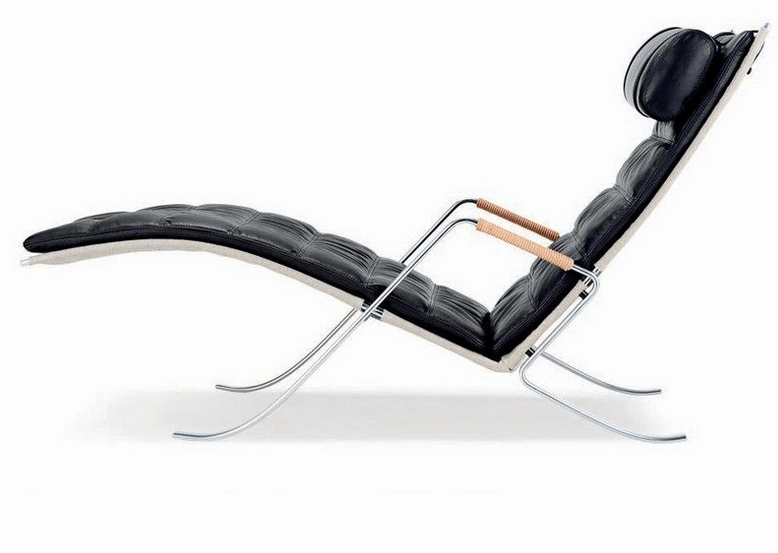
Grasshopper chair FK87 is designed in 1967 by Preben Fabricius & Jørgen Kastholm. Grasshopper chair is one of their finest design icons of all time. Grasshopper chair was initially manufactured by Alfred Kill in Germany when the chair was intended for the German market. Grasshopper chair is a world-class chaise lounge.
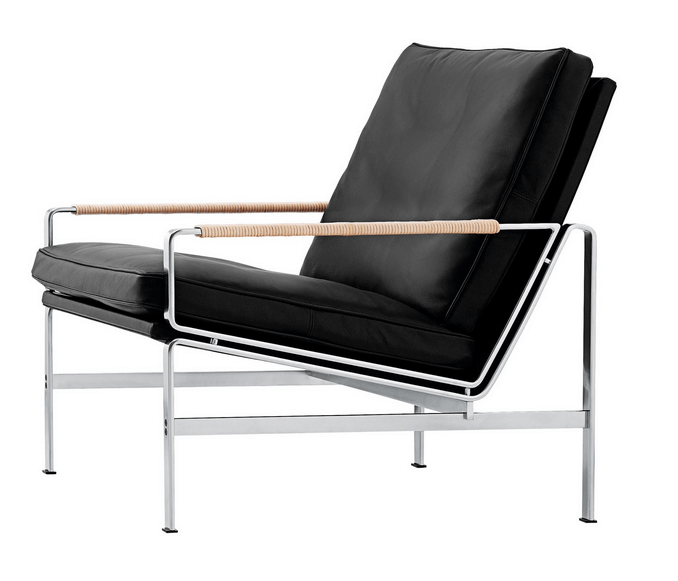
The FK6720 easy chair and sofa was designed in 1965. Today, 50 years later, the steel on the chair and sofa is today being produced at the same factory by the same man produced and on the same tools as back in the 60’s.
FK82 X-Chair by preben fabricius & Jørgen kastholm
The FK 82 X-Chair was designed by Preben Fabricius & Jørgen Kastholm in 1967 and original produced by Kill International in Germany. Although the two designers have individually created some interesting pieces, it is in pair that they have achieved their greatest success. During the eight years of partnership they managed to create a wide selection of very high quality designs. The results were often minimalistic and functional designs in steel, glass and leather. Since 2006, Lange Production has had the exclusive rights to manufacture a variety of Fabricius & Kastholm’s design collection. The furniture is produced at the original factory, and with the original tools as it was back in the 1960s.
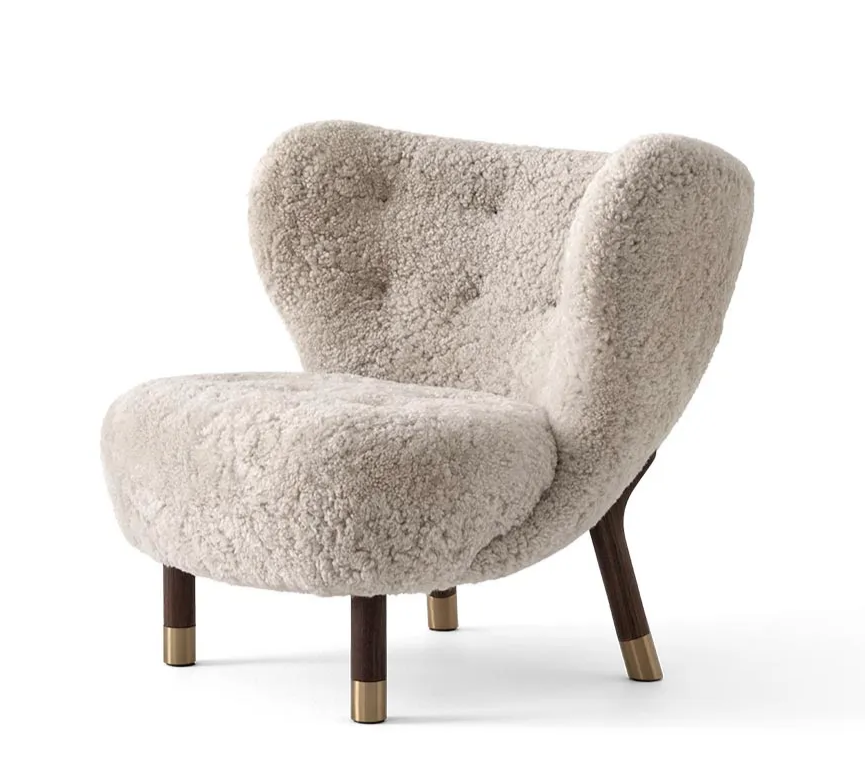
Initially introduced back in 1938, Little Petra won instant praise at the Copenhagen Cabinetmakers Guild Exhibition, subsequently winning awards at exhibits in New York and Berlin. It’s one of just a few designs by architect Viggo Boesen, who became associated with Denmark’s signature design aesthetic in the 1930s called funkis style. Little Petra is surprisingly petite, able to fit into all kinds of spaces, interiors and environments. Low to the ground, open and embracing, it embodies the essence of a lounge chair, allowing for all kinds of seating positions in any cosy setting imaginable.